Scottish Kilt Knife-Pleating & Tartan Alignment Guide 2026
The Renaissance of Bespoke Highland Dress in 2026
The construction of the traditional Scottish Highland kilt represents a pinnacle of European folk dress engineering. In 2026, the bespoke heritage tailoring market has experienced a massive resurgence, with enthusiasts and cultural preservationists seeking out authentic, hand-stitched garments over mass-produced alternatives. A true bespoke kilt is not merely a wrapped skirt; it is a complex architectural feat of textile manipulation that requires an intimate understanding of geometry, tension, and pattern alignment. As of 2026, commissioning a bespoke 8-yard kilt from a master kiltmaker typically costs between £650 and £950, reflecting the dozens of hours of meticulous hand-stitching required. For those looking to master European folk dress construction patterns, understanding the mechanics of Scottish kilt knife-pleating and tartan sett alignment is an essential endeavor. This guide will walk you through the precise measurements, structural techniques, and material requirements needed to construct a traditional Highland kilt in the modern era.
Understanding the Tartan Sett: The Blueprint of the Kilt
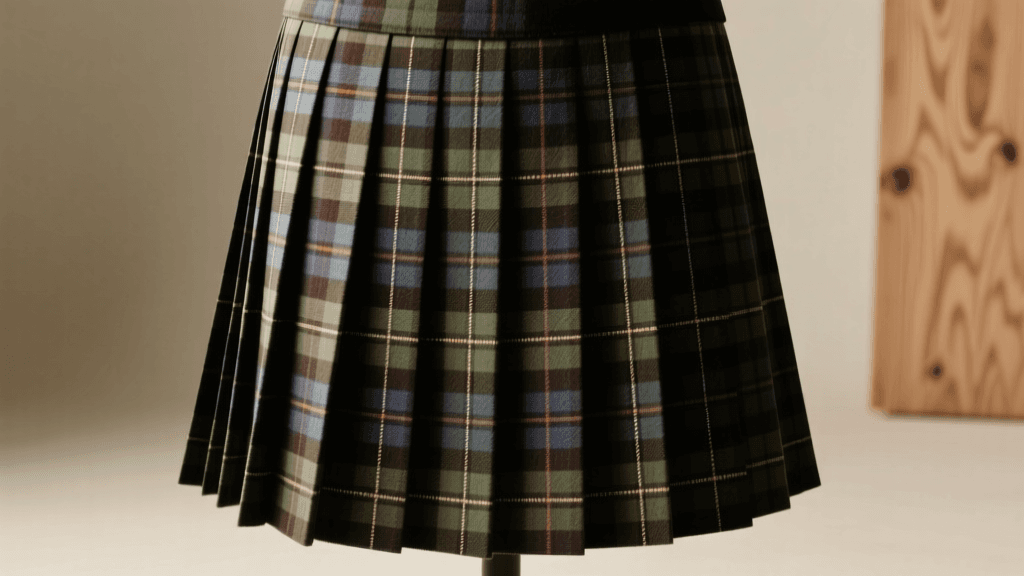
At the very heart of kilt construction is the 'sett'—the specific, repeating geometric pattern of the tartan. According to the Scottish Register of Tartans, there are over 14,000 officially registered tartans, each with its own unique thread count and color sequence. When constructing a kilt, the maker must decide how to manipulate this pattern during the pleating process. The two primary methods are 'pleating to the sett' and 'pleating to the stripe.' Pleating to the sett involves folding the fabric so that the pattern on the outside of the pleat perfectly mirrors the pattern on the inside, creating a continuous, unbroken geometric illusion around the wearer's body. This requires identifying the 'pivot point' of the tartan—the exact thread where the pattern reverses symmetrically. Conversely, pleating to the stripe aligns a single dominant vertical stripe down the center of every pleat, creating a striking, uniform column effect that is highly favored by military pipe bands.
The Mathematics of Kilt Construction
The traditional Highland kilt is constructed from a single piece of double-width or single-width worsted wool tartan, measuring exactly 8 yards (approximately 7.3 meters) in length. The construction is divided into three distinct zones: the under apron, the pleated section, and the over apron. Calculating the depth of each knife pleat is a rigorous mathematical exercise that depends entirely on the size of the tartan's sett and the wearer's waist and hip measurements. A standard kilt features between 25 and 35 knife pleats, each overlapping the next. The 'fell'—the distance from the waistline to the hipline where the pleats are stitched down and tapered—must be calculated to ensure the garment flares correctly when the wearer moves. Below is the standard measurement allocation chart used by master kiltmakers in 2026 for a standard 34-inch waist bespoke kilt.
| Construction Zone | Standard Dimension | Fabric Allocation | Technical Notes |
|---|---|---|---|
| Under Apron | 13.5 inches (34 cm) | 1.2 yards | Finished edge, hidden beneath over apron. |
| Pleated Section | 32.0 inches (81 cm) visible | 5.5 yards | Contains 29-31 overlapping knife pleats. |
| Over Apron | 15.5 inches (39 cm) | 1.3 yards | Includes fringe edge and buckle straps. |
| Fell Depth | 7.5 to 8.5 inches | N/A | Tapered stitching zone from waist to hip. |
Step-by-Step Knife-Pleating Technique
1. Marking the Fell and Waistline
Mastering the knife-pleating technique requires patience and specialized tools. The first step is marking the fell and waistline. Unlike standard skirt patterns, the kilt is constructed with the fabric oriented so that the tartan's horizontal pattern wraps around the body, while the vertical threads run from the waist to the hem. The bottom edge of the kilt is actually the uncut selvedge of the woven wool, ensuring a durable, fray-resistant hem that carries the proper weight. Once the fabric is oriented, the kiltmaker uses tailor's chalk to mark the exact fold line for each pleat based on the sett's pivot point.
2. Basting and Aligning the Pivot Point
Basting is where the true artistry of European folk dress construction shines. Each pleat is folded by hand and temporarily secured using a running stitch with fine silk thread. Silk is preferred in 2026 bespoke tailoring because it glides through the dense 16oz wool without snapping and can be easily removed later without leaving marks. Once all pleats are basted, the fell is stitched down using a blind hem stitch, tapering the width of the pleats from the hip down to the waist to accommodate the human form's natural curvature. After stitching, the pleats must be aggressively pressed. Traditional kiltmakers use a heavy steam iron combined with a wooden tailor's clapper. The clapper is slammed onto the steamed wool to force the moisture deep into the fibers and flatten the pleats to a razor-sharp edge. This process, repeated for every single pleat, locks the geometric alignment into place.
Stabilizing the Pleats: Hair Canvas vs. Modern Interfacing
A kilt without proper internal stabilization will quickly lose its shape, causing the pleats to sag and the aprons to buckle. The Scottish Tartans Authority emphasizes that traditional structural interlinings are non-negotiable for authentic Highland dress. In 2026, master makers continue to use a combination of hair canvas and domette (a soft, thick cotton flannel) to line the inside of the kilt from the waistband down to the end of the fell. The hair canvas provides rigid structural support, ensuring the waistband sits flush against the body without rolling, while the domette adds comfort and protects the wearer from the coarse, heavy wool and the internal stitching of the pleats. Modern fusible interfacings are strictly avoided in bespoke construction, as the adhesive degrades over time and ruins the natural drape and breathability of the worsted wool.
Sourcing Premium 16oz Worsted Wool in 2026
The foundation of any authentic kilt is the tartan wool itself. Mass-market kilts often utilize lightweight poly-viscose blends, but true folk dress construction demands 100% pure new wool, traditionally woven in a 16oz worsted weight. Sourcing this material in 2026 requires connecting with heritage mills. Establishments like Lochcarron of Scotland remain the gold standard, producing tartans on traditional shuttle looms that give the fabric the necessary density and 'bite' to hold a sharp pleat. As of early 2026, premium 16oz single-width tartan wool costs approximately £70 to £85 per meter. When ordering, it is crucial to specify that the fabric is required for kiltmaking, ensuring the mill provides the correct single-width selvedge and matches the dye lots perfectly across the full 8-yard length.
Conclusion
The construction of the Scottish Highland kilt is a profound exercise in cultural preservation and textile engineering. By adhering to the strict mathematical rules of tartan sett alignment, utilizing traditional basting and pressing techniques, and refusing to compromise on material quality, modern makers can keep this vital piece of European folk dress alive. Whether you are drafting your first 8-yard kilt or refining your pleating to the stripe, the techniques outlined in this 2026 guide provide the structural foundation necessary to create a garment that will endure for generations.