Scottish Kilt Hand-Pleating & Tartan Sett Alignment Guide 2026
The Renaissance of Bespoke Highland Kilt Construction in 2026
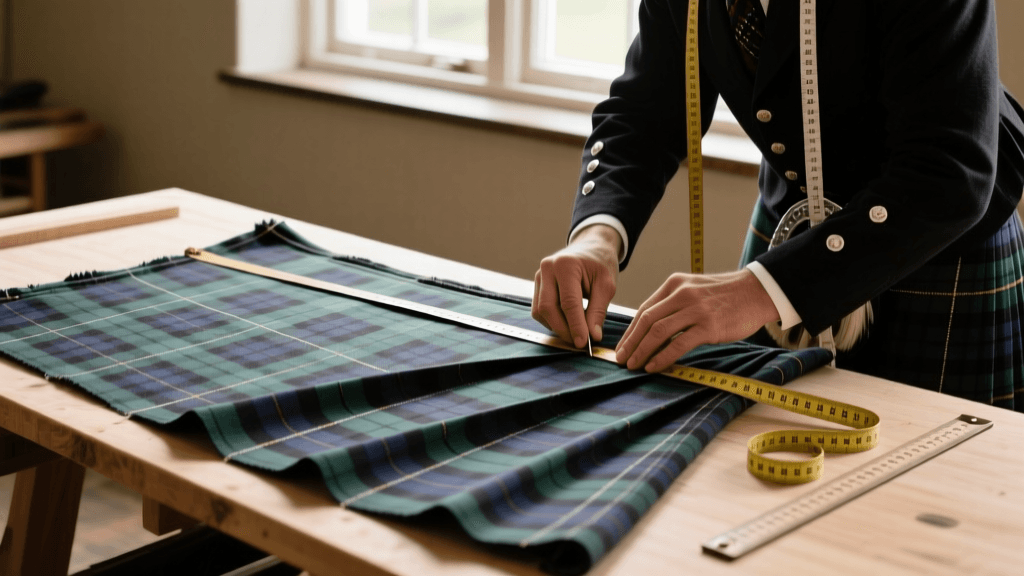
The construction of a traditional Scottish Highland kilt is a masterclass in geometric precision, textile manipulation, and cultural heritage. Unlike modern commercial kilts that often rely on machine-sewn box pleats or simplified knife pleats, a bespoke hand-pleated kilt requires the artisan to fold the tartan wool so that the complex pattern—the sett—aligns perfectly across every single pleat. As we navigate the bespoke menswear and heritage craft landscape of 2026, the appreciation for slow fashion and historically accurate garment construction has reached new heights. Discerning clients and textile enthusiasts are increasingly seeking out authentic, hand-stitched 8-yard kilts, driving a resurgence in traditional kiltmaking apprenticeships across Scotland and beyond.
Creating a Highland kilt is not merely about sewing fabric; it is an exercise in structural engineering. The garment must support its own considerable weight, contour seamlessly to the human body without the use of darts, and swing with a distinctive, fluid motion when the wearer walks or dances. This comprehensive guide explores the exact construction patterns, mathematical calculations, and hand-pleating techniques required to craft an authentic Scottish kilt in 2026.
Understanding the Anatomy of the Tartan Sett
Before a single cut is made, the kiltmaker must thoroughly understand the tartan sett. The sett is the specific sequence of colored stripes and thread counts that make up the tartan's unique pattern. According to The Scottish Register of Tartans, every officially recognized tartan is defined by its precise thread count and color palette. For the kiltmaker, the sett dictates the entire pleating strategy.
There are two primary methods of pleating a kilt to the sett:
- Pleating to the Sett (Striped): The kiltmaker selects a specific, visually dominant stripe within the tartan pattern to serve as the "pivot line." Each pleat is folded so that this exact stripe appears on the outer edge of every pleat, creating a continuous, unbroken vertical line down the back of the kilt while the complex pattern remains hidden inside the folds.
- Pleating to the Block (Boxed): Less common for traditional Highland dress but used in specific regional variations, this method attempts to replicate the full tartan pattern on the visible surface of each pleat. This is vastly more complex and requires significantly more fabric to execute without distorting the geometry.
For the standard traditional Highland kilt, pleating to the sett (striped) is the gold standard. The artisan must identify the pivot line, measure its exact width, and calculate how many times it will repeat across the wearer's waist.
Fabric Weight, Yardage, and 2026 Material Sourcing
The foundation of any authentic kilt is pure, worsted-spun Scottish wool. The traditional requirement for an adult male kilt is exactly 8 yards (288 inches) of double-width fabric (approx. 54-60 inches wide), though larger builds may require up to 9 yards. In 2026, sourcing high-quality tartan wool from historic mills like Lochcarron of Scotland or House of Edgar remains essential for achieving the correct drape and structural integrity.
Selecting the correct fabric weight is crucial for the garment's performance and the wearer's comfort. Below is a comparison of the standard wool weights utilized in contemporary kiltmaking.
| Wool Weight | Drape & Structure | Best Use Case (2026) | Approx. Cost per 8-Yard Kilt |
|---|---|---|---|
| 13 oz (Medium) | Lighter, softer drape; breathes well but holds pleats slightly less rigidly. | Summer weddings, indoor events, dancers requiring high mobility. | £650 - £850 |
| 16 oz (Heavy) | Exceptional structure; pleats hold a razor-sharp edge and swing beautifully. | Standard bespoke kilts, Highland games, formal evening wear. | £800 - £1,100 |
| 18 oz (Ultra-Heavy) | Stiff, armor-like rigidity; highly weather-resistant but very warm. | Historical reenactment, extreme outdoor weather, pipe bands. | £1,000 - £1,400 |
According to historical garment analysis by National Museums Scotland, early 19th-century kilts often utilized even heavier, coarser wools due to the harsh Highland climate. Today, the 16 oz worsted wool remains the undisputed standard for bespoke kiltmakers, offering the perfect balance of durability, pleat retention, and elegant movement.
The Mathematics of Hand-Pleating
The most critical phase of kilt construction is the mathematical calculation of the pleats. A kilt is essentially a flat piece of fabric that must wrap around a three-dimensional, tapered cylinder (the human torso) without buckling or flaring. To achieve this, the kiltmaker must calculate the "fell" and the "pleat depth."
Calculating the Visible Sett and Pleat Count
The wearer's waist measurement is taken at the navel, which is where the kilt sits. Let us assume a waist measurement of 36 inches. The kiltmaker must subtract the width of the two front aprons (typically 12 inches each, overlapping in the center). This leaves the remaining waist circumference to be covered by the pleated section.
If the visible width of the chosen pivot line in the tartan sett is 4 inches, the kiltmaker divides the remaining waist circumference by 4 to determine the number of pleats required. If the math does not result in a whole number, the kiltmaker must adjust the depth of the inner folds of the pleats (the under-pleat) to ensure the visible outer edge aligns perfectly with the sett, while subtly tapering the overall circumference to match the wearer's exact measurements.
The Fell: Tapering the Garment
The "fell" is the top portion of the kilt, usually measuring 7 to 9 inches in length, where the pleats are stitched down flat against the body. Because the human hips are wider than the waist, the pleats must be tapered. The kiltmaker achieves this by folding the inner layers of the pleat at a slight angle, creating a conical shape. This structural engineering is what allows the kilt to hug the waist while flaring out gracefully over the hips and thighs.
Step-by-Step Hand-Pleating and Basting Techniques
The physical act of pleating an 8-yard kilt requires immense patience, a heavy wooden tailor's clapper, and a steam iron. The process generally follows these meticulous steps:
- Marking the Pivot Line: Using a specialized fabric marker or tailor's chalk, the kiltmaker marks the exact pivot line on the right side of the wool for every single pleat across the entire 8-yard length.
- Steam and Press: The wool is folded along the marked line. A damp pressing cloth is placed over the fold, and a hot steam iron is applied, followed immediately by the wooden clapper. The clapper traps the steam and forces the wool fibers to set into a razor-sharp, permanent crease.
- Pinning and Basting: Once all pleats are pressed, they are pinned to a heavy canvas basting board. The kiltmaker uses a long running stitch with heavy, waxed linen thread to baste the top 9 inches (the fell) of the pleats, ensuring they do not shift during the final stitching.
- The Fell Stitch: Using a heavy kiltmaker's needle and waxed polyester or linen thread, the artisan sews the fell using a nearly invisible slip stitch or fell stitch. This stitch must be incredibly strong, as it bears the entire weight of the heavy wool fabric.
"A machine can sew a straight line, but only a human hand can feel the tension of the wool and adjust the taper of the fell to match the unique asymmetry of the wearer's body. That is the soul of the Highland kilt." — Master Kiltmaker proverb, widely cited by The Scottish Tartans Authority.
Essential Tools for the 2026 Kiltmaker
While the fundamental techniques have remained unchanged for centuries, the modern artisan in 2026 benefits from refined tools that improve ergonomics and precision. A proper kiltmaker's toolkit must include:
- Kiltmaker's Needles: Heavy-duty, sharp-pointed needles capable of piercing multiple layers of dense 16oz wool without bending.
- Beeswax: Used to heavily wax the linen or polyester stitching thread, preventing tangling and increasing tensile strength.
- Wooden Tailor's Clapper: An essential, heavy block of hardwood used to pound steam into the wool, locking the pleats in place permanently.
- Heavy Canvas Basting Board: A large, padded board used to pin the kilt flat during the basting and stitching phases, maintaining perfect tension.
- Specialized Tartan Shears: High-carbon steel shears designed to cut through thick, layered wool cleanly without fraying the delicate worsted threads.
Final Construction: Aprons, Fringes, and Straps
Once the pleated section is complete, the kiltmaker turns their attention to the aprons. The under-apron and over-apron are lined with heavy cotton drill or canvas to provide structure and prevent sagging. The over-apron is finished with a hand-knotted wool fringe, a detail that mimics the raw edges of the historic "Great Kilt" (Feileadh Mòr) of the 16th century.
Finally, heavy leather straps and cast-metal buckles are attached. In 2026, bespoke kiltmakers often partner with local Highland leatherworkers and silversmiths to ensure that the hardware matches the premium quality of the hand-pleated wool. The left-side strap passes through a discreet slit in the kilt's waistband, allowing the apron to lie perfectly flat against the body.
Conclusion
The construction of a traditional Scottish Highland kilt is a profound intersection of mathematics, textiles, and cultural pride. By mastering the geometry of the tartan sett, understanding the structural necessity of the tapered fell, and executing flawless hand-pleating techniques, the modern artisan preserves a vital piece of European folk dress. As the demand for authentic, sustainably crafted heritage garments continues to grow in 2026, the meticulous art of hand-pleated kiltmaking remains a testament to the enduring power of traditional craftsmanship.