Authentic Schuhplattler Tracht: 2026 Bavarian Dance Festival Guide
The Revival of Authentic Tracht in 2026
The intersection of traditional European folk dress and kinetic folk dance creates a unique sartorial discipline where garments must not only look historically accurate but perform under extreme physical stress. Nowhere is this more evident than in the Bavarian and Austrian Alpine regions, where the Schuhplattler folk dance demands specialized traditional clothing, known as Tracht. As we navigate the 2026 Alpine festival season, there has been a definitive cultural shift away from the commercialized, mass-produced costumes sold in tourist shops, moving fiercely back toward historically accurate, artisan-crafted garments. According to the Bayerischer Trachtenverband (Bavarian Tracht Association), 2026 has seen a record number of young dancers joining official Trachtenvereine (traditional costume clubs), all of whom require garments that meet strict regional guidelines while withstanding the rigorous demands of competitive folk dancing.
The Schuhplattler is a courtship dance that mimics the mating ritual of the capercaillie (Auerhuhn). It involves vigorous stomping, leaping, and the rhythmic slapping of the thighs, knees, and soles of the shoes. For the dancer, the costume is not merely decorative; it is an acoustic instrument and a functional athletic uniform. This comprehensive guide details the anatomy of authentic 2026 Schuhplattler costumes, offering precise measurements, material requirements, and sourcing advice for dancers and cultural enthusiasts preparing for this year's major regional festivals.
Anatomy of the Male Dance Costume: Acoustic Leather and Alpine Footwear
The Hirschleder Lederhosen
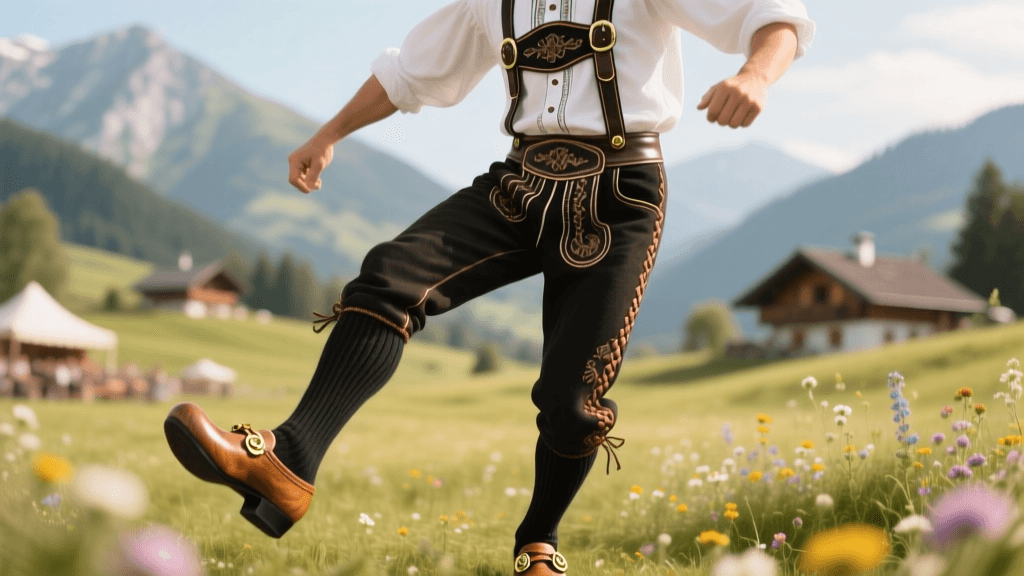
For male dancers, the centerpiece of the costume is the Kniebundlederhosen (knee-breeches). However, not all leather is suitable for the Schuhplattler. In 2026, serious dancers exclusively commission breeches made from Hirschleder (deerskin) or high-grade Sämischleder (chamois leather) that has been brain-tanned or oil-tanned. This specific tanning process yields a leather that is incredibly supple, washable, and, most importantly, acoustic. When a dancer strikes his thigh during the Plattler sequence, the supple deerskin produces a sharp, resonant 'smack' that echoes across the festival grounds. Stiffer, commercially dyed cowhide simply absorbs the impact, resulting in a dull thud that fails to impress judges at the Gauefeste (regional Tracht festivals).
The embroidery (Stickerei) on authentic dance Lederhosen is typically done in a technique called Weißstickerei (white-on-white embroidery) or with muted green and yellow silk threads, featuring regional motifs like the Edelweiss, alpine roses, or oak leaves. For dancers, the embroidery must be placed carefully to avoid creating rigid ridges on the exact spots where the hands strike the thighs and knees.
Hosenträger, Hemd, and Loferl
The breeches are supported by Hosenträger (suspenders) that cross at the back, featuring a beautifully embroidered chest shield (Quersteg). Underneath, dancers wear an off-white, unbleached linen shirt (Leinenhemd). Bright white cotton shirts are considered historically inaccurate and are frowned upon in official 2026 competitions. The shirt must feature gusseted underarms to allow for the extreme overhead arm raises required during the dance's leaping sequences. On the calves, dancers wear Loferl (calf warmers), which are essentially sleeves for the lower leg made of ribbed wool or linen, leaving the ankle exposed to transition seamlessly into the footwear.
Haferlschuhe: The Engine of the Stomp
The footwear is arguably the most critical component for rhythm. Dancers wear Haferlschuhe, traditional Alpine shoes characterized by their distinctive side-lacing. This side-lacing is not merely decorative; it prevents the laces from snapping or coming undone during the violent, rhythmic stomping that characterizes the dance. In 2026, custom cobblers in regions like Garmisch-Partenkirchen and Miesbach are utilizing advanced 3D foot-scanning technology alongside traditional hand-welting techniques to create Haferlschuhe with reinforced toe caps and specialized leather soles that grip the wooden stages of festival tents while producing a thunderous percussive sound.
The Female Dance Dirndl: Function Meets Tradition
The Structured Mieder (Bodice)
The female Schuhplattler costume is a highly specialized version of the traditional Dirndl. While commercial Dirndls often rely on flimsy zippers and lightweight fabrics, the authentic dance Dirndl features a heavily structured Mieder (bodice). The bodice is reinforced with internal boning and fastens with heavy metal hooks or intricate lacing. This structure is vital for the female dancer, whose primary role in the Schuhplattler involves rapid, continuous spinning (Drehen). The structured bodice provides core support and ensures the garment remains perfectly in place during dizzying rotational movements.
The Rock (Skirt) and Aerodynamic Flaring
The skirt (Rock) of a dance Dirndl is cut with a massive hem circumference to allow for aerodynamic flaring. When the dancer spins, the heavy fabric—usually a densely woven cotton, wool blend, or heavy silk—flares out into a perfect, bell-shaped circle. The Bayerisches Nationalmuseum notes that historical skirt lengths varied, but for modern 2026 dance competitions, the hem must fall precisely at the mid-calf or just below the knee. This length is strictly enforced by dance judges: it is long enough to maintain modesty and create a visually stunning bell shape during spins, but short enough that the judges can observe the intricate footwork and stamping of the dancer's Trachtenschuhe.
The Schürze (Apron) and Footwear
The silk or fine linen apron (Schürze) must be tied with a specific bow (Schleife) that traditionally denotes the wearer's marital status. For dancers, the apron is often slightly weighted at the hem or tied with a specialized, flat knot to prevent it from flying up and obscuring the skirt's movement during rapid spins. Female dancers wear specialized Trachtenschuhe with a sturdy, low block heel and a strap across the instep, providing the necessary stability for stamping and pivoting on wooden floors.
2026 Measurement and Sizing Guide for Dance Costumes
Ordering authentic Tracht requires precise measurements, as these garments are tailored to allow for specific kinetic movements. Below is the standard measurement matrix used by Alpine tailors in 2026 for competitive dance costumes.
| Garment Component | Primary Measurement Focus | Dance-Specific Allowance & Notes |
|---|---|---|
| Lederhosen (Kniebund) | Waist, Thigh, Knee-cuff | +2cm thigh ease for high kicks; knee-cuff must sit exactly 2cm below the patella. |
| Hemd (Linen Shirt) | Chest, Sleeve length, Neck | Gusseted underarms required; sleeves must not restrict elbow flexion during slapping. |
| Dirndl Mieder (Bodice) | Underbust, Waist, Torso | Structured boning; must be snug to support core during 30+ consecutive spins. |
| Dirndl Rock (Skirt) | Waist, Hem circumference | Minimum 3.5-meter hem circumference for optimal aerodynamic flaring. |
| Haferlschuhe | Length, Width, Instep | Side-lacing must clear the ankle bone to prevent chafing during rhythmic stomping. |
2026 Festival Calendar: Where to See Authentic Dance Tracht
If you are looking to observe the highest caliber of Schuhplattler dancing and authentic Tracht in 2026, you must look beyond the main commercial tents of the major beer festivals. The true heart of the folk dance revival lies in the regional Gauefeste and the historical sections of the major festivals. The Munich Tourism Board highly recommends the Oide Wiesn (Old Oktoberfest) section, which strictly enforces historical costume guidelines and features daily performances by the oldest and most prestigious Trachtenvereine in Bavaria.
Additionally, the autumn Almabtrieb (cattle drive) festivals in the Tyrolean and Bavarian Alps offer spectacular open-air dance performances. During these events, dancers wear the Almabtracht, which includes the addition of the Gamsbart (a tuft of chamois hair worn on the Alpine hat) and elaborate floral crowns for the women. In 2026, the integration of sustainable, locally sourced materials for these festival accessories has become a major point of pride among the dance troupes.
Sourcing Authentic Garments: 2026 Pricing and Artisans
Investing in authentic dance Tracht is a significant financial commitment, reflecting the hundreds of hours of artisanal labor required. In 2026, the market for genuine, hand-crafted garments remains robust, with wait times for bespoke Lederhosen often stretching from six to nine months.
- Bespoke Hirschleder Lederhosen: Expect to pay between €900 and €1,800, depending on the complexity of the hand-embroidery and the specific tannery sourcing the deerskin.
- Authentic Dance Dirndl (Custom): A complete, high-quality ensemble (bodice, skirt, apron, and blouse) tailored for dance dynamics ranges from €600 to €1,200.
- Hand-Welted Haferlschuhe: Custom-fitted Alpine shoes from master coblers cost between €220 and €350.
- Vintage and Second-Hand: Because high-quality Tracht is built to last generations, the 2026 vintage market is thriving. Well-maintained vintage Lederhosen with a desirable patina can fetch upwards of €2,000 at specialized antique textile auctions in Munich and Salzburg.
Ultimately, the Schuhplattler costume is a masterclass in functional folk art. Every stitch, lace, and cut of leather serves a dual purpose: honoring the deep cultural heritage of the Alpine regions while enabling the human body to perform one of Europe's most energetic and percussive traditional dances. Whether you are a competitive dancer preparing for the 2026 Gauefest or a cultural historian studying the evolution of European folk dress, understanding the precise mechanics of these garments is essential to appreciating the living tradition of Bavarian Tracht.