Bavarian Schuhplattler Dance Attire 2026: Lederhosen & Haferl Shoes
The Resurgence of the Schuhplattler in 2026 Alpine Festivals
As the 2026 Alpine festival season approaches, traditional European folk dress is experiencing a massive renaissance, driven by a renewed interest in authentic cultural preservation. Among the most visually and acoustically striking expressions of this heritage is the Bavarian Schuhplattler. This traditional folk dance, characterized by rhythmic stomping, thigh-slapping, and the spinning of partners, requires highly specialized garments that can withstand rigorous physical exertion while maintaining historical accuracy. For members of Trachtenvereine (traditional costume clubs) and festival performers preparing for the 2026 Gaufest competitions and Oktoberfest, standard tourist-shop attire is entirely inadequate. Authentic performance gear demands specific leather treatments, reinforced stitching, and specialized footwear that bridges 19th-century craftsmanship with modern ergonomic needs.
The Schuhplattler is not merely a dance; it is a courtship ritual turned competitive sport, originating in the Alpine regions of Bavaria, Tyrol, and Salzburg. The male dancers perform the platteln (slapping of shoes, thighs, and knees) while the female dancers execute the Drehertanz (a continuous, elegant spinning motion). According to cultural guidelines published by the Oktoberfest official portal, strict adherence to historical regional styles, particularly the Miesbacher Tracht, is heavily judged in modern competitions. This means every button, stitch, and leather grain is scrutinized by experts and enthusiasts alike.
Anatomy of Performance-Ready Lederhosen
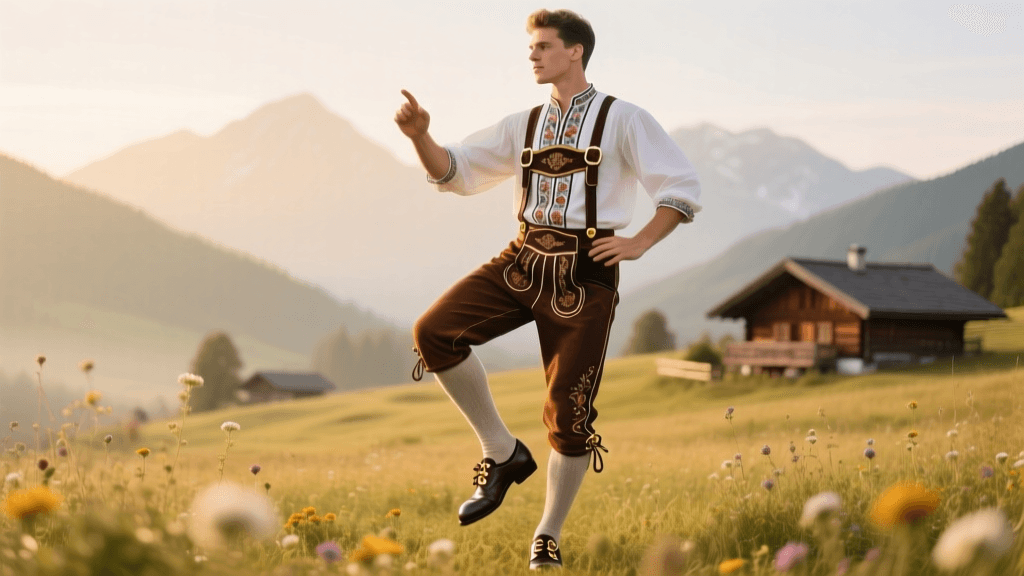
The cornerstone of the male Schuhplattler attire is the Lederhosen (leather trousers). However, the trousers used for vigorous folk dancing differ significantly from everyday festival wear. The constant, high-velocity slapping of the thighs requires a specific type of leather that produces a sharp, resonant stopper (the cracking sound of the slap) without tearing or bruising the dancer. In 2026, master Säckler (traditional leatherworkers) are seeing a surge in demand for bespoke, performance-grade Kurze (short Lederhosen) that utilize ethically sourced, chrome-free tanned hides.
The most prized material for a dancer’s Lederhosen is Hirschleder (deer hide). Deer leather is exceptionally durable, breathable, and possesses a natural elasticity that conforms to the dancer’s movements. Over time, the repeated slapping and the absorption of natural oils create the highly coveted Krachlederne effect—a darkened, polished, and slightly worn patina on the thighs and seat that proves the dancer’s dedication to the craft. The embroidery (Stickerei) on performance Lederhosen is typically done with heavy silk thread in traditional floral or hunting motifs, and the seams are double-stitched with waxed linen thread to prevent blowouts during high kicks.
2026 Leather Comparison for Folk Dance Performers
| Leather Type | Sound Resonance (Slap) | Durability & Flexibility | 2026 Average Bespoke Cost (EUR) |
|---|---|---|---|
| Hirschleder (Deer) | Exceptional, sharp crack | Highly flexible, molds to body | €950 - €1,400 |
| Rehleder (Roe Deer) | High, slightly softer | Very soft, less durable for heavy slapping | €800 - €1,100 |
| Ziegenleder (Goat) | Moderate, muted | Stiff initially, breaks in well | €600 - €850 |
| Rindsleder (Cow) | Low, heavy thud | Too rigid, restricts dance movement | €350 - €500 |
Haferl Shoes: The Foundation of the Folk Dance
No Schuhplattler can perform effectively without the correct footwear. The traditional Bavarian Haferlschuh (literally “oat shoe,” named for its resemblance to an oat bucket) is a masterpiece of alpine cobbling. Unlike modern dress shoes, the Haferl features a distinctive side-lacing system (Seitenschnürung) and a heavily nailed, double-layered leather sole. This construction is non-negotiable for the Schuhplattler, as the dance requires the dancer to stomp forcefully on wooden stages and cobblestone grounds to keep the rhythm for the musicians.
In 2026, traditional cobblers have begun integrating modern podiatric science into the historical silhouette. While the exterior remains pure, pebbled calfskin or deer leather with hand-forged metal eyelets, the interior now frequently features custom-molded cork and natural latex footbeds. This innovation is critical for festival performers who may be dancing for up to eight hours a day over a multi-day Gaufest weekend. The side-lacing ensures that the ankle is locked in place, preventing sprains during the rapid pivots and deep squats required for the Bodnplattler (floor-slapping) variations of the dance. Dancers are advised to purchase their Haferl shoes at least three months before the 2026 festival season to allow adequate time for the thick leather uppers to mold to the foot and for the soles to be properly scuffed for stage grip.
The Drehertanz: Women’s Festival Attire and Engineering
While the men provide the percussive rhythm, the women provide the visual grace of the Schuhplattler through the Drehertanz. The women’s attire, typically a Miesbacher Dirndl, is engineered specifically for centrifugal force. The Bavarian National Museum notes that the Miesbacher style is characterized by its rich, dark colors, intricate silk embroidery, and specific structural elements designed to enhance the spinning motion.
The most critical component of the dancer’s Dirndl is the Rock (skirt). A performance skirt is heavily gathered at the waist and features a weighted hem. In 2026, tailors use thin, flexible lead-free brass chains or dense cotton cording sewn into the bottom hem. This weight ensures that when the dancer spins, the skirt flares out into a perfect, horizontal bell shape without flying up and exposing the petticoats. Beneath the skirt, dancers wear multiple layers of Unterrock (petticoats) made from crisp cotton or linen, which provide volume and create a beautiful rustling sound that complements the men’s slapping. The bodice (Mieder) is heavily boned to provide back support during continuous spinning, and the silk apron (Schürze) is tied in a specific regional knot that signifies the dancer’s home valley.
Women’s Trachtenschuhe (Dance Shoes)
Female performers do not wear standard Dirndl pumps. They wear specialized Trachtenschuhe, which are essentially historical character shoes. These feature a sturdy, low block heel (usually no higher than 4 centimeters), a reinforced shank for arch support, and an ankle strap (Riemchen) to keep the shoe secure during rapid footwork. The soles are made of smooth, hard leather to allow for effortless pivoting on wooden dance floors, reducing torque on the knees and hips.
Hats, Suspenders, and Essential Accessories
The Trachtenhut (traditional hat) is the crowning glory of the male dancer’s ensemble. Made from waterproofed loden wool or felt, the hat is adorned with a Gamsbart (a brush made from chamois hair) and a feather or eagle down. For competitive Schuhplattler, the hat must fit snugly; it is a mark of immense skill to perform deep squats and rapid head movements without the hat dislodging. In 2026, ethical sourcing of Gamsbart and feathers is strictly monitored by alpine conservation societies, and many top-tier dancers now use certified, naturally shed feathers or sustainably harvested chamois hair.
The Lederhosen are held up by Hosenträger (suspenders). For everyday wear, H-style suspenders are common, but for the rigorous movements of the Schuhplattler, cross-back suspenders are mandatory. The cross-back design prevents the straps from slipping off the shoulders when the dancer raises his arms high above his head to slap his shoes. The suspenders are heavily embroidered and fasten to the Lederhosen with buttons made from carved stag horn, never plastic or metal.
Sourcing Authentic Gear and 2026 Festival Etiquette
Preparing for the 2026 festival circuit requires planning and a significant financial investment. Authentic, bespoke Tracht is not mass-produced. Recent cultural reports from Bavaria Tourism highlight that waitlists for master Säckler and Tracht tailors can stretch up to eight months. A complete, competition-ready male outfit (including bespoke Lederhosen, hand-embroidered shirt, Haferl shoes, and accessories) can easily exceed €3,500, while a fully tailored female Miesbacher Dirndl ensemble averages around €2,800.
For those on a tighter budget, the secondary market for vintage, broken-in Lederhosen is highly active in 2026. However, buyers must be cautious to verify the leather quality and the authenticity of the embroidery patterns, as wearing a mismatched regional Tracht is considered a major faux pas in the Trachtenverein community. Maintenance is also crucial; performers must treat their Lederhosen with specialized deer tallow and beeswax blends to keep the leather supple and water-resistant, especially for outdoor festival stages where morning dew and sudden alpine rain showers are common.
Ultimately, the Schuhplattler is a living, breathing testament to European folk culture. The garments are not mere costumes; they are precision-engineered tools of the trade, steeped in centuries of alpine history. Whether you are a seasoned member of a Trachtenverein or a cultural enthusiast attending the 2026 Gaufest, understanding the intricate construction of the Lederhosen, the vital importance of the Haferlschuh, and the physics of the weighted Dirndl skirt deepens the appreciation for this spectacular folk tradition.