Norwegian Bunad Silver & Telemark Crowns: 2026 Guide
The Resurgence of Norwegian Folk Accessories in 2026
As we enter the 2026 cultural heritage festival season, from the vibrant Syttende Mai (Constitution Day) parades to the lush midsummer weddings, traditional European folk dress continues to experience a massive global revival. Among the most intricate and highly sought-after elements of this revival are the accessories of the Norwegian bunad. While the hand-woven wool garments and elaborate embroidery often capture the eye, it is the heavy sterling silver jewelry (sølje) and the majestic regional bridal crowns (brudekrone) that truly anchor the silhouette. For collectors, brides, and folk-dress enthusiasts navigating the 2026 market, understanding the nuances of regional silversmithing, authentic hallmarks, and modern styling techniques is essential.
Anatomy of the Bunad Silver (Sølje)
The term sølje broadly refers to the traditional silver jewelry worn with the bunad. Historically, these pieces were not merely decorative; they served as a portable display of a family's wealth and social standing, often passed down through generations or given as significant life-event gifts. In 2026, master silversmiths continue to use traditional casting and filigree techniques, though modern metallurgical standards ensure higher durability.
The Halsknapp and Brystsølje
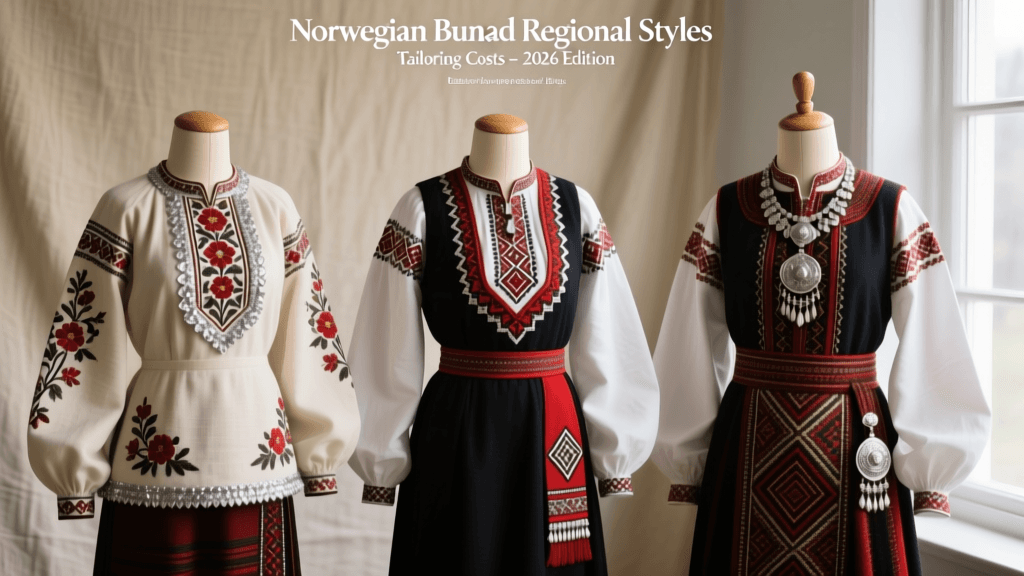
The foundation of any bunad silver set begins at the neckline. The halsknapp (neck button) is typically a small, domed piece of filigree silver, measuring roughly 25mm to 30mm in diameter, used to fasten the collar of the linen shirt. Just below it sits the brystsølje (chest brooch), the undisputed centerpiece of the ensemble. A standard Hardanger brystølje measures between 60mm and 75mm across and features a central motif surrounded by dangling elements known as skjelv. These dangles were traditionally believed to ward off evil spirits and the huldra (forest spirits) by reflecting light and creating a gentle chiming sound as the wearer moved.
Belts, Cuffs, and Shoe Buckles
Depending on the specific regional bunad, the silver set expands to include functional yet ornate hardware. The Telemark bunad, for instance, requires heavy silver cufflinks (ermerknapper) and intricately cast shoe buckles (skospenner). The belt is often secured with a livsnor (a woven silver chain) or a heavy cast belt clasp. In 2026, a complete, museum-quality sterling silver set for a Telemark bunad, weighing upwards of 350 grams of 925S silver, typically ranges from €2,400 to €3,800 when commissioned from heritage workshops.
The Majestic Brudekrone: Telemark and Hardanger Crowns
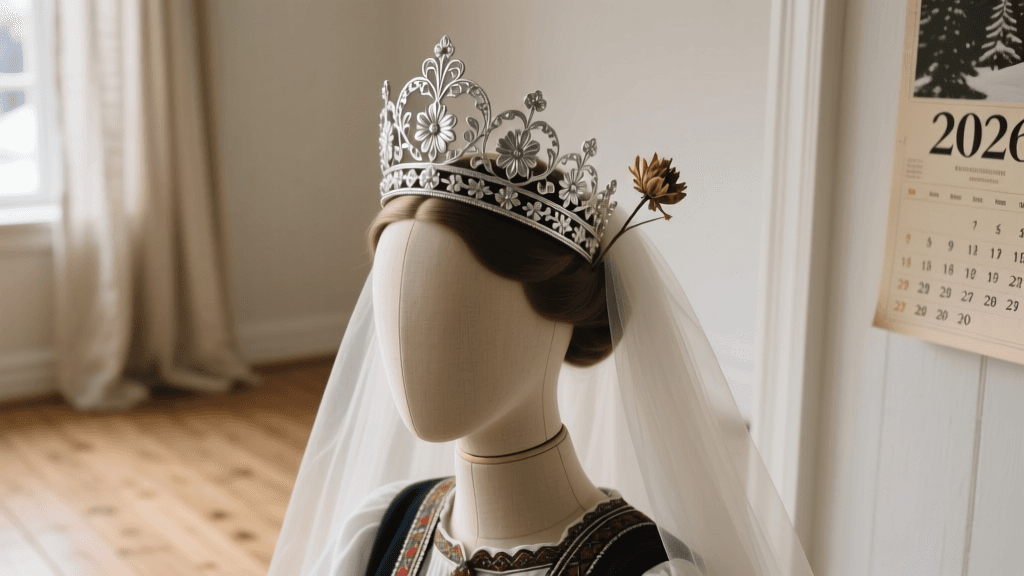
No discussion of European folk headwear is complete without addressing the Norwegian brudekrone (bridal crown). Unlike the delicate floral wreaths of Slavic traditions, Norwegian bridal crowns are towering, architectural masterpieces of metalwork, glass, and sometimes semi-precious stones. According to the Norsk Folkemuseum, these crowns historically symbolized the bride's purity and her transition into a married woman, drawing visual inspiration from the crown of the Virgin Mary.
Regional Variations and Construction
The Telemark crown is characterized by its wide, circular base and upward-reaching spires, often adorned with brass, silver, and colored glass stones that catch the candlelight during evening ceremonies. The Hardanger crown, conversely, tends to be taller and more cylindrical, heavily reliant on intricate silver filigree and dangling brass ornaments. In 2026, contemporary brides are increasingly seeking out antique crowns from the late 19th century, driving the vintage folk-accessories market to record highs.
Sourcing and Styling Crowns for 2026 Weddings
Purchasing an authentic antique brudekrone can cost anywhere from €4,000 to over €15,000. Consequently, the 2026 rental market is thriving. Specialized heritage boutiques and local husflid (craft) associations offer weekend rentals averaging €150 to €350. Styling the crown requires precision; while traditional methods involved tightly braiding the hair and securing the crown with woven silk ribbons, modern 2026 styling often incorporates hidden, custom-molded silicone combs and invisible elastic netting to ensure the heavy metal structure remains perfectly stable during the traditional brudevals (bridal waltz).
2026 Buyer’s Comparison: Regional Silver Sets
When investing in bunad silver, it is critical to match the jewelry to the specific regional dress. Wearing Hardanger silver with a Gudbrandsdal bunad is considered a major faux pas in Norwegian folk-dress culture. Below is a comparative guide to the three most prominent regional silver sets available on the 2026 market.
| Region | Core Silver Pieces Included | Average 2026 Price (EUR) | Distinctive Design Features |
|---|---|---|---|
| Hardanger | Halsknapp, Brystsølje, Belt Chain | €1,600 - €2,400 | Heavy oxidized backgrounds, raised polished filigree, red glass cabochons. |
| Telemark | Brystsølje, Cufflinks, Shoe Buckles | €2,400 - €3,800 | Massive cast elements, biblical motifs (angels, lions), abundant leaf dangles. |
| Gudbrandsdal | Brystsølje, Crown, Purse Clasp | €1,400 - €2,100 | Highly polished silver, deep floral engraving, simpler and fewer dangles. |
2026 Market Trends: Digital Preservation and Heirloom Casting
A fascinating development in the 2026 European folk dress accessories market is the integration of 3D scanning technology for heirloom preservation. Many families possess damaged or incomplete silver sets inherited from the early 20th century. Leading traditional silversmiths, such as those at Sylvsmidja, now offer non-destructive 3D laser scanning of antique brystsølje and crown fragments. This data is used to create exact wax models for traditional lost-wax casting, allowing families to recreate missing shoe buckles or shattered dangles with micrometer precision, seamlessly blending 21st-century technology with centuries-old metallurgical arts.
Care and Maintenance: Preserving the Patina
Proper care of folk silver is paramount, particularly because many regional styles rely on intentional oxidation (a darkened patina in the crevices of the filigree) to create depth and contrast. Using the wrong cleaning methods can strip this oxidation, drastically reducing both the aesthetic and monetary value of the piece.
Cleaning Oxidized vs. Polished Silver
- Oxidized Silver (Hardanger/Telemark): Never use chemical silver dips or ultrasonic cleaners, as these will strip the dark patina from the recessed areas. Instead, use a high-quality, untreated microfiber cloth to gently buff only the raised, polished surfaces. For intricate crevices, use a soft-bristled makeup brush to dust away skin oils and cosmetic powders.
- Polished Silver (Gudbrandsdal): These pieces can tolerate mild silver polishing creams. Apply a pea-sized amount of non-abrasive silver paste with a cotton swab, rubbing in circular motions, and rinse thoroughly with distilled water before drying completely.
- Glass and Stone Settings: Many antique crowns and brooches feature foil-backed glass stones. These must never be submerged in water, as the moisture will destroy the reflective foil backing, turning the stones black or cloudy.
"The soul of the bunad lies not just in the weave of the wool, but in the heavy, chiming silver that connects the wearer to the hands of their ancestors. To polish away the oxidation is to erase the shadows where the history lives." — Master Silversmith proverb, widely cited by Norges Husflidslag.
Storage Recommendations for 2026
When the festival season concludes, proper storage is essential to prevent sulfur-induced tarnishing. Wrap each individual silver piece in acid-free, unbuffered tissue paper, and place them in airtight polyethylene bags alongside 3M anti-tarnish strips. For bridal crowns, store them in custom-fitted archival boxes with acid-free foam inserts to prevent the delicate brass spires and glass pendants from crushing one another under their own weight.
Final Thoughts for the 2026 Season
Whether you are securing a rental Telemark brudekrone for a summer wedding or investing in a bespoke Hardanger sølje set to mark a milestone anniversary, the accessories of Norwegian folk dress remain a profound testament to European textile and metallurgical heritage. By prioritizing authentic hallmarks, respecting regional styling rules, and employing meticulous conservation techniques, you ensure that these wearable artifacts will continue to catch the light—and the imagination—for generations to come.