Sewing a 15th-Century Burgundian Houppelande: 2026 Guide
The Resurgence of the Houppelande in 2026
The landscape of historical European dress and reenactment has evolved dramatically as we move through 2026. With the global rise of immersive historical festivals, high-end Renaissance faires, and academic living history programs, the demand for meticulous, museum-quality garment construction has never been higher. Among the most iconic and sought-after garments of the late medieval period is the Burgundian houppelande. Originating in the late 14th century and reaching its zenith in the 15th century, this sweeping, voluminous gown represents the pinnacle of medieval sartorial elegance.
At The Garment Atlas, we recognize that modern makers and textile enthusiasts require more than just a historical overview; they need actionable, precise construction guides tailored to the modern market. In 2026, access to heritage textiles, botanically dyed wools, and specialized historical sewing notions has improved significantly, allowing home sewists and professional costumers to achieve unprecedented accuracy. This comprehensive guide will walk you through the anatomy, pattern drafting, fabric sourcing, and construction techniques required to build a historically accurate 15th-century Burgundian houppelande.
Anatomy of the 15th-Century Burgundian Silhouette
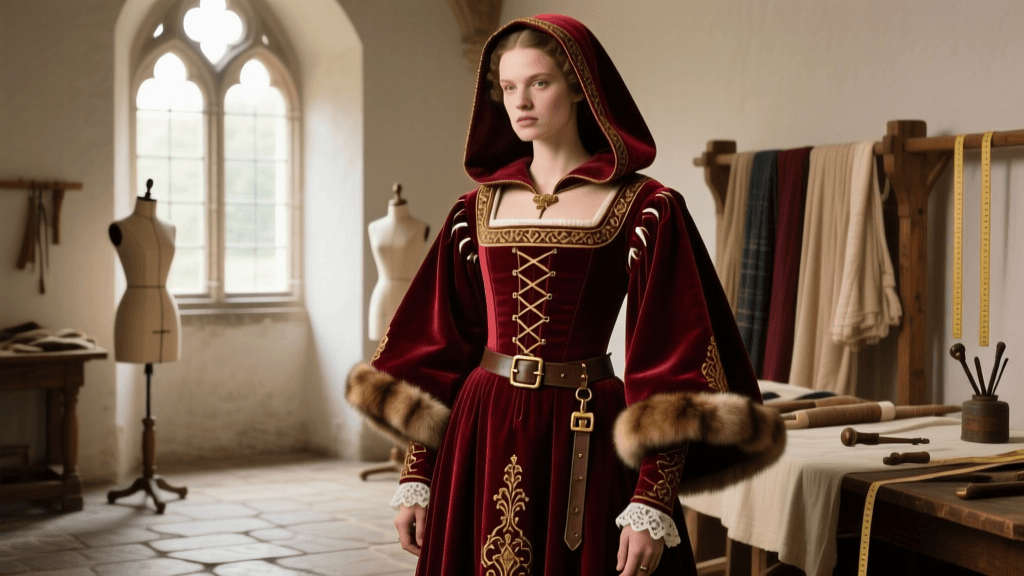
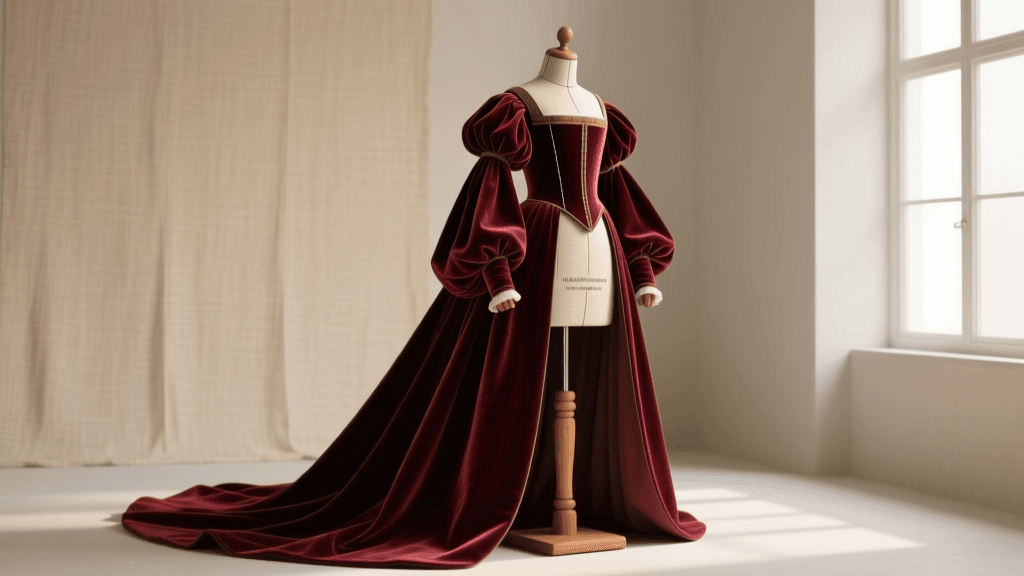
Before cutting into expensive yardage, it is vital to understand the structural elements that define the houppelande. According to the Victoria and Albert Museum's archives on medieval fashion, the garment is characterized by several distinct features that separate it from earlier, more tailored cotehardies:
- The High Collar: Often stiffened and standing up to the ears, sometimes dagged (cut into decorative scallops or leaf shapes) at the edges.
- Pleated Shoulders and Bodice: The fabric is heavily gathered or cartridge-pleated at the neck and shoulders, creating a voluminous drape that is cinched tightly at the natural waist or under the bust with a wide belt.
- The Flared Skirt: Below the belt, the fabric falls in deep, tubular folds to the floor, often featuring a trailing hem for the nobility.
- Grande Assiette Sleeves: The armholes are cut exceptionally deep, extending down to the waist, allowing for massive, sweeping sleeves that can be lined with contrasting fabrics or fur, and often feature elaborate dagging at the cuffs.
2026 Fabric Sourcing and Yardage Guide
Sourcing the correct weight and drape of fabric is the most critical step in recreating medieval European clothing. The houppelande requires heavy, fulled wool to achieve the deep, tubular pleats characteristic of the era. As of 2026, heritage mills in the United Kingdom and Italy have released new runs of historically accurate, broadcloth wools specifically marketed toward the living history community.
Below is a structured breakdown of recommended materials, estimated 2026 market pricing, and yardage requirements for a standard floor-length houppelande (based on a maker who is 5'6" with a 30-inch waist and 40-inch chest).
| Material Type | Weight / Weave | 2026 Est. Cost per Yard | Yardage Needed (Main) | Best Historical Use |
|---|---|---|---|---|
| Fulled Wool Broadcloth | Heavy (16-20 oz) | $45 - $65 | 6 - 8 yards (60" wide) | Outer shell for winter/autumn gowns |
| Wool Flannel / Melton | Medium-Heavy (12-15 oz) | $30 - $45 | 7 - 9 yards (60" wide) | Outer shell for drape-heavy skirts |
| Heavyweight Linen | Medium (7-9 oz) | $20 - $35 | 6 - 8 yards (60" wide) | Summer garments or linings |
| Silk Taffeta / Dupioni | Crisp, Medium | $40 - $75 | 6 - 8 yards (45" wide) | Nobility linings, sleeve contrasts |
| Faux Fur / Recycled Pelts | Short to Medium Pile | $25 - $50 | 4 - 5 yards (60" wide) | Cuff, collar, and hem lining |
2026 Maker's Tip: When purchasing wool for a houppelande, always request a "burn test" sample or buy a swatch first. Modern synthetic blends will not hold the steam-pressed cartridge pleats required for the bodice. You need 100% animal fiber with a high fulled content.
Drafting the Geometric Pattern
Unlike modern clothing, which relies on complex, curved multi-panel patterns to fit the body, 15th-century tailoring was largely geometric. The Metropolitan Museum of Art's Heilbrunn Timeline of Art History notes that medieval tailors prized fabric conservation and structural drape over rigid, seamed tailoring. The houppelande is drafted using basic rectangles, triangles, and circles.
Step 1: The Body Panels
The main body of the houppelande is essentially a massive rectangle or slightly flared trapezoid. To draft the front and back panels:
- Measure from the base of your neck to the floor. Add 4 inches for hem allowance and ground clearance.
- Cut two main panels (front and back) to this length. The width at the top should be enough to wrap comfortably around your shoulders and chest, while the bottom width can be as expansive as your fabric allows (often incorporating triangular gores at the sides to maximize the hem circumference).
- The waist is not seamed; instead, the excess fabric is gathered by the belt. Therefore, the width of the fabric at the waist level must be at least 2.5 to 3 times your actual waist measurement to allow for deep pleating.
Step 2: The Iconic Grande Assiette Sleeves
The grande assiette (great plate) sleeve is a marvel of medieval engineering. The armhole is cut incredibly deep, sometimes reaching down to the waistline, which allows the wearer to raise their arms without lifting the entire heavy gown. To draft this:
- Draw an armhole that extends from the collarbone down to the lower ribcage on both the front and back body panels.
- The sleeve itself is drafted as a large, elongated cone or spiral. The upper circumference must match the massive armhole, while the lower circumference flares out dramatically to create the iconic "bag" or "bell" shape.
- For the trailing sleeve variation (the bombard sleeve), extend the back edge of the sleeve pattern so that it tapers to a point that reaches the floor when the arm is resting at the side.
Mastering Cartridge Pleating and Construction
The defining visual of the houppelande is the tight, tubular pleating at the neck and shoulders. Modern gathering stitches will not create the correct historical silhouette; you must use cartridge pleating (also known as gauging).
The Cartridge Pleating Technique
- Mark the Grid: On the wrong side of your wool, use a water-soluble pen and a ruler to draw a grid of dots. Space the rows 1/2 inch apart, and the dots within each row 1/2 inch apart. Stagger the dots like a honeycomb.
- Run the Threads: Using heavy-duty, waxed linen buttonhole thread, run a series of parallel running stitches through the dots. Do not pull the threads tight yet.
- Pull and Stack: Once all rows are stitched, gently pull the threads simultaneously. The fabric will naturally fold into tight, accordion-like tubes. Tie off the threads securely.
- Attach to the Collar: Whip-stitch the top edge of each individual pleat directly to the inside of your stiffened collar band. This allows the pleats to flare outward beautifully over the shoulders, exactly as depicted in 15th-century Burgundian tapestries.
Bag Lining the Garment
To achieve a clean interior and add weight to the drape, the houppelande should be fully lined using the "bag lining" method. Construct the outer wool shell and the inner linen or silk shell as two completely separate garments. Place them right-sides together, sew the neckline, center front, and sleeve cuffs, and then turn the garment right-side out through the bottom hem. Hand-stitch the hem and the armhole seams closed. This technique, championed by experts at the Medieval Dress Society, ensures no raw edges are visible and gives the garment a heavy, luxurious swing.
Accessorizing the Silhouette
A houppelande is incomplete without the proper accessories to anchor the historical silhouette. In 2026, the artisan market for historically accurate accessories is robust, but knowing what to look for is key.
- The Belt: The houppelande is always worn with a belt. For men, this is a wide leather belt worn at the natural waist or slightly lower on the hips. For women, it is often a narrower, highly decorative belt worn high, just under the bust, to elevate the waistline and support the heavy skirts.
- Headwear: The high collar of the gown frames the face, demanding an equally dramatic headpiece. Women should pair the gown with a hennin (the iconic steeple cone headdress with a flowing veil) or a escoffion (a padded, horned roll). Men should opt for a complex, draped chaperon, utilizing a padded roll and a long, dagged liripipe tail.
- Footwear: The sweeping hem will hide most of your shoes, but historically accurate leather turnshoes with a pointed poulaine toe are essential for wading through the mud of outdoor reenactment events without ruining modern footwear.
Conclusion: Bringing History to Life
Constructing a 15th-century Burgundian houppelande is a labor of love that bridges the gap between medieval artistry and modern craftsmanship. By respecting the geometric drafting methods of the past, investing in high-quality, heavy-weight wools available in today's 2026 heritage textile market, and mastering historical techniques like cartridge pleating, you can create a garment that is not merely a costume, but a living piece of European cultural heritage. Whether you are attending an academic symposium, a high-end historical gala, or a weekend Renaissance festival, the houppelande remains an undeniable testament to the enduring power of medieval fashion.