Reviving the 15th-Century Burgundian Houppelande for 2026 Festivals
The Enduring Legacy of the Burgundian Court
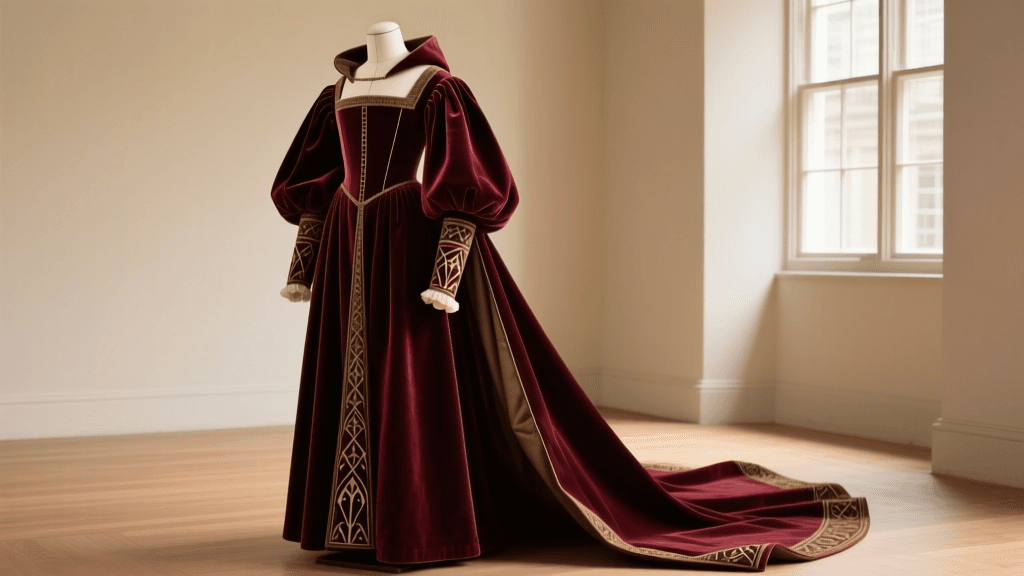
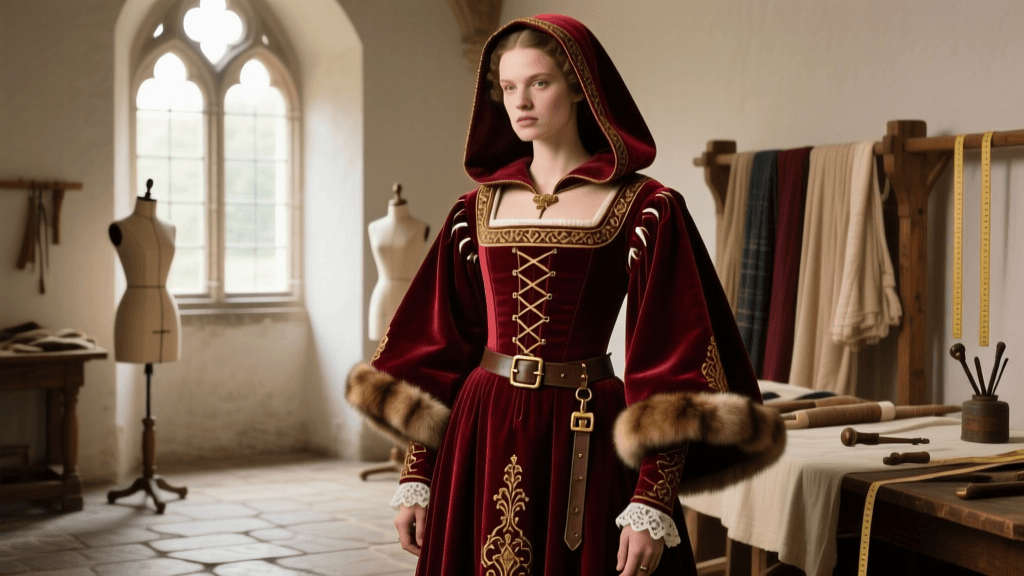
As we enter the 2026 European heritage festival season, the demand for historically accurate, meticulously crafted medieval and Renaissance garments has reached an all-time high. Among the most iconic and visually striking garments of this era is the Burgundian houppelande. Originating in the late 14th century and reaching its zenith in the 15th-century courts of the Dukes of Burgundy, this voluminous, floor-length gown is characterized by its high standing collar, massive belled or bombard sleeves, and deep, structured pleats. According to the Metropolitan Museum of Art's Heilbrunn Timeline of Art History, the transition from the fitted cotehardie to the expansive houppelande represented a monumental shift in European sartorial culture, emphasizing wealth, textile abundance, and dramatic silhouettes.
For modern historical reenactors, folk dress revivalists, and Renaissance festival attendees in 2026, constructing a houppelande is both a rewarding challenge and a masterclass in historical tailoring. Unlike the complex, multi-piece bodices of the later 16th century, the houppelande relies on geometric cutting, gravity, and intricate pleating to achieve its dramatic drape. This comprehensive guide will walk you through sourcing authentic textiles, drafting the pattern, constructing the iconic pleated collar, and accessorizing your garment for the modern festival circuit.
Sourcing Historically Accurate Textiles in 2026
The foundation of any authentic medieval garment lies in its textile. The Burgundian court was famous for its opulent use of heavy wools, rich silk damasks, and voided velvets. In 2026, the global textile market has seen a welcome resurgence in heritage milling, making it easier than ever to source historically appropriate fabrics without relying on synthetic blends.
For the outer shell of a winter or autumn houppelande, a heavy melton wool or broadcloth is essential. Look for fabrics weighing between 14 and 18 ounces per yard. Heritage mills in West Yorkshire, England, and Biella, Italy, are currently producing short-staple, heavily fulled wools that perfectly mimic the dense, wind-resistant broadcloths of the 1400s. As of early 2026, expect to pay between $45 and $65 per yard for authentic, undyed or naturally dyed heritage wool.
For the lining, historical accuracy dictates the use of linen or silk. A medium-weight linen (5.5 to 7 oz) in a natural or bleached white provides excellent breathability and structural support. If you are portraying high nobility, lining the sleeves and collar with silk taffeta or a high-quality cruelty-free faux fur (which has become the ethical standard for 2026 reenactment groups) will elevate the garment's authenticity and warmth. As noted by curators at the Victoria and Albert Museum, the structural integrity and drape of historical garments were heavily dependent on the interplay between the heavy outer wool and the smoother, lighter lining fabrics.
Drafting the Pattern: The Geometry of Volume
The houppelande is not tailored to the body in the modern sense; rather, it is an exercise in geometric draping. The basic pattern consists of large rectangular or half-circle panels that are pleated to fit the neck, shoulders, and waist.
The Body Panels
To draft the body, start with four main panels: two for the front and two for the back. The width of these panels at the hem should be generous—often requiring 4 to 6 yards of fabric circumference at the floor to achieve the correct sweeping drape. The shoulder seams are cut straight, but the neckline is where the magic happens. Instead of a simple curved cutout, the neckline is left relatively wide and straight, allowing the fabric to be gathered or pleated into the standing collar.
The Bombard Sleeves
The sleeves of a Burgundian houppelande are notoriously massive. Draft them as large half-circles or deep bells. The armhole should be cut deeply into the side seam, sometimes extending down to the waist, to allow for the immense volume of fabric at the upper arm. The wrist opening should be wide enough to sweep the floor when the arm is lowered, often featuring a decorative scalloped or dagged edge.
Constructing the Iconic Pleated Collar
The high, standing collar is the defining feature of the 15th-century houppelande. To achieve the stiff, fluted look seen in period tapestries and illuminations, you must master cartridge pleating (also known as pipe pleating).
Begin by cutting a collar band from heavy linen or canvas, interfaced for stiffness, measuring the circumference of your neck plus two inches for overlap. Next, mark parallel lines on the wrong side of your houppelande neckline, spaced about half an inch apart. Using a heavy-duty buttonhole twist or waxed linen thread, sew running stitches along these lines. Once stitched, pull the threads simultaneously to gather the fabric into tight, uniform tubes. Stitch these pleats individually to the inside of your stiffened collar band. This technique not only creates the beautiful fluted aesthetic but also supports the weight of the heavy wool, distributing it evenly across the shoulders.
2026 Material Comparison Chart for Reenactors
Choosing the right fabric combination is critical for both historical accuracy and festival comfort. Below is a comparison of the most popular textile choices for houppelande construction available in the 2026 market.
| Fabric Type | Weight (oz/yd) | 2026 Avg Cost | Drape Quality | Best Application |
|---|---|---|---|---|
| Heritage Melton Wool | 16 - 18 oz | $55 - $70 | Heavy, structured | Outer shell, winter festivals |
| Wool Broadcloth | 12 - 14 oz | $40 - $55 | Fluid, elegant | Outer shell, indoor events |
| Silk Taffeta | 4 - 6 oz | $35 - $50 | Crisp, rustling | Collar lining, sleeve cuffs |
| Medium-Weight Linen | 5.5 - 7 oz | $18 - $25 | Soft, breathable | Full garment lining |
| Silk Damask | 8 - 10 oz | $80 - $120 | Rich, heavy | High nobility outer shell |
Essential Accessories: Hennins, Chaperons, and Tooling
A houppelande is never worn in isolation. To complete the 15th-century Burgundian silhouette, specific accessories are mandatory. Historical context provided by English Heritage highlights that headwear and belts were just as crucial as the garments themselves in denoting social status and regional fashion trends during the late medieval and early Renaissance periods.
For Women: The Steeple Hennin
The steeple hennin is the quintessential Burgundian headdress. In 2026, modern milliners and reenactors construct these using lightweight buckram or thermoplastic wireframes, covered in silk and draped with sheer linen or silk organza veils. The veil should be exceptionally long, often trailing down the back to the hem of the houppelande. To secure it, a velvet brow band is pinned to the hairline, ensuring the heavy cone remains stable during outdoor festival activities.
For Men: The Chaperon
Men pairing a houppelande should opt for the chaperon, a complex headdress evolved from the simple hood. By the mid-15th century, the chaperon was twisted and folded into an elaborate turban-like shape, with the liripipe (the long tail of the hood) draped over the shoulder or wrapped around the neck. Pre-tied, structured chaperons made from fine wool are widely available from specialized historical vendors and offer a secure, authentic look without the daily struggle of wrapping raw fabric.
The Statement Belt
Because the houppelande is so voluminous, a belt is necessary to define the waist (especially for women, who wore it just under the bust, and men, who wore it at the natural waist or hips). Look for wide, tooled leather belts with ornate brass or pewter buckles. The belt should be long enough to hang down the front, often terminating in a decorative metal chape.
Garment Care and Preservation
Investing the time and money into a historically accurate houppelande requires proper maintenance. The heavy wools and structured pleats are susceptible to moisture, moths, and crushing. After a weekend at a heritage festival, always air out the garment in a dry, shaded area. Use a soft-bristled clothes brush to remove dust and dried mud from the wool nap.
Never machine wash a fully lined, pleated houppelande. Spot clean stains with a mild wool detergent and cold water. For deep cleaning, seek out a dry cleaner in 2026 that specializes in historical garments or theatrical costumes, as standard commercial pressing will destroy your cartridge pleats. When storing the garment between seasons, hang it on a wide, padded hanger to support the heavy shoulders. Stuff the standing collar with acid-free tissue paper to maintain its rigid, fluted shape, and store the garment in a breathable cotton canvas bag with natural cedar blocks to deter pests.
Conclusion
The 15th-century Burgundian houppelande remains a masterpiece of medieval textile art and geometric tailoring. By sourcing high-quality heritage wools, mastering the art of cartridge pleating, and pairing the gown with accurate headwear, you can bring the opulence of the Burgundian court to life. As the 2026 historical reenactment and folk dress community continues to prioritize accuracy and craftsmanship, a well-made houppelande will not only turn heads at any festival but will also serve as a lasting testament to the rich sartorial history of Europe.