15th-Century Burgundian Houppelande Sewing Guide 2026
Introduction to the Burgundian Houppelande
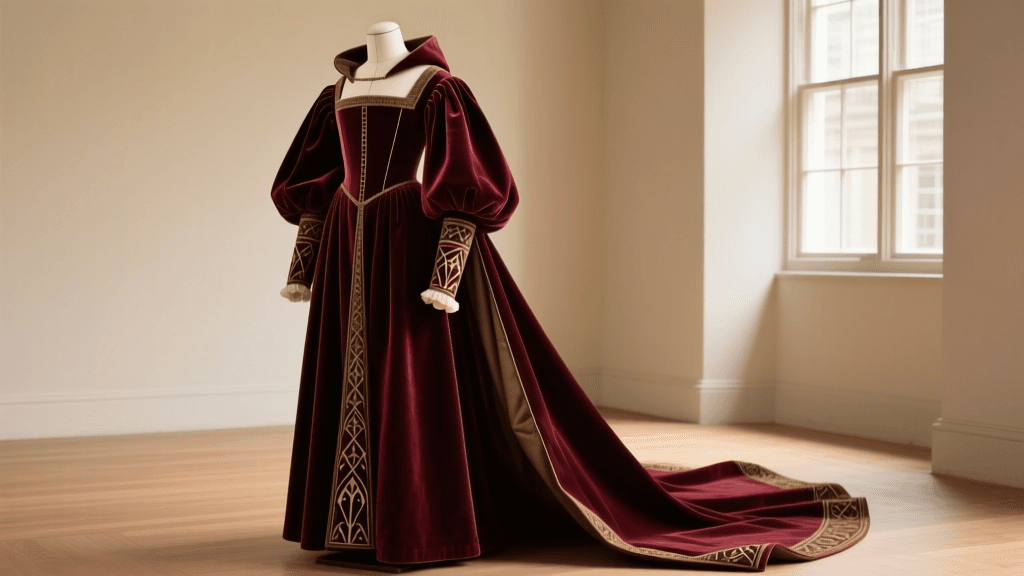
The Burgundian houppelande represents the absolute zenith of late Medieval and early Renaissance European fashion. Originating in the late 14th century and reaching its most extravagant proportions in the 15th-century Burgundian court, this voluminous outer garment is characterized by its massive, flowing sleeves, high collar, and sweeping, floor-length skirt. As we navigate the 2026 historical costuming and reenactment season, the community's emphasis has shifted dramatically away from poly-blend approximations toward rigorous, museum-quality historical accuracy. According to the Metropolitan Museum of Art's Heilbrunn Timeline, the transition from the fitted cotehardie to the draped houppelande marked a profound shift in European tailoring, moving from garments cut to the body's shape to those that relied on the heavy drape of luxurious textiles. This guide provides a comprehensive, actionable framework for constructing an authentic 15th-century houppelande, incorporating the latest 2026 textile market data and advanced historical sewing techniques.
Sourcing Authentic Historical Textiles in 2026
The success of a houppelande relies entirely on the behavior of the fabric. Modern costume wools often lack the density, weight, and fulled finish required to achieve the iconic, sculptural folds seen in period manuscript illuminations. Due to the 2025-2026 shifts in global textile shipping and climate impacts on European sheep farming, sourcing authentic wool broadcloth requires looking to specialized niche weavers in Scotland and Scandinavia. For the elite reproductions, silk damasks and heavy brocades remain the standard, while medium-weight linen is essential for lining the garment to provide structure and comfort. The Europeana Fashion and Costume Archive offers extensive digital access to 15th-century manuscripts, allowing modern makers to study the precise drape and light reflection of historical silks and wools before purchasing yardage.
| Fabric Type | Historical Equivalent | 2026 Avg. Cost (per yard) | Drape Quality | Recommended Supplier Region |
|---|---|---|---|---|
| Heavy Fulled Wool | Broadcloth | $85 - $140 | Excellent, structural | Scotland, Scandinavia |
| Silk Damask | Figured Silk | $110 - $250 | Fluid, luxurious | Italy (Como), India |
| Medium-weight Linen | Holland Linen | $25 - $45 | Crisp, breathable | Ireland, Eastern Europe |
| Recycled / Faux Fur | Vair / Ermine | $40 - $90 | N/A (Ethical alt) | Global Upcycling Markets |
Patterning and Proportions: The Geometry of Drape
Unlike modern garments, which are heavily darted and shaped to the body, the houppelande is cut from geometric primitives—primarily circles, half-circles, and rectangles. This zero-waste approach to historical patterning maximizes the fabric's natural drape. The bodice is typically constructed from rectangular panels with inserted triangular gores to create the massive sweep of the skirt. The latest 2026 guidelines from The Costume Society emphasize that understanding the grainline of historical broadcloth is critical; cutting gores on the bias was rarely done in the 15th century due to the value of the cloth, meaning the drape must be engineered through the sheer volume and weight of the straight-grain panels.
Calculating the Bombard Sleeve
The defining feature of the Burgundian houppelande is the bombard (or angel) sleeve. To pattern this, you must measure from the center back of the neck, over the shoulder, down to the wrist, and then add the desired length for the 'flare' or 'tail' that drags near the floor. For a historically accurate floor-grazing flare, add an additional 30 to 40 inches to your wrist measurement. The sleeve is cut as a massive, curved triangle or half-circle, with the straight edge sewn into the armhole and the curved edge forming the hem of the sleeve. Because of the immense weight of these sleeves, the armhole must be reinforced with a linen stay tape to prevent the wool from tearing under its own weight.
Step-by-Step Construction Techniques
Constructing a garment of this scale requires specialized tools and a methodical approach. Before beginning, ensure you have heavy-duty fabric shears, a wooden tailor's clapper for pressing thick seams, beeswax for strengthening linen thread, and a heavy leather thimble for pushing needles through dense wool.
1. Fabric Preparation and Blocking
Never skip the blocking phase. Wool broadcloth must be steam-pressed and allowed to relax for 24 hours before cutting. This prevents the garment from warping after its first wear. If you are using silk damask, lightly mist it and press with a cool iron to remove any mill folds, ensuring your geometric cuts remain perfectly true.
2. Assembling the Gores and Bodice
Begin by sewing the rectangular bodice panels together, leaving the center front open if you are constructing a front-lacing variation (common in women's styles). Insert the triangular gores into the side and back seams. To achieve a flat, historically accurate finish, press the seam allowances open and secure them using a running stitch with waxed linen thread. This technique, known as 'pricking', was standard in the 15th century and adds immense structural stability to heavy skirts.
3. Constructing and Setting the Sleeves
Bag-line your bombard sleeves with linen before attaching them to the bodice. Sew the outer wool and inner linen right-sides together along the massive curved hem, clip the curves carefully, and turn them right-side out. Use your wooden clapper to press the edge flat. When setting the sleeve into the armhole, gather the top edge slightly to accommodate the shoulder curve, and sew with a heavy backstitch. Reinforce the inside of the armhole seam with a strip of linen binding to distribute the weight of the sleeve across the bodice.
4. Edge Finishing and Fur Trimming
The high collar and center front edges were frequently trimmed with fur or velvet. In 2026, ethical sourcing is paramount; high-quality upcycled vintage furs or premium plush faux-furs are widely accepted in the reenactment community. Cut the fur strips slightly wider than your seam allowance, baste them to the right side of the wool edge, and fold them over to the inside, slip-stitching them securely to the linen lining. This creates a seamless, luxurious roll at the garment's edge.
Accessories: Completing the 15th-Century Silhouette
A houppelande is never worn alone. For women, the garment is typically belted high, just under the bust, with a woven silk or leather girdle, creating the elevated waistline characteristic of the era. The headwear is equally important: the steeple hennin or the padded bourrelet completes the vertical silhouette. For men, the houppelande is often belted at the hips or natural waist, paired with a chaperon (a complex, draped turban-like headdress) and hose. Paying attention to these accessories ensures that the garment is contextualized correctly within the broader scope of European folk and courtly dress.
Conclusion
Recreating the 15th-century Burgundian houppelande is a masterclass in historical textile manipulation. By prioritizing authentic broadcloth and figured silks, respecting the geometric patterning methods of the era, and employing period-accurate hand-finishing techniques, modern makers can achieve a garment that is not merely a costume, but a living piece of European history. As textile markets and historical research continue to evolve through 2026, the dedication to accuracy ensures that the magnificent drape and opulence of the Burgundian court will continue to be understood and appreciated for generations to come.