Viking Smokkr Apron Dress Guide 2026: Weaving & Natural Dyes
Introduction to the Viking Smokkr in 2026
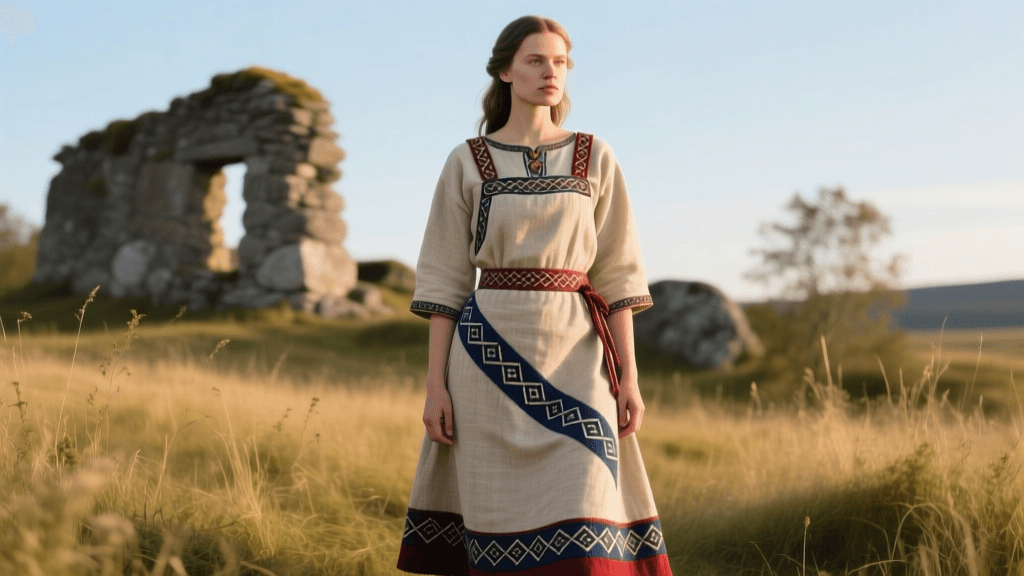
The Viking Age smokkr, commonly referred to as the apron dress or hangerock, remains one of the most iconic and heavily researched garments in European folk dress. As we navigate the historical reenactment and traditional textile revival movements of 2026, the demand for archaeological accuracy has never been higher. Gone are the days of the simplistic, heavily-gathered 'Viking princess' dresses of the early 2000s. Today's artisans, guided by recent 2025 and 2026 textile analyses from Scandinavian universities, focus on precise geometric cuts, historically accurate diamond twills, and authentic botanical dyes.
Whether you are preparing for the 2026 Moesgaard Viking Moot or simply expanding your traditional wardrobe, constructing a historically grounded smokkr requires a deep understanding of Nordic textile traditions. This comprehensive guide will walk you through sourcing heritage fibers, mastering natural dyeing techniques, and drafting patterns based on the latest archaeological consensus.
Sourcing Historically Accurate Textiles
The foundation of any authentic Nordic garment is the cloth. Viking Age weavers primarily utilized wool and linen, with wool being the dominant fiber for outer garments like the smokkr. In 2026, the historical textile market has matured, allowing reenactors to purchase fabrics that closely mimic the thread count and weave structures of the 9th and 10th centuries.
Wool Weaves: Diamond Twill and Herringbone
Archaeological finds from Birka and Hedeby reveal a strong preference for 2/2 diamond twill and herringbone weaves. These structures not only provided excellent drape and warmth but also showcased the weaver's skill. When sourcing wool in 2026, look for heritage sheep breeds such as Norwegian Spelsau, Swedish Gotland, or Icelandic sheep. The yarn should be Z-spun and S-plied, a specific spinning direction that was almost universal in the Viking Age due to the mechanics of drop spindles.
- Thread Count: Aim for 10-14 threads per centimeter in the warp and 8-12 in the weft for a mid-to-high status garment.
- Weight: A fabric weight of 250-350 grams per square meter (GSM) is ideal for a durable, historically accurate apron dress.
- Finish: Avoid modern chemical fulling. The fabric should have a slightly fulled, brushed finish achieved through traditional wet-finishing and teaseling.
According to the National Museum of Denmark, the preservation of textile fragments in metal-rich graves highlights the importance of the weave structure in determining the social status of the wearer. High-status women often wore finer, tightly woven diamond twills dyed in vibrant, expensive colors.
The Underdress: Linen vs. Hemp
Beneath the wool smokkr, women wore a serk (underdress). While linen is the modern default, recent 2026 palynology and fiber analyses suggest that nettle and hemp fibers were far more prevalent in everyday Nordic dress than previously thought. For high-status portrayals, bleached linen remains appropriate, but for everyday working-class impressions, unbleached hemp or nettle cloth provides a highly authentic, durable alternative that breathes exceptionally well during summer encampments.
Natural Dyeing: Madder, Woad, and Weld
Color in the Viking Age was a potent indicator of wealth and trade connections. While the common populace wore undyed wool in natural shades of brown, grey, and white, the elite utilized complex dye vats. In 2026, natural dyeing has seen a massive resurgence, with specialized suppliers offering historically accurate plant matter and mineral mordants.
The Mordanting Process
Before applying color, the wool must be mordanted to ensure the dye bonds to the protein fibers. Clubmoss (Lycopodium) was historically used as an alum accumulator, but modern traditionalists typically use pharmaceutical-grade aluminum potassium sulfate (alum) combined with cream of tartar to replicate the historical mordanting process without over-harvesting rare flora.
The Chemistry of the Woad Vat
Dyeing with woad (Isatis tinctoria) is a masterclass in historical chemistry. Unlike madder, which is a hot-water extraction, woad requires a reduction vat to strip oxygen from the indigotin molecule, making it water-soluble. In 2026, reenactors use organic reduction methods involving madder root, bran, and wood ash to maintain an alkaline, oxygen-depleted environment. When the wool is pulled from the yellow-green vat and exposed to the air, it oxidizes, magically transforming into a deep, colorfast blue.
Botanical Dyes and Outcomes
The following table outlines the primary dyes used in Nordic and Celtic overlapping regions, along with their 2026 market availability and expected color outcomes on a white wool base.
| Dye Source | Historical Name/Origin | Color Outcome | 2026 Cost (per 100g extract) |
|---|---|---|---|
| Madder Root (Rubia tinctorum) | Trade import / Cultivated | Brick Red to Deep Crimson | €18 - €24 |
| Woad (Isatis tinctoria) | Locally foraged / Cultivated | Soft Blue to Deep Navy | €22 - €30 |
| Weld (Reseda luteola) | Locally foraged | Bright Neon Yellow | €15 - €20 |
| Walnut Hulls (Juglans regia) | Locally foraged | Rich Dark Brown (No mordant needed) | €8 - €12 |
'The analysis of textile fragments from the Hedeby harbor confirms that while local dyes like woad were ubiquitous, the presence of madder and silk indicates extensive trade networks reaching into the East and the Mediterranean.' — Centre for Textile Research, University of Copenhagen.
Pattern Drafting and Construction
The construction of the smokkr has been hotly debated among historians for decades. Early interpretations favored a simple wrapped tube, but modern archaeological consensus, supported by finds from Køstrup and Adwick-le-Street, points to a more tailored, closed-front or gored garment.
The Hedeby vs. Birka Cuts
There are two primary patterns utilized by master tailors in 2026:
- The Closed Tube with Gores: Based on the Køstrup find, this pattern features a central front panel with pleated or gathered inserts, flanked by tailored side gores that provide flare and ease of movement. This is ideal for active reenactors.
- The Four-Panel Wrap: Often associated with earlier interpretations of Birka graves, this consists of four distinct rectangular panels suspended from the shoulders. While visually striking, it is less practical for the harsh Nordic winds and is increasingly reserved for high-status, stationary ceremonial portrayals.
Measurements and Historical Ratios
Viking tailors did not use modern measuring tapes; they relied on the body's natural proportions, such as the ell (the distance from the elbow to the tip of the middle finger) and the span. When drafting your pattern in 2026, map out your panels using these historical units to ensure the geometric harmony of the garment. A standard front panel often measures exactly one ell in width, with gores cut from the remaining fabric to minimize waste—a crucial economic consideration in the textile-scarce Viking Age.
Seam Techniques
Machine sewing is strictly forbidden in high-level authenticity circles. All seams must be hand-stitched using waxed linen or silk thread. The most common historical seam is the flat-felled seam, which encloses the raw edges and provides immense structural integrity. For the hem, a simple running stitch followed by a whipstitch ensures the diamond twill does not unravel during festival wear.
Accessories: Turtle Brooches and Tablet Weaving
No smokkr is complete without its functional and decorative hardware. The garment is suspended by woven bands or braided loops attached to a pair of oval 'tortoise' brooches at the shoulders.
Oval Brooches
In 2026, bronze casters utilizing lost-wax casting techniques based directly on 3D scans of museum artifacts have made high-quality, historically accurate brooches more accessible than ever. When selecting brooches, ensure the pin mechanism features a double-coil spring and a secure catchplate, mirroring the engineering of the 9th century. Prices for museum-grade bronze replicas currently range from €120 to €250 per pair.
Tablet Woven Trims
Appliquéd tablet weaving was a hallmark of wealth. The Mammen-style trims, featuring complex geometric and animal motifs, were woven using up to 60 tablets. For a modern reconstruction, starting with a 12-tablet warp using fine 20/2 silk or tightly spun worsted wool will yield a beautiful, durable trim. The Jorvik Viking Trust frequently showcases these intricate weaving techniques in their updated 2026 educational exhibits, highlighting how Celtic knotwork and Nordic animal styles often merged in border regions like York.
2026 Reenactment Standards and Authenticity
As the historical European martial arts (HEMA) and civilian reenactment communities continue to grow in 2026, the standards for 'authentic' dress have become rigorously codified. Organizations across Europe now mandate that visible machine stitching, synthetic dyes, and modern cotton blends result in immediate disqualification from living history encampments.
To ensure your smokkr passes the strictest authenticity checks:
- Submit your textile samples to independent historical textile labs for fiber composition verification if entering high-tier competitions.
- Use only bone, wood, or cast bronze needles for any visible sewing or repairs.
- Avoid the 'layering myth' of wearing excessive, unproven under-layers; stick to a single linen serk (underdress) beneath the wool smokkr.
Constructing a Viking smokkr is more than a sewing project; it is an act of experimental archaeology. By embracing the natural dyes, precise weaves, and hand-stitched seams of our ancestors, we keep the rich tapestry of European folk dress alive and relevant in the modern era.