Alpine Tracht 2026: Bavarian vs Austrian Dirndl Guide
The Renaissance of Alpine Tracht in 2026
As we navigate the 2026 festival season, the traditional Alpine folk dress—collectively known as Tracht—continues to experience a profound cultural renaissance. Far from being a static relic of the past or a mere costume for tourists, the Dirndl and its accompanying garments are living textiles that evolve with contemporary tastes while strictly adhering to historical regional codes. For enthusiasts, collectors, and those attending major European folk festivals this year, understanding the nuanced differences between Bavarian and Austrian Dirndls is essential. According to the Bayerisches Nationalmuseum, the preservation of regional textile heritage has never been more vital, as modern artisans work to balance historical accuracy with sustainable, contemporary manufacturing.
This comprehensive guide breaks down the distinct characteristics of Alpine folk dress by country and region, offering actionable advice on how to identify, wear, and source authentic garments in 2026.
Anatomy of the Dirndl: Beyond the Stereotypes
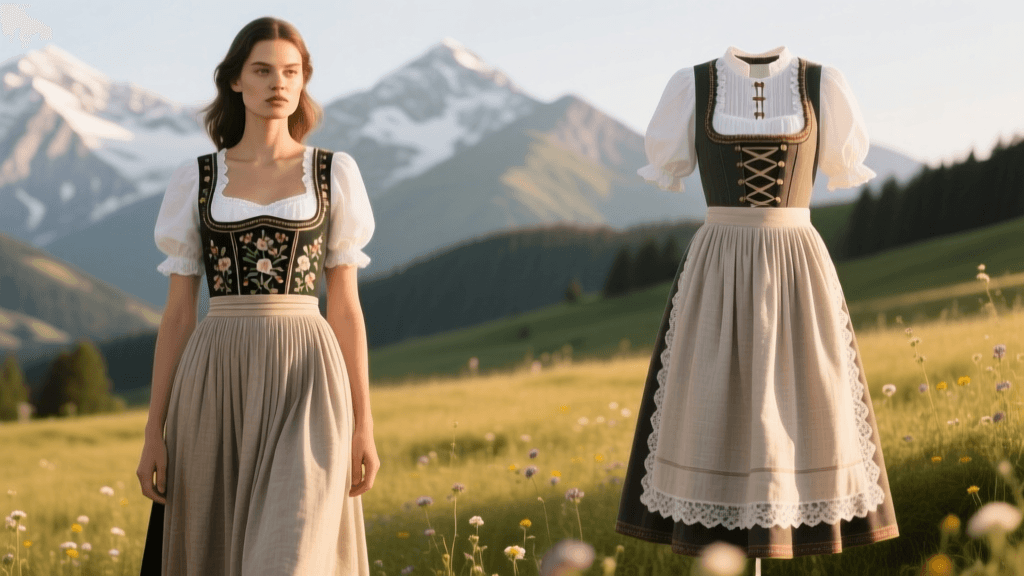
Before diving into regional variations, it is crucial to understand the foundational anatomy of the Dirndl. A genuine traditional Dirndl consists of four distinct components:
- Das Mieder (Bodice): The structured, often tightly fitted upper garment that provides the dress's silhouette. It typically features a front lacing, hook-and-eye closures, or a concealed zipper.
- Der Rock (Skirt): Gathered or pleated at the waist, the skirt's length is a major indicator of regional origin and era. Traditional lengths range from midi (mid-calf) to the modern knielang (knee-length).
- Die Schürze (Apron): A separate piece tied at the front, made of silk, cotton, or linen. The apron is slightly shorter than the skirt and serves as a canvas for regional color palettes.
- Die Bluse (Blouse): Worn beneath the bodice, traditionally white and made of cotton or linen, featuring various necklines (round, square, or heart-shaped) and sleeve lengths.
Bavarian Tracht: The Munich and Upper Bavarian Standard
When most of the world envisions a Dirndl, they are picturing the Upper Bavarian style, heavily influenced by the fashion of Munich and the surrounding Alpine foothills. The Bavarian Dirndl is characterized by its robust construction, elegant but understated color palettes, and a strong emphasis on high-quality natural fibers.
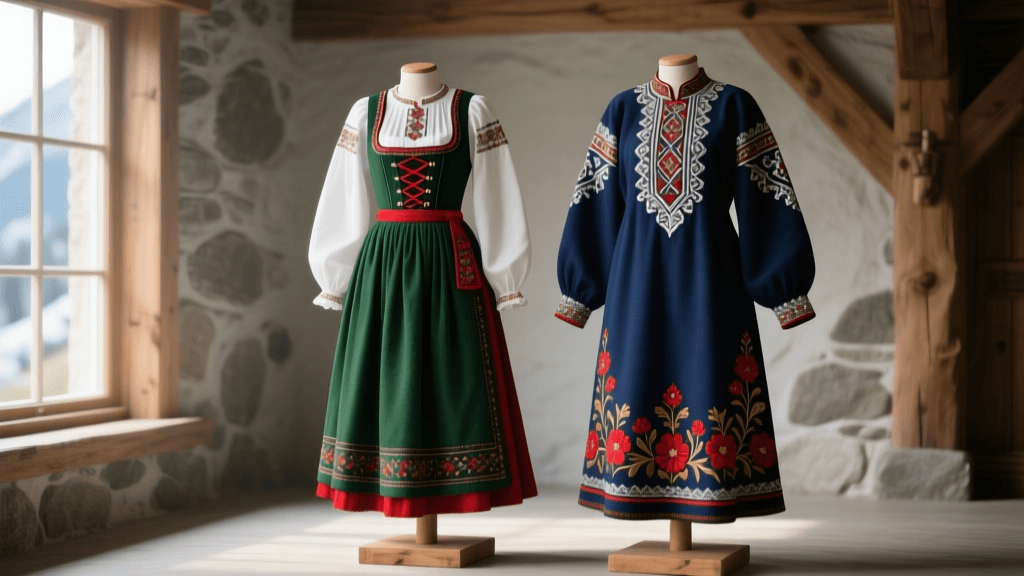
In 2026, the Munich standard favors deep, rich tones such as forest green, navy blue, and burgundy for the bodice, often contrasted with lighter, patterned cotton skirts. The Bavarian style heavily incorporates intricate embroidery, often featuring local flora like edelweiss, oak leaves, or gentian flowers. The Deutscher Trachtenverband (German Tracht Association) notes that authentic Bavarian Tracht strictly avoids synthetic materials, with modern artisans favoring organic linen and ethically sourced wool to maintain the garment's breathability during late-summer harvest festivals.
The Miesbacher and Werdenfelser Styles
Within Bavaria, sub-regional styles dictate specific color combinations. The Miesbacher Tracht, for instance, is renowned for its specific shade of dark green and silver embroidery, while the Werdenfelser style often incorporates lighter, more pastel tones suited for alpine spring celebrations. Bavarian bodices are typically more heavily boned than their Austrian counterparts, providing a rigid, corset-like structure that emphasizes a dramatic waistline.
Austrian Dirndls: Regional Elegance and Heritage
Crossing the border into Austria, the Dirndl takes on a different character. Austrian folk dress is deeply tied to specific valleys and provinces, resulting in a much wider array of highly codified regional variations. The official Austrian cultural heritage portals emphasize that in Austria, a Dirndl is often a marker of local identity, worn not just at festivals, but at weddings, church services, and formal rural events.
Salzburg and the Festive Elegance
The Salzburg Dirndl is perhaps the most elegant of all Austrian variations. It is characterized by a slightly softer bodice construction, often featuring a square neckline that showcases delicate lace or hand-embroidered blouses. Salzburg styles frequently utilize luxurious fabrics like silk damask and brocade, reflecting the city's historical wealth and baroque influences. In 2026, Salzburg tailors are seeing a surge in demand for 'Alt-Salzburger' reproductions, which feature hand-pleated skirts and antique silver coin buttons.
The Ausseer Dirndl: A Study in Color Blocking
Originating from the Salzkammergut lake region, the Ausseer Dirndl is instantly recognizable and strictly codified. It features a very specific color-blocking pattern: a green bodice, a pink (often described as 'old rose') skirt, and a purple or lilac apron. This combination was historically derived from the natural dyes available in the Alpine valleys. The Ausseer style is traditionally worn with a distinctive golden or black silk headpiece known as the Ausseer Hut, and it remains a fiercely protected cultural symbol in Austria.
Tyrolean and Vorarlberg Variations
In the western Austrian states of Tyrol and Vorarlberg, the Dirndl becomes more utilitarian and heavily influenced by the harsher mountain climate. Tyrolean Tracht often features heavier wool skirts, darker colors, and the addition of a Spenser (a short, cropped wool jacket) worn over the bodice. Vorarlberg styles, particularly the Bregenzerwälder Tracht, feature a unique, wide-brimmed black lace hat and a heavily gathered, almost bell-shaped skirt that differs significantly from the streamlined Bavarian silhouette.
Comparative Guide: Regional Folk Dress Variations
To easily distinguish between the major Alpine folk dress styles in 2026, refer to the comparison chart below:
| Feature | Upper Bavarian (Munich) | Salzburg (Austria) | Ausseerland (Austria) | South Tyrol (Italy/Austria) |
|---|---|---|---|---|
| Bodice Structure | Heavily boned, rigid | Softer, flexible fit | Structured but traditional | Fitted, often velvet |
| Primary Colors | Navy, Forest Green, Wine | Pastels, Brocades, Gold | Green, Pink, Purple | Dark Blue, Black, Red |
| Skirt Length | Midi to Knee-length | Midi (mid-calf) | Strictly Midi | Midi to Ankle |
| Signature Accessory | Silver Charivari (chain) | Lace Schal (shawl) | Ausseer Hut (gold hat) | Silk headscarf |
| Best For | Oktoberfest, Beer Tents | Weddings, Galas, Theater | Lake festivals, Summer | Mountain parades, Winter |
The Apron Bow Code: A Timeless Tradition
Regardless of whether you are wearing a Bavarian or Austrian Dirndl, the manner in which you tie the Schürze (apron) bow communicates your relationship status. This code is strictly observed in traditional circles across the Alps:
- Bow on the Left: The wearer is single and potentially open to romantic advances.
- Bow on the Right: The wearer is married, engaged, or in a committed relationship.
- Bow in the Center (Front): Historically indicates that the wearer is a virgin, though in modern 2026 contexts, it is often worn by young girls or simply as a stylistic choice by those unaware of the code.
- Bow in the Center (Back): The wearer is widowed, or, in the case of hospitality staff, it indicates that they are working and should not be approached.
2026 Textile Trends and Sustainable Sourcing
The European folk dress market in 2026 is heavily driven by sustainability and climate adaptation. With September festivals experiencing warmer average temperatures due to shifting climate patterns, traditional heavy wools are being supplemented by innovative, breathable blends. Artisans are utilizing Tencel-linen blends for skirts and organic, unbleached cotton for blouses. Furthermore, there is a massive resurgence in natural dyeing techniques. Madder root (for reds), woad (for blues), and weld (for yellows) are replacing synthetic chemical dyes in high-end bespoke Tracht, appealing to eco-conscious consumers who want their heritage garments to align with modern environmental ethics.
Actionable Buying Guide: Pricing and Measurements
If you are looking to invest in an authentic Dirndl in 2026, it is vital to understand the market tiers and how to measure yourself correctly for online or bespoke orders.
Market Tiers and Pricing (2026 Estimates)
- Mass-Market / Costume (€50 - €120): Made from polyester blends, often featuring zippers and glued-on embellishments. Best avoided if you seek genuine cultural appreciation.
- Mid-Range / Commercial Tracht (€150 - €350): Brands like Krüger or Dirndl.com offer cotton and linen blends with decent construction. Ideal for occasional festival-goers.
- High-End / Designer (€400 - €800): Labels such as Lola Paltinger or Gössl offer premium silks, intricate hand-embroidery, and superior tailoring. These garments are built to last a lifetime.
- Bespoke / Maßgeschneidert (€1,000+): Commissioned directly from a master tailor in Munich, Salzburg, or Innsbruck. Includes multiple fittings, custom natural dyeing, and heirloom-quality construction.
How to Measure for a Dirndl
When ordering online, standard dress sizes (EU 36, 38, etc.) are notoriously unreliable for Tracht, as the bodice requires a much more precise fit than modern fast fashion. You must take the following measurements:
- Bust (Oberweite): Measure around the fullest part of your chest, keeping the tape measure level across your back.
- Underbust (Unterbrustweite): Crucial for the bodice fit. Measure snugly directly beneath the bust line where the Mieder will sit.
- Waist (Taille): Measure at the narrowest part of your natural waist, typically just above the navel.
- Skirt Length (Rocklänge): Measure from your natural waist down to your desired hemline. For a traditional 'Midi' length, the hem should hit approximately 3 to 4 centimeters above the ankle bone.
By understanding these profound regional differences and adhering to the traditional codes of wear, you honor the rich textile heritage of the Alps. Whether you choose the structured elegance of a Bavarian Mieder or the vibrant, color-blocked joy of an Ausseer Dirndl, your 2026 festival attire will be both culturally respectful and sartorially impeccable.