Schuhplattler Dance Tracht: 2026 Bavarian Costume Guide
The Demands of the Schuhplattler: Why Standard Tracht Fails
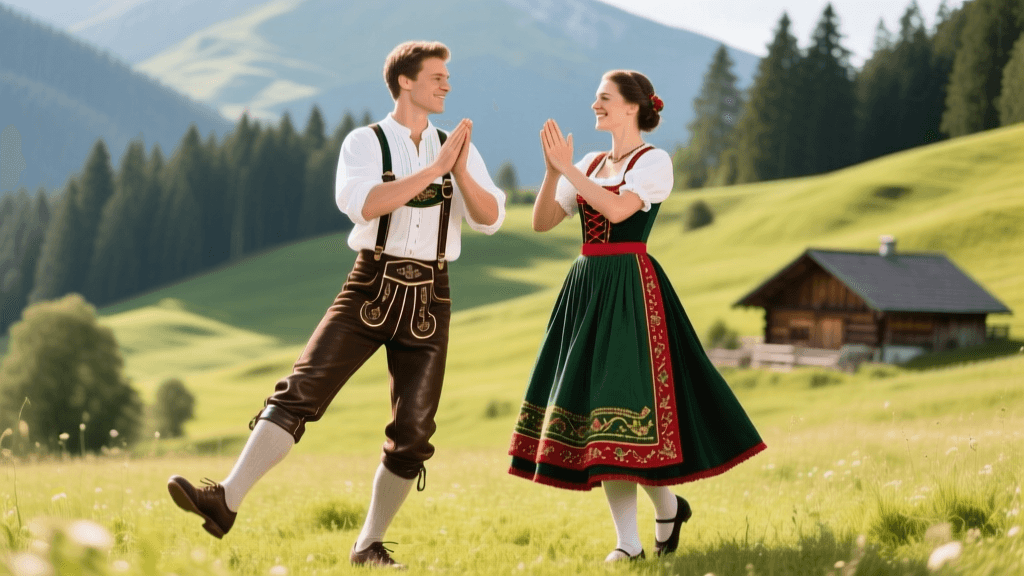
As we enter the 2026 Alpine festival season, the revival of traditional European folk dance has reached new heights, with the Bavarian Schuhplattler leading the charge. This vigorous folk dance, characterized by rhythmic stomping, leaping, and the percussive slapping of thighs, calves, and shoes, requires garments that are engineered for extreme kinetic movement. While commercial fashion Tracht floods the markets ahead of Oktoberfest, these mass-produced garments are entirely unsuited for the rigorous demands of authentic folk dance. A standard fashion Lederhosen will tear at the seams during a high kick, and a rigid, mass-market Dirndl will restrict the torso during rapid rotational sequences.
For dancers participating in the 2026 Gaufeste (regional folk festivals) and competitive Plattler events, the costume is not merely decorative; it is a vital piece of performance equipment. The Bayerischer Trachtenverband (Bavarian Tracht Association) strictly enforces guidelines regarding historical accuracy and functional construction for registered dance groups. Understanding the precise textile and leather specifications required for a dance-ready Tracht is essential for any performer, choreographer, or cultural enthusiast looking to participate in this year's festival circuit.
Anatomy of the Dancer's Lederhosen (2026 Specifications)
The foundation of the male Schuhplattler costume is the Lederhose, specifically the Kurze Lederhose (short leather breeches) or the Kniebundlederhose (knee-breeches). For the percussive slapping that defines the dance, the choice of leather and the cut of the gusset are non-negotiable.
Leather Selection and Acoustic Properties
Authentic dance Lederhosen are crafted exclusively from Hirschleder (deer leather) or high-grade Ziegenleder (goat leather). In 2026, master saddlers and Tracht tailors recommend a leather thickness of exactly 1.2mm to 1.4mm for the front panels. This specific gauge provides the optimal acoustic 'crack' when struck by the dancer's hands, without being so thick that it causes bruising or so thin that it wears through from repetitive friction. The leather must be brain-tanned (sämisch gegerbt) to ensure it remains supple and breathable, allowing the dancer to wash the garment in lukewarm water without it stiffening upon drying.
The Zwickel (Gusset) and Kinetic Tailoring
The most critical structural element for a dancer is the Zwickel, a diamond-shaped gusset inserted into the crotch seam. While commercial pairs feature a narrow 8cm gusset, a professional dancer's Lederhosen requires a 15cm to 18cm Zwickel. This expanded measurement prevents the inseam from ripping during the 'Radl' (wheel) formation, where male dancers execute deep lunges and high lateral kicks. Furthermore, the waistband must sit precisely at the natural waist, secured by a robust 4cm wide cross-back Hosenträger (suspender) system that distributes the weight of the heavy leather and prevents the garment from slipping during vertical leaps.
Embroidery Placement: Protecting the 'Slap Zones'
Regional embroidery (Stickerei) is a hallmark of Bavarian folk dress, with the Miesbacher and Werdenfelser styles being the most prominent in 2026 dance competitions. However, for a Schuhplattler, the placement of this intricate hand-stitched silk thread must be carefully mapped. Master tailors now utilize 3D body-mapping techniques to identify the primary 'slap zones'—the lateral and anterior thigh regions where the hands make contact at high velocity.
In a dance-specific Lederhosen, the raised floral embroidery is deliberately kept to the lower leg panels, the bib (Latz), and the suspenders. Placing dense, raised embroidery on the upper thigh would result in severe skin abrasion for the dancer and rapid degradation of the antique silk threads. The 2026 trend among competitive troupes favors tonal, flat-stitch embroidery in the slap zones, maintaining regional authenticity while prioritizing the performer's physical safety and the garment's longevity.
The Tanzdirndl: Engineering the Skirt and Bodice for Rotation
The female counterpart in the Schuhplattler is the Tanzdirndl, a garment engineered to create a spectacular visual bell-shape during rapid pirouettes while maintaining strict modesty and historical accuracy. The construction of a dance-ready Dirndl differs vastly from the static fashion Dirndls sold in boutique windows.
Skirt Circumference and Fabric Weight
To achieve the iconic 'flair' required for the waltz and polka sequences, the skirt of a Tanzdirndl must possess a minimum circumference of 4.5 meters. In 2026, the preferred textile is a tightly woven organic hemp-linen blend or a high-thread-count Baumwolle (cotton) poplin. These fabrics offer the necessary weight at the hem to keep the skirt anchored during outdoor festival winds, while remaining breathable enough for summer Gaufeste. The hem is typically reinforced with a 5cm wide cotton twill tape (Stoßband) to protect the delicate fabric from dragging on rough wooden stages and alpine gravel.
The Boned Bodice (Mieder)
The bodice of a Tanzdirndl is heavily structured. Unlike fashion corsets that restrict breathing, the Tanzmieder utilizes flexible spiral steel boning encased in cotton channels. This provides vital lumbar support for the female dancers, who must maintain perfect upright posture while executing rapid, multi-directional turns. The neckline is traditionally cut in a square or heart shape, framed by a separately attached, pleated cotton lace trim (Schürze) that is pinned, rather than sewn, allowing for easy laundering and replacement.
Footwear: Haferlschuhe and Trachtenschnürschuhe
The connection between the dancer and the wooden stage is mediated entirely by traditional Alpine footwear. For men, the Haferlschuh is mandatory. This side-lacing shoe features a robust ankle cuff that provides lateral support during heavy stomping. In 2026, competitive dancers are opting for Haferlschuhe with a specialized hybrid sole: a traditional leather base fitted with a micro-cellular rubber insert to absorb the shock of the 'plattler' stomps, reducing long-term joint fatigue without sacrificing the authentic auditory stomp required by the judges.
Female dancers wear the Trachtenschnürschuh, a low-cut, lace-up shoe with a slight 2cm stacked leather heel. The sole must be flexible enough to allow for the articulation of the foot during the waltz, yet durable enough to withstand the friction of constant pivoting. Dancers frequently apply a thin layer of specialized rosin to the soles before stepping onto polished parquet floors to ensure optimal grip during the 2026 indoor festival season.
2026 Sourcing and Cost Comparison for Dance Tracht
Investing in a functional, competition-grade Tracht is a significant financial commitment. Below is a comparative breakdown of the 2026 market for authentic dance costumes, highlighting the differences in construction, turnaround time, and pricing.
| Category | Construction Details | Turnaround Time | 2026 Estimated Cost (EUR) |
|---|---|---|---|
| Bespoke (Maßgeschneidert) | Hand-cut Hirschleder, hand-stitched silk embroidery, custom Zwickel, multiple fittings. | 4 - 6 Months | €2,800 - €4,500+ |
| Made-to-Measure | Pre-selected patterns adjusted to dancer's measurements, machine-assisted embroidery. | 8 - 12 Weeks | €1,200 - €2,200 |
| Off-the-Rack (Standard) | Standardized sizing, cow-leather blends, narrow gusset. Not recommended for competitive Plattler. | Immediate | €350 - €700 |
For serious folk dance troupes, the bespoke route is heavily subsidized by regional cultural grants in Bavaria and Tyrol, ensuring that the heritage of the garment is preserved through master artisans. The Münchner Stadtmuseum frequently hosts exhibitions and workshops in 2026 that connect aspiring dancers with certified Tracht tailors, bridging the gap between historical archives and living performance.
Festival Maintenance: Preserving Leather and Textiles
The summer festival circuit is grueling on traditional garments. Sweat, spilled festival beverages, and alpine dust can rapidly degrade untreated materials. Proper maintenance of the Hirschleder is paramount. After a weekend of performances, the Lederhosen must be brushed with a soft-bristled horsehair brush to remove surface dirt. If the leather becomes saturated with sweat, it should be allowed to air dry away from direct sunlight or heat sources, which will bake the natural oils out of the hide.
Once dry, dancers must massage a specialized deer-fat based conditioner (Hirschtalg) into the leather to restore its supple, water-resistant properties. The Dirndl skirts and aprons must be washed in cold water with a pH-neutral textile detergent, and the intricate pleats must be re-pressed using a steam iron and a cotton pressing cloth to maintain the sharp, accordion-like folds that allow the skirt to open uniformly during a spin.
Conclusion
The Schuhplattler is more than a dance; it is a kinetic expression of Alpine history, and the Tracht is its vital medium. As the 2026 festival season unfolds across Bavaria, Austria, and South Tyrol, the dedication to authentic, functionally engineered folk dress ensures that this vibrant cultural heritage continues to thrive. By prioritizing acoustic leather properties, kinetic tailoring, and historical accuracy, modern dancers honor the artisans of the past while pushing the physical boundaries of European folk performance.