2026 Alpine Dance Festivals: Authentic Tracht & Dirndl Guide
The Intersection of Rhythm and Textile: Understanding Schuhplattler
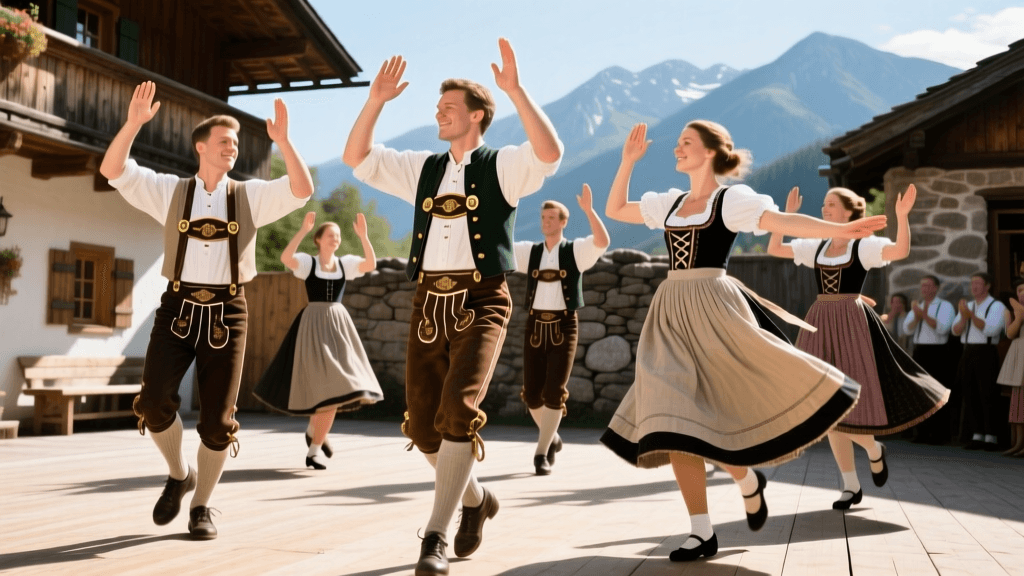
As the 2026 Alpine folk dance season approaches, thousands of performers and cultural enthusiasts are preparing for the highly anticipated Gaufest circuit and regional summer festivals. At the heart of these celebrations is the Schuhplattler, a traditional Bavarian and Tyrolean folk dance characterized by rhythmic stomping, clapping, and the striking of shoes, thighs, and knees. While the dance itself is a spectacular display of agility and endurance, it is inextricably linked to the garments worn by the performers. Authentic Tracht (traditional folk dress) is not merely a costume; it is a functional, engineered textile system designed to withstand rigorous kinetic movement while producing specific acoustic effects.
For dancers participating in the 2026 festival season, understanding the precise construction, material sourcing, and functional requirements of both the Lederhosen and the Dirndl is essential. Mass-market tourist apparel simply cannot survive the demands of competitive folk dance, nor does it honor the sartorial heritage preserved by organizations like the Bayerischer Trachtenverband (Bavarian Tracht Association). This guide breaks down the exact specifications required for authentic dance-grade Tracht in 2026.
The Biomechanics of the Plattler: Why Garment Specs Matter
The Schuhplattler is a dance of percussive friction and centrifugal force. Male dancers (Buam) must strike their leather breeches with enough force to create a sharp, resonant crack that carries over the sound of brass bands and accordions. Female dancers (Madln) execute rapid, continuous spins (Drehen), requiring their skirts to flare into a perfect, gravity-defying bell shape. If the leather is too stiff, it restricts high kicks; if the skirt lacks adequate circumference, the visual impact of the spin is lost, and the dancer's balance can be compromised. Therefore, the 2026 standard for festival Tracht demands a meticulous balance of durability, flexibility, and aerodynamic tailoring.
Lederhosen for the Buam: Engineering the Perfect Slap
Leather Selection and Tanning
For competitive Schuhplattler, the material of the Lederhosen is non-negotiable. Authentic dance breeches must be crafted from Hirschleder (deer leather) or premium Rehleder (roe deer). Cowhide is entirely unsuitable; it is too heavy, lacks the necessary acoustic resonance, and causes severe chafing during the deep squats and high kicks inherent to the dance.
The tanning process is equally critical. Artisans utilize Sämischgerbung (oil tanning), a centuries-old method that uses cod liver oil to cure the hides. This process yields a leather that is incredibly supple, breathable, and, most importantly, washable. Given the intense physical exertion of summer festivals, the ability to gently wash sweat and dirt from the leather without ruining the hide is a mandatory feature for 2026 dance tracht. The ideal thickness for a dancer's Lederhosen is between 1.2mm and 1.4mm. This specific gauge provides enough structural integrity to produce a loud, sharp Plattln (slapping) sound, while remaining flexible enough for unhindered movement.
Cut, Suspenders, and Footwear
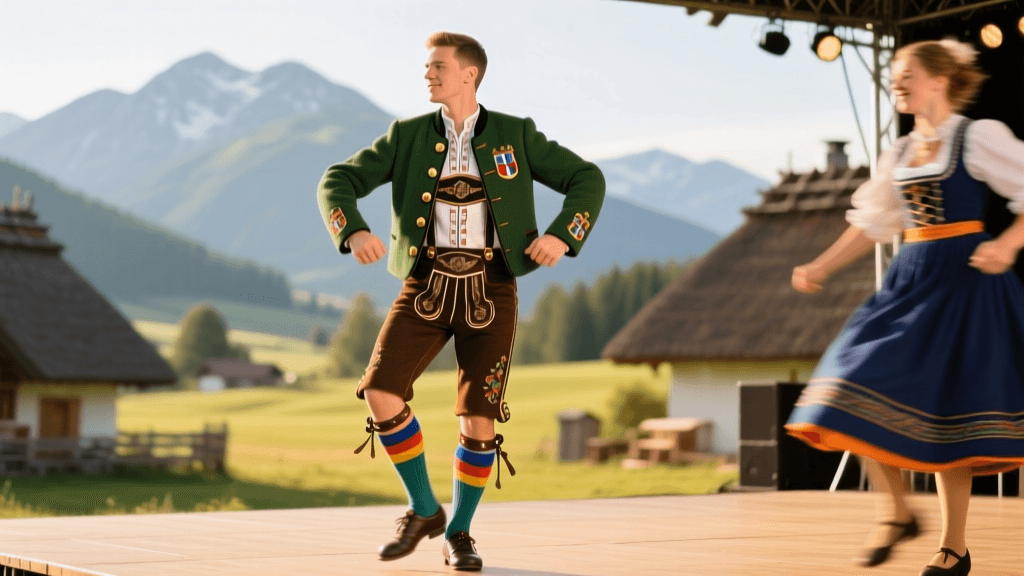
Dancers exclusively wear Kurze Lederhosen (short breeches ending above the knee). The cut must allow for a full range of motion in the hip flexors. The front flap, or Latz, is heavily embroidered with regional motifs (such as oak leaves or edelweiss) and secured with horn buttons. Suspenders (Hosenträger) are typically worn in an H-shape or cross-back configuration, featuring a heavily embroidered chest piece (Ranzen) that sits flat against the body to avoid interfering with arm movements during the dance.
Footwear consists of traditional Haferlschuhe. For the 2026 festival circuit, dancers are moving away from mass-produced rubber soles and returning to Goodyear-welted leather soles with specialized hobnails or rubber-grip inserts to prevent slipping on polished wooden dance floors while maintaining the percussive stomp required by the choreography. Expect to invest between €650 and €1,200 for bespoke, dance-grade Hirschleder Lederhosen in 2026, with Haferlschuhe adding another €180 to €250.
The Dirndl for the Madl: Aerodynamics of the Spin
Skirt Width and the 'Drehen'
The female Dirndl is a masterclass in textile engineering, specifically designed to maximize the visual spectacle of the Drehen (spin). The most critical component is the Kittel (skirt). A standard fashion Dirndl might feature a gathered skirt with a hem circumference of 1.5 to 2 meters. However, for folk dance, this is woefully inadequate. A true dance-grade Dirndl requires a full-circle or multi-gathered skirt with a hem circumference ranging from 3.5 to 4.5 meters.
This massive amount of fabric, often crafted from a structured cotton-linen blend or high-density poplin, catches the air during the spin, creating the iconic, perfectly horizontal bell shape. To prevent the lightweight fabric from tangling around the dancer's legs, the hem is often finished with a subtle, weighted cotton tape or a specific Tanzrüsche (dance ruffle) that provides centrifugal stability. The length of the skirt is strictly Midi (falling just below the knee or mid-calf), ensuring modesty and safety during high-kicking choreography.
Bodice Structure and Apron Etiquette
The Mieder (bodice) must provide rigorous postural support. Dance Dirndls feature internal steel or heavy synthetic boning and are lined with breathable cotton. This structure supports the dancer's core during vigorous jumping and spinning, preventing the garment from shifting or bunching. The accompanying Bluse (blouse) is typically made of crisp white batiste or linen, featuring a Karrée-Ausschnitt (square neckline) that remains secure during movement.
The Schürze (apron) is tied using the traditional knot code to indicate relationship status (left for single, right for taken, middle for virgin/young girl, and back for widow). However, for competitive dance, the bow is tied exceptionally tight and the excess ribbon is often tucked discreetly into the skirt's waistband to prevent it from whipping into the dancer's face or her partner's hands during complex partnered routines.
2026 Sourcing Guide: Mass-Market vs. Bespoke Tracht
When outfitting a dance troupe or purchasing personal festival gear for the 2026 season, it is vital to distinguish between commercial party-wear and authentic Tracht. The Bayerisches Trachtenkulturzentrum (Bavarian Tracht Culture Center) frequently highlights the degradation of traditional craftsmanship in favor of fast fashion. Below is a comparison of what to look for when sourcing garments for the festival circuit.
| Garment Component | Mass-Market 'Festival' Grade (2026) | Authentic Dance-Grade Tracht (2026) | Impact on Schuhplattler Performance |
|---|---|---|---|
| Lederhosen Leather | Cowhide, Chrome-tanned (1.0mm) | Deer/Hirschleder, Oil-tanned (1.3mm) | Mass-market leather produces a dull thud and causes severe chafing during high kicks. |
| Dirndl Skirt Width | 1.5 - 2.0 meters hem circumference | 3.5 - 4.5 meters hem circumference | Narrow skirts fail to achieve the 'bell' shape and tangle around the legs during spins. |
| Footwear | Rubber-soled fashion boots or pumps | Goodyear-welted Haferlschuhe / Trachtenschuhe | Fashion soles slip on wooden floors and lack the ankle support needed for stomping. |
| Bodice Structure | Light plastic boning, polyester blends | Steel boning, natural linen/cotton exterior | Poor posture support leads to fatigue and garment shifting during vigorous jumping. |
Regional Variations for the 2026 Festival Circuit
Authenticity in European folk dress is deeply tied to regional geography. When attending or competing in the 2026 Gaufest, dancers must adhere to the specific Trachtenordnung (dress code) of their respective regions. The Miesbacher Tracht is renowned for its dark, subdued color palette, intricate silk embroidery, and the distinct Miesbacher Hut (hat) adorned with eagle feathers or hair. Conversely, the Werdenfelser Tracht from the Garmisch-Partenkirchen region features brighter colors, different lapel cuts on the Lederhosen, and a unique style of silk neckerchief (Halstuch) tied with a specialized silver ring. Mixing regional elements is considered a major faux pas in competitive circles and is heavily penalized by judges.
Garment Care and Maintenance for Dancers
Maintaining dance-grade Tracht requires specialized care, especially after a long weekend of summer festivals. Oil-tanned Hirschleder can be washed by hand using lukewarm water and a specialized leather soap or mild saddle soap. The Lederhosen must be massaged while damp to retain its suppleness and allowed to air dry away from direct sunlight or radiators, which will bake the natural oils out of the hide, causing it to crack. Dirndl skirts should be dry-cleaned only if heavily soiled; otherwise, spot cleaning and steam-pressing the pleats is recommended to maintain the structural integrity of the weighted hem.
"The Tracht is not a static museum piece; it is a living, breathing garment that moves with the people. When a dancer steps onto the floor, the textile must become an extension of their own body, responding to the rhythm of the music and the history of the region."
— Archival Guidelines, Haus der Bayerischen Geschichte
Conclusion
Preparing for the 2026 Alpine folk dance festivals requires a commitment to authenticity, quality, and functional design. By investing in properly tanned Hirschleder, meticulously engineered Dirndl skirts, and regionally accurate accessories, dancers not only elevate their own performance but actively participate in the preservation of Europe's most vibrant living textile traditions. Whether you are a seasoned competitor or a first-time festival attendee, respecting the biomechanics and history of the Tracht ensures that the legacy of the Schuhplattler will continue to resonate for generations to come.