Schuhplattler Dance Costumes 2026: Festival Dirndl And Lederhosen
The Cultural Resurgence of the Schuhplattler in 2026
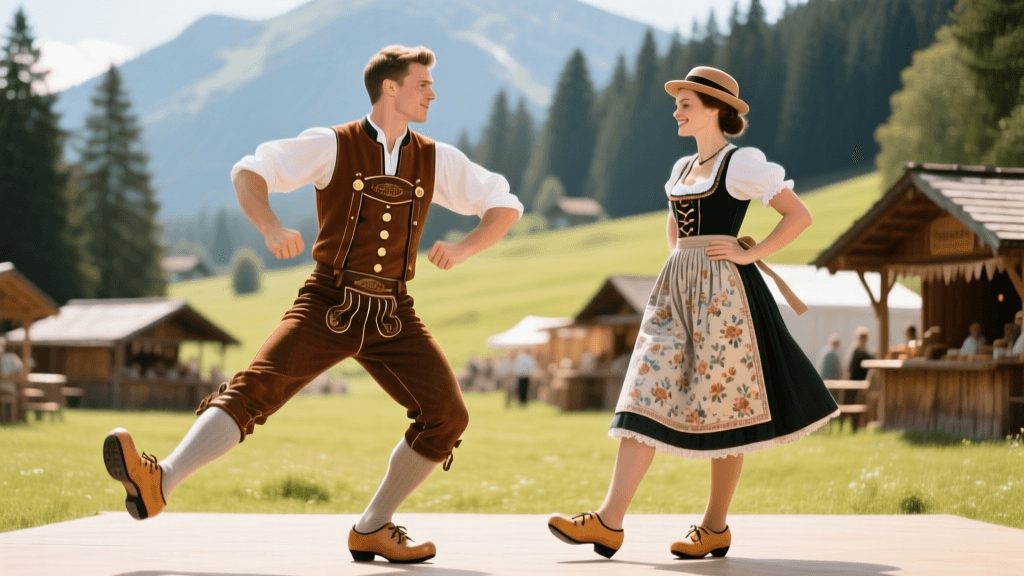
As the 2026 European festival season approaches, traditional folk dances are experiencing a massive renaissance, moving beyond mere tourist spectacles to become vibrant expressions of living heritage. At the heart of this movement in the Alpine regions of Bavaria, Tyrol, and Salzburg is the Schuhplattler. This energetic, percussive folk dance requires performers to leap, stomp, and rhythmically slap their thighs, knees, and shoe soles. For the female dancers, the routine involves rapid, centrifugal spinning that transforms the traditional skirt into a perfect, floating bell.
Participating in major 2026 events—such as the Maibaumaufstellen (Maypole festivals), Almabtrieb (alpine cattle drives), and regional Oktoberfest celebrations—demands more than just any costume off the rack. It requires authentic Tanztracht (dance costume). The physical demands of the Schuhplattler dictate that garments must be engineered for extreme mobility, friction resistance, and structural integrity. According to the Bayerischer Trachtenverband (Bavarian Folk Costume Association), preserving the authenticity of these garments is paramount, as the cut and material directly influence the execution and historical accuracy of the dance.
The Anatomy of a Dance-Ready Lederhosen
When observing a male Schuhplattler dancer, the Lederhosen is not merely a garment; it is the percussion instrument. The slapping of the leather against the skin and hands produces the sharp, cracking sounds that define the dance's rhythm. However, a standard commercial festival Lederhosen will quickly tear at the seams or restrict movement during high kicks.
Material and Tanning
Authentic dance Lederhosen in 2026 are crafted exclusively from Hirschleder (deerskin) or high-grade Rehleder (doeskin), treated using the traditional Sämischgerbung (oil tanning) process. This method uses fish oil and natural fats, resulting in a leather that is incredibly soft, breathable, and washable. Unlike chrome-tanned leathers found in fast-fashion festival wear, Sämisch-tanned deerskin stretches and molds to the dancer's body, allowing for the deep squats and explosive leaps required in the Plattler without chafing or tearing.
Cut, Fit, and Embroidery
The cut of a dance-specific Lederhosen is notably shorter than modern fashion variants, typically ending just below the knee to allow complete articulation of the joint. The waistband must sit high and tight, secured by robust horn buttons, to prevent the heavy leather from shifting during stomping. The Hosenträger (suspenders) are cross-back style, heavily embroidered with Federkielstickerei (peacock quill embroidery) or silk thread depicting regional flora like the Edelweiss or Alpenrose. This embroidery is not just decorative; the dense stitching reinforces the leather straps against the immense tension generated by the dancer's movements.
The Dirndl: Engineering for Centrifugal Force
While the male dancers provide the percussive foundation, the female dancers provide the visual spectacle through the Drehen (spinning). A dance-ready Dirndl is a marvel of traditional textile engineering, designed to flare out perfectly while remaining securely anchored to the body.
Skirt Pleating and Apron Dynamics
The Rock (skirt) of a Tanztracht Dirndl is the most critical component for a dancer. In 2026, master tailors utilize deep, precise knife pleats or cartridge pleating at the waistband, rather than simple gathers. This allows the heavy wool or high-grade cotton skirt to remain flat against the hips when standing, but explode outward into a flawless horizontal disc when spinning. The hem is often weighted with a subtle, hidden cord or heavy bias tape to maintain the skirt's shape against wind and centrifugal force.
The Schürze (apron) must be tied using the traditional regional knot, but for dancers, it is often subtly secured with hidden interior loops or weighted at the bottom corners. This prevents the apron from flying up and exposing the dancer during vigorous choreography, maintaining modesty and historical decorum as emphasized by cultural preservationists at the Munich Official Cultural Portal.
Bodice Support and Blouse Mobility
The Mieder (bodice) must offer corset-like support without restricting the diaphragm, as the Schuhplattler requires immense cardiovascular stamina and deep breathing. Authentic bodices feature internal stiffening with reed or synthetic whalebone and are laced with silk ribbons. The accompanying Bluse (blouse) is cut with gussets under the arms and features generous sleeves to allow the dancer to raise her arms gracefully above her head during the partner-swapping sequences of the dance.
Footwear: The Foundation of the Stomp
You cannot execute a proper Schuhplattler in modern rubber-soled shoes. The traditional Haferlschuhe (Bavarian alpine shoes) are mandatory for male dancers. These shoes feature a distinct side-lacing system that secures the ankle, preventing sprains during lateral leaps. The soles are made of thick, nailed leather. The metal hobnails provide the necessary grip on wooden festival stages and alpine grass, while the leather heel produces the authentic, resonant 'clack' when the dancer strikes his soles together in mid-air.
Female dancers wear Trachtenschuhe with a sturdy, low block heel and an ankle strap. The soles are smooth leather, allowing for the rapid pivoting and spinning required on wooden dance floors without catching and causing knee injuries.
Regional Variations in Festival Tracht
When attending festivals in 2026, keen observers will notice that the Tanztracht varies significantly by region, reflecting local history and dialect.
- Miesbacher Tracht: Known for its dark, subdued colors, grey Loden jackets, and specific green velvet lapels. For the dance, the jacket is removed, revealing intricate suspenders and a distinct, flat-crowned hat adorned with a Gamsbart (chamois beard).
- Werdenfelser Tracht: Lighter in color, often featuring a distinct blue or grey hue. The embroidery is highly floral, designed to catch the sunlight during outdoor Maibaum festivals.
- Inntaler Tracht: Originating from the Inn valley, this style incorporates brighter colors and a heavier emphasis on silver coin jewelry (Kropfkette) for women. Dancers must secure these heavy necklaces tightly to prevent them from swinging and causing injury during vigorous routines.
Sourcing Authentic Dance Costumes in 2026
Acquiring a genuine Tanztracht is an investment in heritage. In 2026, the lead time for custom-tailored dance Lederhosen and Dirndls from heritage ateliers in Munich, Garmisch-Partenkirchen, or Salzburg can range from six to ten months. Prices reflect the artisanal labor involved, with bespoke deerskin Lederhosen starting around €1,200 and hand-pleated dance Dirndls averaging €800 to €1,500.
For those on a tighter budget or timeline, specialized Trachten rental houses in Bavaria and Tyrol offer high-quality, dance-grade garments that far surpass the synthetic alternatives sold in tourist traps. When purchasing off-the-rack, buyers must scrutinize the material composition labels, ensuring 100% natural fibers and genuine leather.
Comparison: Fast-Fashion vs. Authentic Tanztracht
| Feature | Fast-Fashion Festival Wear | Authentic Tanztracht (2026 Standard) |
|---|---|---|
| Material | Synthetic blends, faux leather, polyester | 100% Sämisch-tanned Hirschleder, virgin wool, linen |
| Skirt/Durability | Static cut, tears under tension, poor drape | Deep knife pleats, reinforced waistband, weighted hem |
| Embroidery | Machine-printed, glued, or cheap acrylic thread | Hand-stitched Federkiel (quill) or pure silk thread |
| Price Range | €40 - €120 | €800 - €2,500+ |
| Lifespan | 1-2 festival seasons | Generational (50+ years with proper care) |
| Dance Suitability | Restricts movement, high risk of seam failure | Engineered for leaps, spins, and percussive slapping |
Conclusion
The Schuhplattler is a visceral, demanding, and deeply historical folk dance that serves as a living bridge to Europe's alpine heritage. As we navigate the 2026 festival calendar, the distinction between wearing a 'costume' and donning 'Tracht' has never been more pronounced. By investing in authentic, movement-ready Lederhosen and Dirndls, dancers not only protect themselves from the physical rigors of the performance but also honor the centuries-old textile traditions that continue to define European folk culture. Whether you are stomping on a wooden stage in Tyrol or spinning through a Maypole festival in Bavaria, the right garments ensure that the rhythm of the ancestors beats on, unbroken and resplendent.