Ancient Greek Chiton Draping Guide 2026: Doric vs Ionic
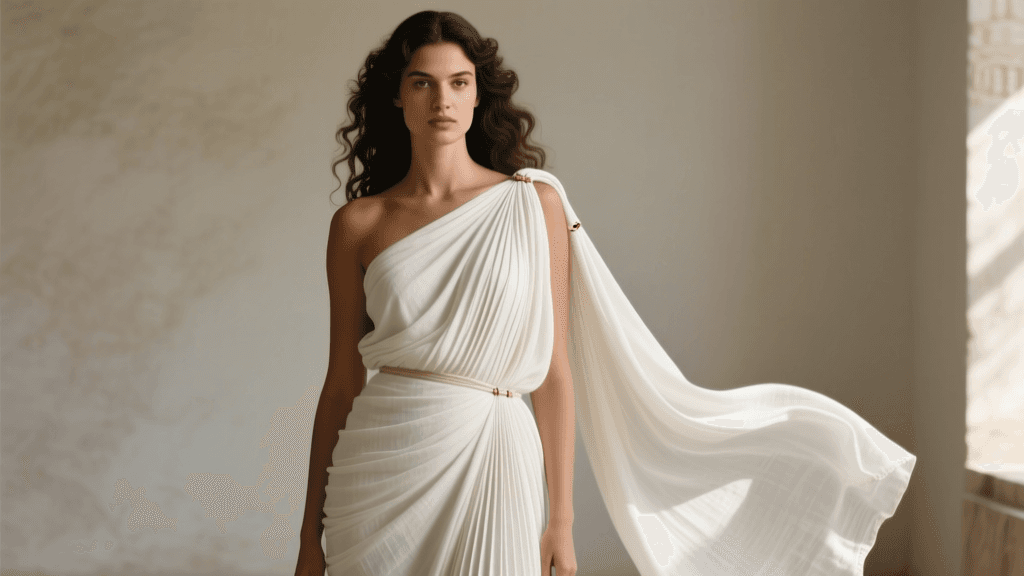
The year 2026 has ushered in a remarkable renaissance for historical garment reconstruction and sustainable, zero-waste fashion. As modern makers and historical reenactors seek alternatives to heavily tailored, waste-producing clothing, the ancient Greek and Roman draped garments have emerged as the pinnacle of elegant, functional design. At the forefront of this classical revival is the chiton, a versatile, rectangular garment that defined the silhouette of antiquity. Whether you are preparing for a contemporary Hellenic festival, a theatrical production, or simply integrating historical draping into your 2026 sustainable wardrobe, mastering the chiton is essential.
The Foundations of the Chiton and Peplos
Unlike modern clothing, which is cut from patterns and sewn into rigid shapes, ancient Greek dress was fundamentally based on the draping of uncut, rectangular woven textiles. According to the Metropolitan Museum of Art's Heilbrunn Timeline of Art History, the fundamental principle of ancient Greek dress was the use of the loom-woven rectangle, which was wrapped, folded, and pinned around the body. This approach meant that the garment was entirely modular and could be adjusted to fit any body type, making it a highly inclusive and sustainable form of dress.
The two primary variations of this draped garment are the Doric chiton (often referred to interchangeably with the peplos in women's dress) and the Ionic chiton. While both utilize rectangular fabric, their construction, pinning methods, and resulting silhouettes differ significantly.
Doric vs. Ionic Chiton: A 2026 Structural Comparison
Understanding the structural differences between the Doric and Ionic styles is critical for achieving an authentic historical silhouette. Below is a comprehensive comparison to help you choose the right style for your needs.
| Feature | Doric Chiton (Peplos) | Ionic Chiton |
|---|---|---|
| Fabric Weight | Heavyweight wool or dense linen (250+ GSM) | Lightweight linen, cotton, or silk crepe (120-180 GSM) |
| Overfold (Apoptygma) | Yes, typically 10-15 inches deep | No, though fabric can be bloused over the belt |
| Shoulder Fastening | Single large pin (fibula/peronē) on each shoulder | Multiple small pins or buttons along the entire arm |
| Sleeve Effect | Sleeveless or short cap sleeve | Long, flowing false sleeves formed by multiple pins |
| Side Seams | Left side folded and pinned, or sewn; right side open | Usually sewn into a tube, or pinned continuously |
Sourcing Authentic, Sustainable Fabrics in 2026
The success of your chiton relies entirely on the drape and weight of your textile. In 2026, the sustainable textile market offers exceptional options that closely mimic ancient hand-woven fabrics without the prohibitive cost of artisanal loom-weaving.
- For the Doric Chiton: Seek out 100% European Flax-certified heavyweight linen or lightweight wool crepe. A fabric weight of 7 to 9 ounces per square yard (approx. 230-300 GSM) provides the necessary structural rigidity to hold the deep folds of the overfold while allowing the hem to swing elegantly.
- For the Ionic Chiton: Opt for medium-weight, semi-sheer linen or organic cotton voile (4 to 5.5 oz/yd² or 130-180 GSM). The Ionic style relies on gathering and fine pleating; a fabric that is too heavy will look bulky at the shoulder pins and waist.
Pro-Tip for Modern Makers: Ancient looms produced fabric exactly to the width required for a single garment, meaning the selvedge edges served as the top and bottom hems, requiring zero cutting. Modern 2026 fabrics are typically sold in 54-inch or 72-inch widths. To maintain historical accuracy and a zero-waste ethos, do not cut your fabric. Instead, purchase the exact yardage needed for your height and fold the excess width into deep pleats at the waist, or hem the raw edges to simulate the ancient selvedge.
Step-by-Step Draping Instructions
Draping the Doric Chiton (Peplos Style)
- Measure the Fabric: The width should be your arm span (fingertip to fingertip) plus 12 inches for ease. The height should be the distance from your shoulder to the floor, plus 12 inches for the overfold and hem allowance.
- Create the Overfold: Fold the top 12 inches of the fabric downward, creating a deep cuff (the apoptygma) across the entire width.
- Wrap the Body: Wrap the fabric around your body with the fold facing outward. The left side should overlap the right side slightly.
- Pin the Shoulders: Gather the front and back layers (including the overfold) at your shoulders. Secure them using heavy, historically accurate bronze or brass ring-fibulae or straight peronē pins.
- Belt the Waist: Tie a woven wool zonē (belt) around your waist. You can either belt over the overfold for a high-waisted look, or tuck the overfold up and over the belt to create a bloused effect (kolpos), which allows you to adjust the hemline to your exact ankle height.
Draping the Ionic Chiton
- Measure the Fabric: The width must be much wider—at least twice your arm span—to allow for the extensive gathering and false sleeves. The height is shoulder to floor plus 6 inches.
- Sew or Pin the Tube: Sew the left and right edges together to form a massive cylinder, or leave them open to pin continuously later.
- Mark the Shoulder Points: Starting from the center front, mark equidistant points along the top edge of the fabric. Do the same for the back.
- Pin the Sleeves: Using small, decorative fibulae or sewn rosettes, pin the front and back marks together along the arms. This creates the iconic flowing, multi-buttoned sleeve effect of the Ionic style.
- Belt and Blouse: Secure the waist with a thin leather or braided cord belt, and pull the excess fabric up and over the belt to create a deep, elegant kolpos that hides the waistline and adds volume to the torso.
Roman Adaptations: The Tunica and Stola
As the Roman Republic transitioned into the Empire, they adapted Greek garments to suit their own cultural and climatic needs. As noted in Britannica's comprehensive guide to Roman dress, the Roman tunica evolved from the Greek chiton but was frequently sewn at the sides and shoulders rather than purely draped and pinned. For Roman men, the tunica was belted and worn at or below the knee, serving as the foundational layer beneath the iconic, heavily draped toga.
For Roman women, the stola became the defining garment of the married citizen. Worn over a base tunica, the stola was a long, sleeveless or short-sleeved dress characterized by the instita—a distinctive ruffled or bordered hem that signaled the wearer's social status and modesty. When reconstructing Roman dress in 2026, pay special attention to the clavi (vertical woven stripes) on the tunica, which were historically woven directly into the fabric on the loom to denote rank, though modern makers often use applied linen tape to replicate this effect sustainably.
Essential Accessories for the Complete Silhouette
A chiton is never worn entirely alone in a historical context. To complete your ancient Mediterranean ensemble, consider the following accessories:
- The Himation: A heavy, rectangular woolen cloak draped over the chiton. It was typically wrapped around the back, under one arm, and thrown over the opposite shoulder. It served as both a winter coat and a formal status symbol.
- Fibulae and Peronē: Avoid modern safety pins for public exhibitions. Invest in cast bronze or brass replica fibulae (brooches with a spring mechanism) or long, decorative peronē pins with spherical or floral heads.
- Footwear: Leather sandalia (sandals) with multiple straps wrapping around the calf were standard for outdoor wear, while soft leather slippers (socci) were worn indoors.
Caring for Your Historical Garments
Because authentic chitons rely on the natural crimp and drape of organic fibers, proper care is vital. Hand-wash your linen and wool garments in cool water using pH-neutral, enzyme-free detergents designed for delicate historical textiles. Never tumble dry; instead, roll the garments in a towel to press out excess moisture, then lay them flat or hang them on padded hangers to air dry. The natural wrinkles of linen are historically accurate and add to the beautiful, dynamic texture of the draped folds.
By embracing the uncut, zero-waste philosophy of the ancient Greeks and Romans, modern makers in 2026 can create garments that are not only historically breathtaking but also aligned with the highest standards of contemporary sustainable fashion.