2026 Guide to Slavic Vyshyvanka & Romanian Ie Blouses
The Renaissance of Eastern European Folk Dress in 2026
As we navigate the global heritage fashion landscape in 2026, the profound cultural significance of Slavic and Balkan folk dress has never been more prominent. Moving far beyond the realm of mere costume, traditional Eastern European garments have become powerful symbols of cultural resilience, artisanal mastery, and sustainable textile practices. For collectors, cultural enthusiasts, and advocates of slow fashion, understanding the distinction between mass-produced imitations and authentic, master-crafted garments is essential. This guide delves deeply into two of the most iconic and highly sought-after textile traditions in the region: the Ukrainian vyshyvanka and the Romanian ie blouse.
In 2026, the market for authentic Eastern European folk dress is driven by a renewed interest in ancestral techniques. Artisan cooperatives across the Carpathian Mountains and the Balkans are experiencing a renaissance, reviving natural dyeing methods and complex loom-weaving practices that were nearly lost in the late 20th century. Whether you are looking to acquire a museum-quality piece for a private collection or seeking an ethically made garment for contemporary wear, understanding the regional nuances, material compositions, and current market valuations is critical.
The Ukrainian Vyshyvanka: Decoding Regional Embroidery
The vyshyvanka is far more than a traditional embroidered shirt; it is a wearable manuscript of Ukrainian history, geography, and spiritual belief. In 2026, master embroiderers continue to utilize over 250 documented historical stitches, each carrying specific regional markers and protective symbolism. The base fabric is almost exclusively hand-woven linen or hemp, prized for its durability and natural temperature-regulating properties.
Poltava: The Elegance of White-on-White
In the central region of Poltava, the bila po bilomu (white-on-white) technique represents the pinnacle of understated elegance. This highly complex method relies on the interplay of light and shadow, utilizing varied stitch densities—such as the shtapivka (hemstitching) and zavolikannya (running stitch)—to create intricate geometric and floral motifs without the use of colored thread. In 2026, authentic Poltava shirts are incredibly rare, as a single master-crafted garment can require upwards of 400 hours of continuous handwork. The subtle beauty of the white-on-white embroidery is designed to catch the natural sunlight, creating a textured, almost sculptural surface on the linen.
Hutsulshchyna: Carpathian Geometry and Seed Beads
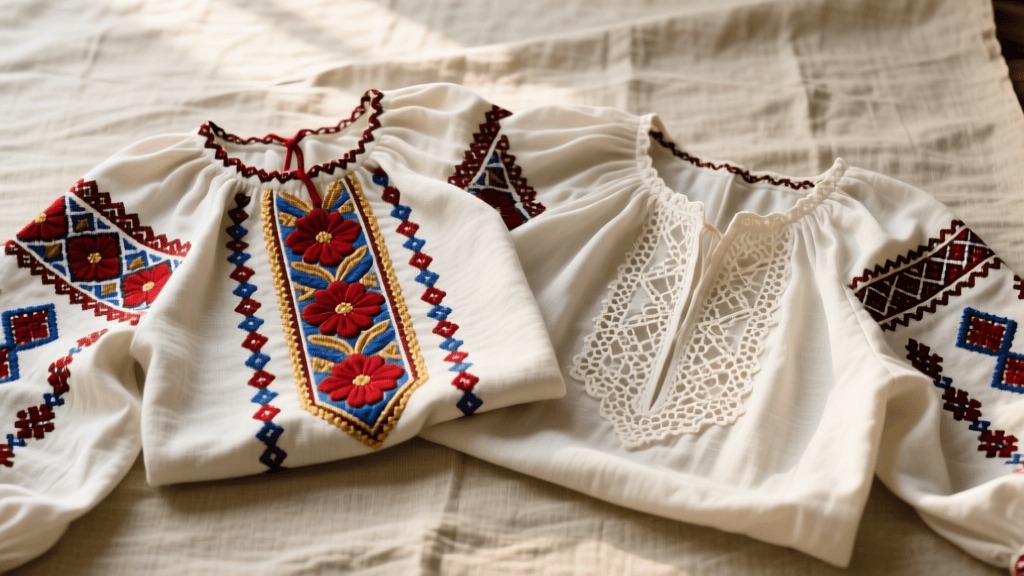
Moving westward to the Carpathian Mountains, the Hutsul vyshyvanka presents a stark visual contrast. Characterized by dense, vibrant geometric patterns, Hutsul embroidery heavily features deep reds, blacks, and ochres. In 2026, master dyers in this region have largely returned to using fermented madder root for reds and onion skins for yellows, moving away from synthetic dyes. A defining feature of the Hutsul style is the integration of tiny glass seed beads (lyshtva) and metallic threads, which were historically used to reflect light and ward off negative energy. The sheer weight of the beadwork on a authentic Hutsul shirt is substantial, often requiring reinforced linen weaves to support the bodice and cuffs.
The Romanian Ie: The Architecture of the Altiță
Across the border, the Romanian ie (traditional blouse) presents a completely different structural and aesthetic approach to embroidery. The ie is constructed from rectangular panels of fabric, gathered at the neck and cuffs, but its true mastery lies in the placement and hierarchy of its ornamentation. Unlike the all-over patterns of some Slavic traditions, the Romanian ie follows a strict architectural blueprint dictated by centuries of village customs.
Decoding the Shoulder and Sleeve Hierarchy
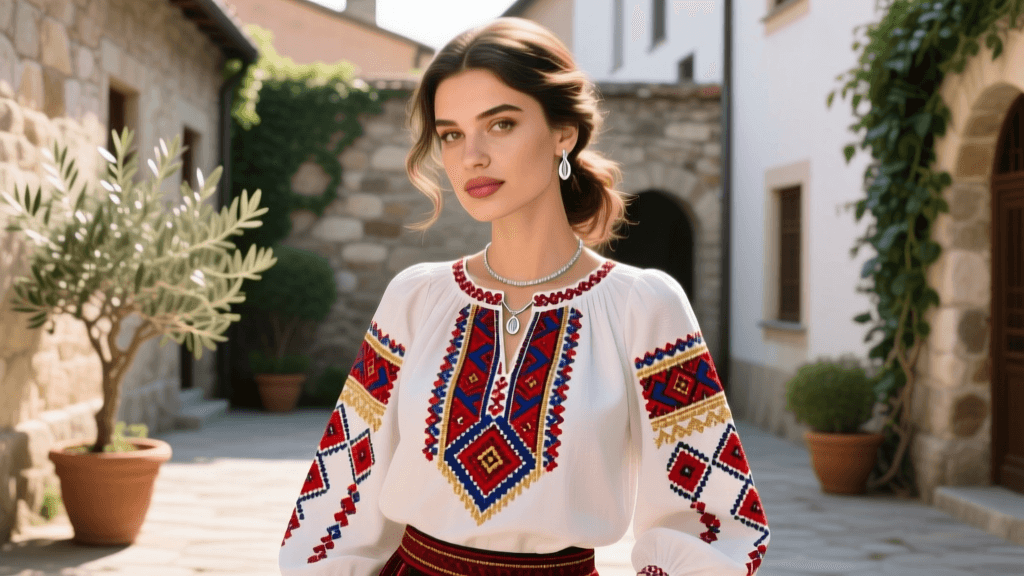
The most critical element of the Romanian blouse is the altiță, a dense, rectangular band of embroidery located squarely on the shoulder. According to the UNESCO Intangible Cultural Heritage registry, the altiță is a defining element of cultural identity in Romania and the Republic of Moldova. Directly beneath the altiță lies the încreț (the gathering), a lighter, often monochromatic band that serves as a visual bridge. Finally, the râuri (rivers) flow down the sleeves in diagonal or vertical stripes, guiding the eye toward the hands.
In the Maramureș and Bukovina regions, the 2026 revival has seen a massive return to borangic (traditional silk-blended linen) and the use of hand-spun silk threads for embroidery. The chain stitch and the Romanian tiwitura (a specialized looping stitch) are predominantly used, giving the ie a raised, tactile quality that machine embroidery simply cannot replicate.
2026 Buyer’s Guide: Pricing, Materials, and Sourcing
Sourcing authentic Eastern European textiles in 2026 requires navigating a market that is simultaneously thriving and saturated with fast-fashion replicas. Mass-market brands frequently appropriate Hutsul geometry or Maramureș sleeve patterns, printing them onto synthetic blends. To build an authentic collection or purchase a genuine heritage garment, buyers must look for specific material markers and understand the current economic realities of artisanal labor.
| Garment Type | Region | Material & Thread | Primary Technique | 2026 Avg. Price (USD) |
|---|---|---|---|---|
| Vyshyvanka (Poltava) | Central Ukraine | Hand-woven Linen / White Linen Thread | White-on-white (Bila po bilomu), Hemstitching | $650 - $1,200 |
| Vyshyvanka (Hutsul) | Carpathian Mts, Ukraine | Hemp/Cotton / Wool, Glass Beads | Cross-stitch, Seed Bead Integration | $800 - $1,500 |
| Ie cu Altiță | Maramureș, Romania | Borangic (Silk/Linen) / Silk Thread | Chain stitch, Altiță shoulder mapping | $750 - $1,300 |
| Ie de Sărbătoare | Bukovina, Romania | Fine Cotton / Cotton & Metallic Thread | Black/Red geometric, Râuri sleeve stripes | $500 - $950 |
Ethical Sourcing and Artisan Cooperatives
To ensure your purchase supports the living heritage of these regions, it is vital to buy directly from recognized artisan cooperatives or vetted cultural institutions. In 2026, several digital platforms and physical guilds have established strict authentication protocols for Eastern European textiles. Institutions like The Ukrainian Museum frequently highlight master artisans and provide resources for identifying authentic regional stitches versus machine-made approximations.
When evaluating a potential purchase, request documentation regarding the loom type used for the base fabric. Authentic hand-woven linen will feature slight irregularities in the warp and weft, and the selvedge edges will often be finished by hand. Furthermore, true artisan cooperatives will provide the name of the specific village and the master embroiderer, ensuring transparency and fair compensation for the hundreds of hours of labor invested in the piece.
Museum-Grade Care and Preservation
Preserving these heavily embroidered textiles requires specific, mindful care routines. The combination of natural fibers, metallic threads, and dense beadwork makes these garments highly susceptible to environmental damage if stored improperly. The Victoria and Albert Museum's textile conservation guidelines recommend avoiding standard wire hangers, which can distort the heavy shoulder seams of a Hutsul vyshyvanka or a Maramureș ie.
- Washing: Never machine wash authentic folk dress. Submerge the garment in cool water with a pH-neutral, conservation-grade detergent. Do not agitate; gently press the water through the fibers and roll the garment in a clean, dry cotton towel to extract moisture.
- Drying and Ironing: Lay the garment flat on a drying rack away from direct sunlight, which can fade natural madder and woad dyes. Iron only on the reverse side, using a low-heat setting and a protective cotton pressing cloth to prevent crushing the three-dimensional embroidery stitches and seed beads.
- Storage: For long-term archival storage, wrap the garment in acid-free, unbuffered tissue paper. Store it flat in an archival-quality textile box in a climate-controlled environment with a relative humidity of 45-55% to prevent the linen from becoming brittle and the metallic threads from tarnishing.
Conclusion
The Eastern European folk dress market in 2026 is a testament to the enduring power of cultural memory. Whether you are drawn to the subtle, shadow-play elegance of a Poltava vyshyvanka or the bold, architectural brilliance of a Romanian ie cu altiță, acquiring these garments is an investment in human history. By prioritizing ethical sourcing, understanding regional nuances, and committing to proper preservation, collectors and enthusiasts can ensure these magnificent textile traditions continue to thrive for generations to come.