Bavarian Schuhplattler Dance Costumes: 2026 Festival Tracht Guide
The Renaissance of Alpine Folk Dance in 2026
As we navigate the vibrant 2026 Alpine festival season, the traditional Bavarian Schuhplattler folk dance continues to captivate audiences and preserve centuries of cultural heritage. Originating as a courting dance mimicking the mating rituals of the capercaillie bird, the Schuhplattler is characterized by rhythmic stomping, leaping, and the striking of thighs, knees, and shoes. However, executing these vigorous movements requires more than just enthusiasm; it demands meticulously crafted, authentic traditional garments known as Tracht. In 2026, the intersection of historical accuracy and functional mobility has never been more critical for dancers participating in major regional events like the Gaufest or the Leonhardifahrt. This comprehensive guide explores the anatomy of the dancer’s costume, detailing the specific textiles, tailoring techniques, and 2026 market trends that define authentic Bavarian folk dance attire.
The Anatomy of a Dancer’s Lederhosen
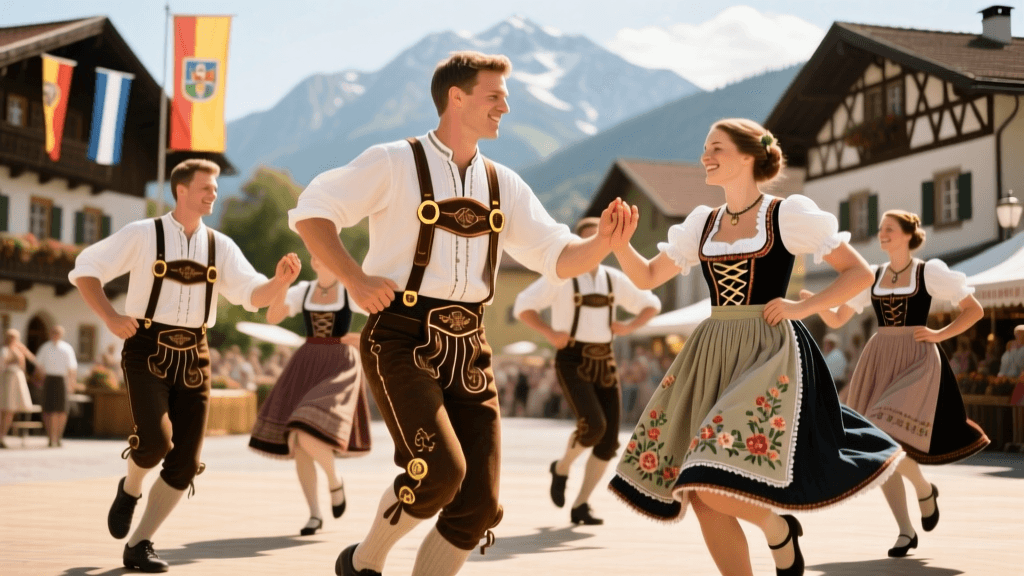
For the male Schuhplattler, the Lederhosen (leather breeches) are the foundational element of the dance costume. Unlike the mass-produced, costume-grade leather shorts sold in tourist shops, authentic dance Lederhosen are master-crafted by a traditional Säckler (leatherworker) to withstand extreme physical stress while maintaining a dignified silhouette.
Leather Selection: Hirschleder vs. Bockleder
In 2026, the gold standard for high-level folk dance remains Hirschleder (deerskin). Prized for its buttery softness, breathability, and exceptional durability, deerskin allows the dancer to perform high kicks and deep squats without the leather binding or tearing. Bockleder (goatskin) is a slightly more rigid but highly durable alternative, often favored for its distinct grain and resilience against the repeated slapping inherent to the Plattler dance. According to the Trachtenkultur-Bayern archives, the tanning process—traditionally using oak bark and natural fats—takes months, ensuring the leather develops a rich, dark patina over years of festival wear.
Construction and Embroidery (Stickerei)
A true dancer’s Lederhosen features a Latz (drop-front) secured by horn or antler buttons, and a high waistband designed to sit above the hips, preventing the garment from slipping during vigorous leaps. The embroidery, or Stickerei, is not merely decorative; it reinforces the seams. In 2026, bespoke floral motifs featuring Edelweiss, Enzian (gentian), and oak leaves are hand-stitched using heavy silk thread. The Hosenträger (suspenders) are heavily embroidered and cross at the back, providing essential support without restricting shoulder movement. As of 2026, commissioning a pair of bespoke Hirschleder Lederhosen from a master Säckler in regions like Miesbach or Salzburg typically costs between €1,450 and €2,400, reflecting the intense artisanal labor involved.
Dirndl Construction for the Folk Dancer
The female counterpart to the Schuhplattler costume is the authentic Dirndl, which is fundamentally different from the modernized, commercialized versions seen at Oktoberfest. A folk dance Dirndl is engineered for the Dreh—the rapid, centrifugal spins that are the hallmark of the dance’s finale.
The Physics of the Spin: Rock and Schürze
The Rock (skirt) of a dance Dirndl is heavily gathered and requires a minimum circumference of 3.5 to 4.5 meters. This vast amount of fabric, often made from high-quality wool blends or heavy cotton, creates a spectacular bell shape when the dancer spins. The Schürze (apron) is tied with a precise bow and is slightly shorter than the skirt to prevent tripping. In 2026, weavers in the Swabian and Bavarian regions are increasingly utilizing sustainably sourced, naturally dyed linen-wool blends that offer the necessary weight for a dramatic swing while remaining breathable under hot festival tents.
The Mieder and Bluse
The Mieder (bodice) is heavily reinforced with internal boning or stiffened canvas to provide back support during the demanding choreography. It is laced tightly with a silk cord or fastened with silver hooks. The Bluse (blouse) worn underneath is typically white, featuring intricate smocking or lace, with sleeves that allow full arm extension for the partnered dance figures. The Bayerischer Trachtenverband (Bavarian Tracht Association) strictly mandates that for official competitive dances, the Dirndl must adhere to the specific historical color palettes and textile weights of the dancer's home village or Gau (region).
Footwear and Accessories: Haferlschuhe and Charivari
No folk dance costume is complete without the proper footwear. The Haferlschuh is a traditional Bavarian shoe characterized by its side-lacing (or sometimes front-lacing) and robust construction. For the Schuhplattler, the sole is paramount. While modern street shoes use synthetic rubber, authentic dance Haferlschuhe feature thick, stacked leather soles with hobnails or specialized rubber grips added to the heel and toe. This provides the necessary traction on wooden festival stages while producing the sharp, percussive smack required when the dancer strikes the sole of the shoe during the routine.
Male dancers often accessorize with a Charivari, a silver chain draped across the Lederhosen drop-front. Historically a hunter's trophy chain featuring animal teeth, coins, and badger hair, the Charivari in 2026 is often passed down through generations. Female dancers wear a Charivari attached to the Dirndl bodice, typically featuring smaller silver charms and pearls. Both genders wear traditional woolen socks (Loferl for men, which are calf-warmers worn without the foot covering, and knee-high ribbed socks for women).
2026 Festival Calendar & Costume Requirements
Understanding the specific dress codes for upcoming festivals is crucial for any serious folk dancer. The German Alpine Club (Deutscher Alpenverein) and regional heritage boards enforce strict guidelines to prevent the dilution of traditional attire. Below is a guide to major 2026 events and their Tracht expectations:
| Festival | Location | 2026 Date | Tracht Strictness & Requirements |
|---|---|---|---|
| Bayerisches Landestrachtenfest | Straubing | July 2026 | Strict: Only officially registered Vereinstracht (club-specific regional uniforms) are permitted on the parade and dance grounds. |
| Leonhardifahrt | Bad Tölz | November 6, 2026 | High: Formal, historic Tracht required. Darker winter wool Dirndls and heavily embroidered winter Lederhosen. No modern accessories. |
| Maibaumaufstellen | Various Villages | May 1, 2026 | Moderate: Festive and joyous. Lighter spring textiles, brighter colors, and floral Schürzen are highly encouraged for the accompanying dances. |
| Gaufest (Oberland) | Miesbach Region | August 2026 | Strict: Competitive Schuhplattler. Judges deduct points for incorrect sock height, improper apron tying, and non-regulation footwear. |
Sourcing and Caring for Your Tracht in 2026
Investing in authentic folk dance costumes is a commitment to cultural preservation. When sourcing garments in 2026, avoid online marketplaces selling "Bavarian costumes"; instead, seek out certified Trachtenfachgeschäfte (specialist Tracht shops) or direct commissions from regional tailors. For leather care, the Säckler community recommends using only natural deer tallow or specialized leather balms to maintain the Hirschleder’s suppleness, especially after the leather has absorbed sweat during summer festivals. Never machine-wash a Dirndl bodice; the internal structure will warp. The skirt and apron should be dry-cleaned or hand-washed in cold water with mild wool detergent to preserve the natural dyes.
"The Tracht is not a costume we put on to play a part; it is the living skin of our history. When a Plattler strikes his shoe, he is speaking a language that predates our modern borders." — Master Säckler and Trachtenhistorian, Miesbach, 2026.
Conclusion
The Bavarian Schuhplattler is a breathtaking display of athleticism, rhythm, and cultural pride. As the 2026 festival season unfolds across the Alpine regions, the authenticity of the dancer’s Tracht remains just as important as the precision of their footwork. By understanding the intricate construction of Hirschleder Lederhosen, the engineered swing of the Dirndl, and the strict regional codes of the festivals, dancers and enthusiasts alike can honor the deep-rooted traditions of European folk dress. Whether you are a seasoned competitor at the Gaufest or an admirer of textile heritage, respecting the craft behind these garments ensures that the rhythm of the Alps will echo for generations to come.