Authentic Schuhplattler Dance Costumes For 2026 Alpine Festivals
The Resurgence of Alpine Folk Dance in 2026
The rhythmic slapping of thighs, boots, and hands echoing across the Bavarian and Tyrolean Alps is more than just a captivating performance; it is the living, breathing heartbeat of Alpine heritage. As we navigate the 2026 European folk festival season—from the sprawling tents of the Munich Oktoberfest to the pastoral celebrations of the Austrian Almabtrieb—the traditional Schuhplattler dance continues to draw massive crowds and dedicated performers. However, executing the demanding choreography of the Schuhplattler requires more than just stamina and rhythm; it demands authentic, meticulously crafted traditional garments that allow for a full range of kinetic movement while honoring centuries of regional textile history.
According to the Bavarian Tracht Association, there has been a significant surge in youth participation in traditional folk dance troupes (Trachtenvereine) leading into 2026. This revival has sparked a renewed demand for high-quality, dance-specific Tracht (folk costumes) that eschews cheap, mass-produced tourist souvenirs in favor of historically accurate, durable garments. Whether you are a seasoned performer preparing for the 2026 Gaufest (regional folk festival) or a cultural enthusiast looking to participate in local dance events, understanding the anatomy of authentic dance costumes is essential.
Men’s Tracht: Engineering the Perfect Lederhosen for Dance
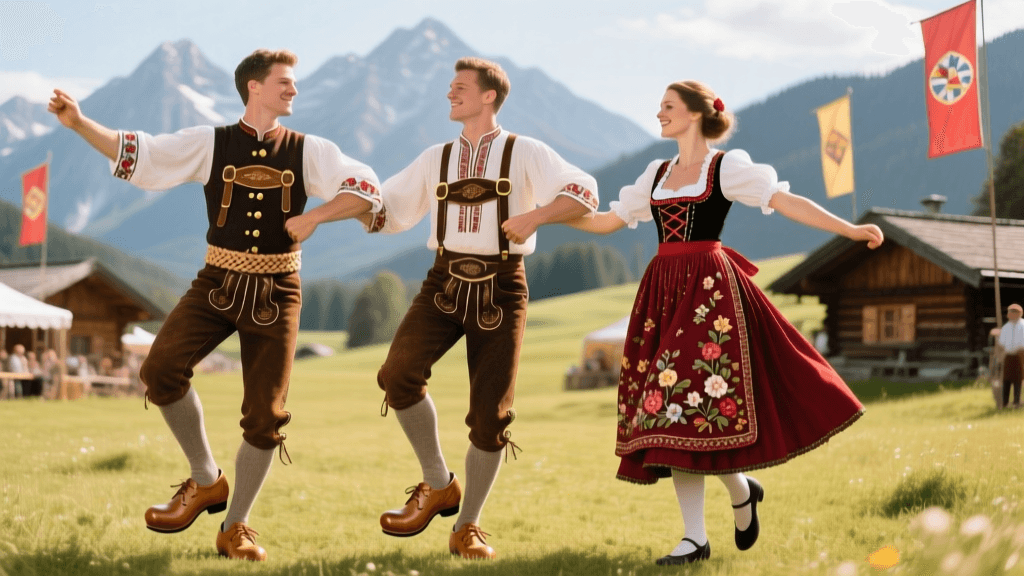
For male dancers, the Lederhosen is the undisputed centerpiece of the Schuhplattler costume. However, not all leather breeches are created equal. A pair designed for casual beer tent lounging will quickly fail under the rigorous demands of folk dancing, which involves deep squats, high kicks, and repetitive striking of the thighs.
Leather Selection and Tanning
In 2026, sustainably sourced Hirschleder (deer leather) remains the absolute gold standard for dance Lederhosen. Unlike cowhide, which is stiff and heavy, deer leather is incredibly supple, breathable, and durable. The traditional tanning process, known as Sämischgerbung (brain tanning or oil tanning), uses natural fats to treat the hide, resulting in a leather that is soft against the skin and capable of withstanding the friction of constant slapping. When purchasing or commissioning Lederhosen for dance, ensure the leather is at least 1.2mm thick to provide a resonant 'smack' during the performance without causing bruising to the dancer's thighs.
The Säcklernaht and Drop-Front Construction
The hallmark of authentic Bavarian Lederhosen is the Säcklernaht, a raised, double-stitched seam that provides structural integrity to the garment. For dancers, this stitching must be executed with heavy, waxed linen thread to prevent blowouts during high kicks. Furthermore, the traditional drop-front (Latz) must be secured with sturdy horn or antler buttons. Dancers should avoid modern snap-buttons or metal clasps, which can pop open during vigorous choreography and pose a safety hazard on the dance floor.
Women’s Tracht: Dirndls Designed for the Dance Floor
The Dirndl, often misunderstood as a monolithic garment, is actually a highly modular ensemble consisting of a bodice (Mieder), blouse (Bluse), skirt (Rock), and apron (Schürze). For the female Schuhplattler dancer, the Dirndl must balance a flattering, traditional silhouette with the practical necessities of spinning, leaping, and partner-swapping.
Skirt Length and Silhouette
While modern fashion trends occasionally flirt with micro-length Dirndls, the 2026 standard for traditional folk dance strictly mandates a midi or maxi length. The skirt should fall gracefully to the mid-calf or just above the ankle. This length is not merely a matter of modesty; it is a functional requirement. During the rapid turns and lifts characteristic of the Schuhplattler, a longer, heavily pleated skirt creates a beautiful, bell-like centrifugal effect that enhances the visual impact of the dance. The skirt must be cut from a full circle or heavily gathered wool or cotton blend, allowing the fabric to flare out dramatically without restricting the dancer's leg movements.
The Bodice and Blouse Dynamics
The bodice must provide firm support without restricting diaphragmatic breathing, which is crucial for dancers performing high-altitude routines. Traditional lacing with silver or brass hooks and a silk cord allows for micro-adjustments in fit. The blouse, typically crafted from fine white linen or batiste, features short puffed sleeves that leave the arms completely free for the intricate hand-clapping sequences (Paschen) that accompany the men's thigh-slapping.
Essential Footwear and Accessories for Performance
No traditional European costume is complete without its accompanying accessories, and for the Schuhplattler dancer, footwear is a matter of both safety and acoustic performance.
- Haferlschuhe: The traditional Bavarian shoe, characterized by its side-lacing and sturdy, hobnailed leather sole. The side lacing prevents pressure on the top of the foot during deep knee bends, while the hobnails provide essential traction on wooden dance floors and produce a satisfying, rhythmic clatter during the dance.
- Loferl (Calf Warmers): Worn by men with short Lederhosen, these two-piece knit garments cover the calf and the foot separately. They provide warmth during autumn festivals and protect the lower leg from stray boot strikes during group choreography.
- Tirolerhut (Tyrolean Hat): Crafted from brushed wool felt and adorned with a Gamsbart (chamois hair tuft) or eagle feather. For dancers, the hat must be sized perfectly and often features a discreet internal leather sweatband and chin cord to ensure it remains securely on the head during jumps and spins.
2026 Buyer’s Guide: Investing in Authentic Tracht
Navigating the market for traditional European folk dress can be daunting, especially with the influx of synthetic 'costume-grade' garments sold online. Below is a comparison of the current 2026 market tiers for dance-ready Lederhosen and Dirndls, helping you make an informed investment.
| Garment Tier | Materials & Construction | Estimated 2026 Price Range | Suitability for Folk Dance |
|---|---|---|---|
| Costume / Tourist Grade | Synthetic leather, polyester blends, glued seams, plastic buttons. | $80 - $150 | Poor. Restricts movement, tears easily, lacks acoustic resonance. |
| Retail / Festival Grade | Pigskin or cowhide, cotton/wool blends, machine embroidery, standard stitching. | $250 - $600 | Fair. Acceptable for casual attendees, but may not withstand rigorous troupe performances. |
| Artisan / Bespoke Tracht | Sämisch-tanned Hirschleder, hand-stitched Säcklernaht, custom tailoring, horn buttons. | $1,200 - $3,500+ | Excellent. The gold standard for Trachtenvereine and serious folk dancers. |
For those seeking authentic, high-quality garments, the Official Oktoberfest Tracht Guide highly recommends purchasing from established regional tailors (Trachtenschneiderei) rather than generic online marketplaces. A well-crafted bespoke Lederhosen is designed to mold to the dancer's body over time, becoming a second skin that moves flawlessly with every choreographed step.
Caring for Your Folk Dance Garments
Authentic Tracht requires specialized care to maintain its longevity and performance qualities. Leather Lederhosen should never be machine washed or dry-cleaned, as harsh chemicals will strip the natural oils from the Sämischgerbung tanning process. Instead, spot clean with a damp cloth and condition the leather annually with pure Hirschtalg (deer tallow) to maintain its suppleness and water resistance. For the Dirndl, the linen blouse and cotton apron can be gently hand-washed, but the heavily structured wool bodice and skirt should only be professionally cleaned by a tailor who specializes in traditional European textiles. By investing in authentic materials and maintaining them properly, your folk dance costumes will not only survive the rigorous 2026 festival season but will become cherished heirlooms passed down through generations of dancers.
For further reading on the cultural preservation of regional attire, the Munich Tourism Tracht Guide offers excellent insights into the historical evolution of these garments and where to observe master artisans at work in the heart of Bavaria.