Authentic Schuhplattler Dance Tracht: Lederhosen & Shoes 2026
Introduction to the Schuhplattler and Alpine Festival Tracht
The Schuhplattler is arguably the most physically demanding and visually striking folk dance in the European Alpine tradition. Originating in the Bavarian and Tyrolean Alps, this courtship dance requires male performers to rhythmically slap their thighs, knees, and shoes in precise synchronization, while female partners execute rapid, continuous spins known as the Dreher. As we enter the 2026 Alpine festival season, the demand for authentic, performance-grade traditional garments—collectively known as Tracht—has reached new heights. Standard tourist-shop costumes simply cannot withstand the rigorous biomechanical stresses of competitive folk dancing.
For serious dancers and cultural preservationists, adhering to the strict sartorial guidelines set forth by organizations like the Bayerischer Trachtenverband (Bavarian Costume Association) is not just about aesthetics; it is about historical accuracy, functionality, and respect for regional heritage. This comprehensive 2026 guide breaks down the exact specifications, materials, and costs required to assemble a genuine Schuhplattler dance kit, from the supple deerskin breeches to the hobnailed footwear.
The Foundation: Hirschleder (Deerskin) Lederhosen for Dance
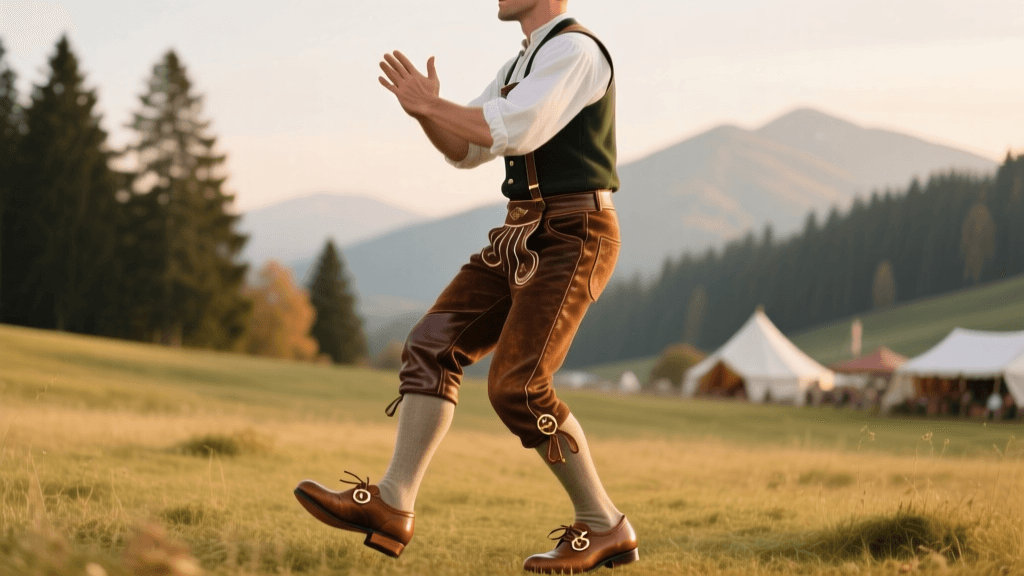
While cowhide and goatskin are common in everyday fashion lederhosen, the Schuhplattler strictly demands Hirschleder (deer leather). The repetitive, high-impact slapping of the thighs requires a material that is exceptionally soft, breathable, and durable. Hirschleder absorbs the shock of the Plattler strikes without bruising the dancer's legs, a crucial factor during multi-hour festival performances.
The Sämischgerbung Tanning Process
Authentic 2026 Hirschleder is processed using Sämischgerbung, a traditional oil-tanning method utilizing cod liver oil and natural fats. This labor-intensive process yields a leather that is washable, incredibly supple, and develops a beautiful patina over time. In 2026, bespoke oil-tanned Hirschleder lederhosen from master saddlers in Upper Bavaria or Tyrol typically range from €850 to €1,600, depending on the complexity of the hand-embroidered Stickerei (floral or hunting motifs).
Fit and Construction for High-Kicks
Dance lederhosen must be tailored with specific structural allowances. The most critical feature is the Sattel (gusset) at the crotch and inner thigh, which provides the necessary range of motion for the high kicks and deep squats inherent to the dance. The waistband should sit precisely at the natural waist, secured by a sturdy linen backing to prevent the heavy leather from sagging during vigorous movement.
Footwear: Selecting the Perfect Haferlschuhe
No piece of the Schuhplattler kit is more vital than the footwear. The Haferlschuh is a traditional Alpine shoe characterized by its front-lacing system and robust construction. For folk dancers, the shoe acts as both a protective shield and a percussive instrument. The rhythmic stomping and heel-clicking require a sole that can produce a sharp, resonant acoustic report on wooden stages and cobblestone village squares.
Historical archives at the Tiroler Volkskunstmuseum showcase centuries of Alpine footwear evolution, highlighting the enduring necessity of the Zwiegenmacher (double-stitched) welt. This construction method ensures the sole remains firmly attached even when subjected to the extreme lateral torsion of folk dance steps.
The Importance of Hobnails (Schuhplattler-Beschlag)
For competitive dancers, the heel and toe of the Haferlschuh are often fitted with specialized steel hobnails or a reinforced metal plate known as the Plattler-Beschlag. This modification amplifies the sound of the heel strikes and protects the leather from rapid degradation. In 2026, master cobblers recommend a hybrid approach for amateur groups: a leather sole with a rubberized heel tap, which provides acoustic feedback without destroying indoor festival hall floors.
2026 Haferlschuh Comparison Chart for Dancers
| Haferlschuh Model Type | Sole Construction | Best For | 2026 Est. Price (EUR) |
|---|---|---|---|
| Standard Trachtenschuh | Vibram Rubber / Crepe | Festival Walking & Light Dancing | €140 - €190 |
| Authentic Plattler-Schuh | Leather with Steel Hobnails | Competitive Schuhplattler & Outdoor | €260 - €390 |
| Hybrid Dance-Sole | Leather base, rubber heel tap | Amateur Folk Dance Groups & Indoor | €190 - €250 |
Upper Body and Accessories: Suspenders, Shirts, and Hats
The upper body ensemble must remain secure and visually striking without restricting the dancer's arms. The Trachtenhemd (traditional shirt) should be made of 100% heavyweight linen or a linen-cotton blend to wick away perspiration. A classic Reverskragen (lapel collar) or Stehkragen (stand collar) is preferred, often featuring subtle horn buttons.
- Hosenträger (Suspenders): Dance lederhosen require wide, heavily embroidered Hirschleder suspenders with a central cross-piece (Steg). The Steg prevents the straps from slipping off the shoulders during arm-raising choreography.
- Tirolerhut (Alpine Hat): A wool felt hat adorned with a Gamsbart (chamois hair tuft) or eagle feather is standard. For dancers, the hat must be sized tightly or secured with a discreet chin cord, as the rapid head turns and jumps can easily dislodge poorly fitted headwear.
- Charivari: While traditional silver coin chains are beautiful, competitive dancers often opt for lighter, simplified versions or omit them entirely to prevent the metal from swinging and causing injury during high-kicks.
Female Tracht for Accompanying Dancers: The Active Dirndl
While the male Schuhplattler takes the percussive spotlight, the female dancers are the kinetic heart of the performance. The female Tracht for folk dancing differs significantly from static festival wear. The primary requirement is the Dreher (spin), which dictates the engineering of the skirt.
Skirt Weight, Width, and Hemlines
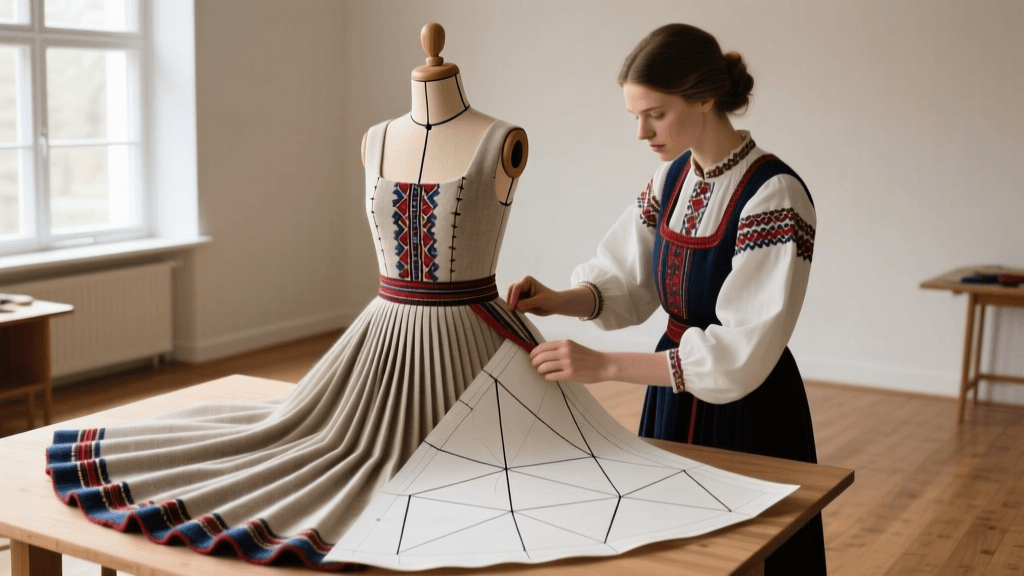
A performance-grade Dirndl skirt in 2026 requires a minimum of 3.5 to 4 meters of fabric circumference to achieve the iconic, bell-shaped flare during spins. The material must have enough weight—typically a dense cotton-linen blend or lightweight wool—to swing outward gracefully and fall back into place immediately. Crucially, the hemline must end precisely at the knee or mid-calf. Skirts that are too long pose a severe tripping hazard to both the dancer and her partner during complex interwoven footwork.
The Schleife (Apron Bow) Etiquette
The placement of the apron bow remains a strict cultural signifier. For unmarried female dancers, the bow is tied on the left side; for married women, on the right. A bow tied in the center back signifies widowhood or that the wearer is working as a server. During performances, the bow must be tied in a secure, flat double-knot to prevent it from unraveling during centrifugal forces.
2026 Festival Calendar and Preparation Timeline
Acquiring authentic, bespoke Tracht requires careful planning. As global interest in traditional European craftsmanship surges, master tailors and cobblers are experiencing unprecedented lead times.
"To ensure your Hirschleder and Haferlschuhe are perfectly broken in for the summer Gau festivals, commissions must be finalized no later than January of the performance year." — Master Saddler Guidelines, Upper Bavaria.
Your 2026 Action Plan:
- January - February: Commission bespoke Hirschleder lederhosen and Haferlschuhe. Provide exact measurements, noting your specific dance requirements (e.g., wider gussets, hobnail preferences).
- April - May: Receive garments. Begin the break-in process. Wear the Haferlschuhe daily with thick wool socks to mold the leather to your foot arch. Practice basic Plattler strikes to soften the deerskin thighs.
- June: Finalize upper-body accessories and female Dirndl fittings. Conduct full dress rehearsals to test the acoustic resonance of your footwear and the swing radius of the skirts.
- July - September: Peak Alpine festival season. Maintain your leather with specialized Hirschleder fats after heavy perspiration or rain exposure.
Investing in authentic, regionally accurate folk dress not only elevates your performance but actively preserves the tangible heritage of European Alpine culture for future generations.