Swedish Dalarna Folk Dress Bodice Construction 2026
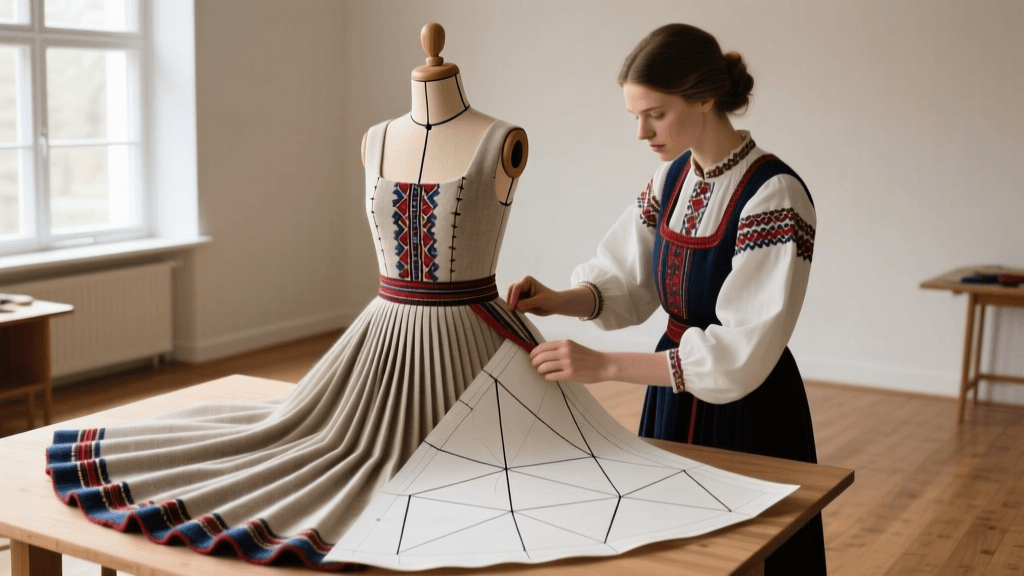
The traditional Swedish folk dress, or folkdräkt, represents one of the most meticulously preserved textile heritages in Europe. Among the regional variations, the costumes of the Dalarna province—particularly those from Leksand and Rättvik—are globally recognized for their striking silhouettes, vibrant accents, and rigorous construction standards. As we navigate the 2026 crafting season, there has been a massive resurgence in historical tailoring, with makers moving away from commercial, mass-produced costumes and returning to the bespoke, hand-finished techniques of the 18th and 19th centuries. Constructing the livstycke (bodice) of a Dalarna folk dress requires a deep understanding of structural tailoring, geometric pattern drafting, and traditional hand-sewing methods. This comprehensive guide will walk you through the exact construction patterns and techniques required to build an authentic, structurally sound Swedish bodice and attach its heavily pleated wool skirt, utilizing both time-honored methods and the best material alternatives available in 2026.
Anatomy of the Dalarna Livstycke (Bodice)
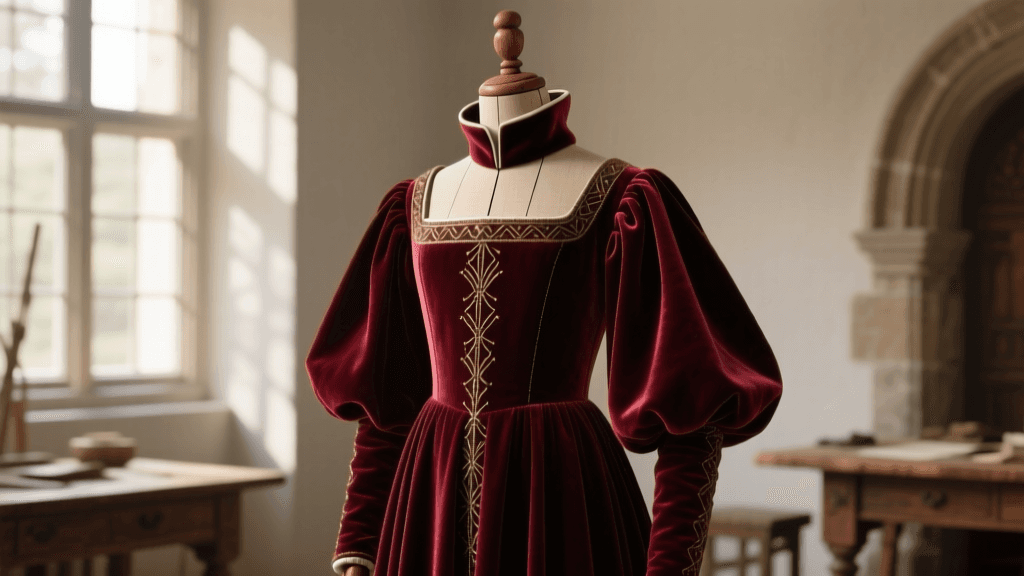
The livstycke is the foundational garment of the Swedish folk dress. Unlike modern bodices that rely heavily on the wearer's undergarments for shaping, the traditional livstycke is a self-supporting, heavily structured piece. Historically, the bodice was constructed from a dense, fulled wool fabric known as vadmal, backed by multiple layers of stout linen. The stiffening was achieved using pasteboard, reeds, or bundled straw inserted into channels. Today, while some purists still weave and full their own wool, most tailors in 2026 utilize high-quality cotton buckram, heavy linen canvas, and synthetic or steel boning to achieve the same rigid, conical silhouette without sacrificing breathability.
The front of the bodice typically features a deep, squared neckline or a slight V-shape, designed to frame the särk (the white linen undergarment) and the decorative bröstlapp (stomacher or chest cloth). The back is often cut with a deep scoop, and the shoulder straps are relatively wide, designed to bear the immense weight of the attached wool skirt. The edges are bound with a contrasting wool or silk twill tape, applied using a nearly invisible slip stitch known in Swedish tradition as smygsöm.
Essential Measurements and Pattern Drafting
Drafting the pattern for a livstycke requires precision. Because the garment is meant to mold to the torso and provide a rigid shell, ease allowances are virtually nonexistent in the waist and bust, while the back must accommodate the expansion of the ribcage during breathing. When drafting your bespoke pattern, begin by taking measurements over a well-fitted linen chemise and a modern corset or structural liner that mimics the posture of the historical silhouette.
Below is the standard measurement and ease chart utilized by historical tailors in 2026 for the Dalarna bodice:
| Measurement Point | Historical Allowance | 2026 Modern Tailoring Standard |
|---|---|---|
| Full Bust | 0 cm (Skin tight over chemise) | +1 cm (Over structural liner) |
| Underbust / Ribcage | -2 cm (Negative ease for grip) | 0 cm (Firm support, no compression) |
| Natural Waist | 0 cm | +1 cm (Allows for seated expansion) |
| Shoulder Strap Width | 5 to 7 cm | 6 cm (Reinforced with inner canvas) |
The Art of the Waistline: Attaching the Kjortel (Skirt)
One of the most defining characteristics of the Swedish folk dress is the method by which the heavy wool skirt (kjortel) is attached to the bodice. The sheer weight of the fulled wool—often exceeding three to four kilograms for a full-length winter skirt—means that standard gathering or modern pleating techniques will fail under the stress of wear. Instead, traditional tailors employ a technique akin to cartridge pleating or tightly packed knife pleats, which are then whipped directly to the lower edge of the bodice.
To prepare the skirt waistline, the top edge is folded down by approximately five centimeters and basted. The tailor then marks a precise grid using a disappearing fabric pen or traditional tailor's chalk, spacing the pleat marks exactly 1.5 centimeters apart. The wool is accordion-folded along these lines and temporarily secured with heavy-duty binder clips or traditional wooden clothespins.
The attachment process uses a heavy, waxed linen thread. The tailor works from the inside of the garment, taking a tiny bite of the folded skirt pleat and then passing the needle through the bound lower edge of the bodice. This creates a flexible but incredibly strong hinge that allows the skirt to swing freely while distributing the weight evenly across the reinforced waistline of the livstycke.
Sourcing Authentic Materials in 2026
The authenticity of a folkdräkt relies heavily on its textiles. In 2026, the sustainable textile movement has made it easier than ever to source historically accurate materials without relying on synthetic blends. For the outer shell, seek out 100% plant-dyed, fulled wool from specialized Scandinavian mills. Wadmal (vadmal) remains the gold standard, but heavy melton wool or boiled wool can serve as excellent substitutes if genuine wadmal is unavailable.
For the lining, unbleached, heavyweight linen (at least 200 GSM) is essential. Avoid modern cotton poly-blends, as they do not provide the necessary friction to keep the linen särk in place, nor do they offer the structural integrity required for the inner layers. When it comes to edge binding, bias-cut wool flannel or silk twill tape provides the necessary stretch to navigate the curved armholes and neckline without puckering. For closures, hand-forged brass hooks and eyes are preferred over modern lacing, as they maintain the historically accurate, seamless front closure seen in museum archives.
Step-by-Step Assembly and Finishing Techniques
Constructing the bodice is a methodical process that prioritizes internal structure before external beauty. Follow these steps for a historically accurate assembly:
- Step 1: Cut the outer wool, the linen lining, and the stiffening interlining (buckram or heavy canvas).
- Step 2: Baste the stiffening layer to the wrong side of the linen lining.
- Step 3: Sew the structural seams of the lining/stiffening layer using a strong backstitch. Trim the seam allowances and press them flat.
- Step 4: Sew the outer wool seams using a fine running stitch or a modern sewing machine with a slightly longer stitch length (3.0mm) to mimic hand-sewing. Press the seams open over a tailor's ham.
- Step 5: Layer the outer shell and the structured lining together, wrong sides facing. Baste the armholes and neckline.
- Step 6: Apply the edge binding. Pin the wool or silk tape to the right side of the neckline and armholes, stitch in place, then fold the tape to the inside and secure it using a blind slip stitch (smygsöm).
- Step 7: Attach the brass hooks and eyes along the front opening, ensuring they are sewn through all layers for maximum durability.
- Step 8: Finally, execute the cartridge pleating of the wool skirt and whipstitch it to the reinforced lower edge of the bodice.
Preserving the Heritage
According to the Swedish folk costume archives, the preservation of these garments is not just about maintaining old clothes, but keeping a living craft alive. Organizations like the Svenska Folkdansringen emphasize that constructing a folkdräkt is a rite of passage that connects the maker to centuries of regional history. Furthermore, institutions such as the Nordiska Museet continue to digitize and share high-resolution images of historical garments, allowing modern tailors in 2026 to study the exact stitch lengths, seam finishes, and fabric weaves of their ancestors. By adhering to these traditional construction patterns and techniques, you ensure that the Dalarna folk dress remains a vibrant, structurally magnificent piece of European cultural heritage for generations to come.