Romanian Ie Blouse Revival: 2026 Contemporary Styling Guide
The Renaissance of the Romanian Ie in 2026
As the global fashion landscape in 2026 continues its aggressive pivot toward slow fashion, heritage textiles, and circular wardrobes, the traditional Romanian ie (peasant blouse) has emerged as a cornerstone of the European folk dress revival. Moving far beyond the realm of museum archives and occasional festival wear, the ie is now being integrated into contemporary urban capsule wardrobes. This garment, celebrated for its intricate hand-embroidery and profound cultural symbolism, offers a masterclass in sustainable, artisanal dressing. According to cultural heritage registries, including the UNESCO Intangible Cultural Heritage state profiles, the traditional art of the peasant blouse with embroidery (altiță) represents a living, breathing element of cultural identity that is currently experiencing a massive global renaissance.
In 2026, contemporary designers and heritage artisans are collaborating to reinterpret the ie for modern life. By utilizing organic hemp, regenerative linen, and naturally dyed threads, the modern ie bridges the gap between ancestral craftsmanship and contemporary ecological consciousness. This guide will explore the anatomy of the blouse, regional variations, and actionable styling techniques to seamlessly integrate this masterpiece of Eastern European folk dress into your 2026 wardrobe.
Decoding the Altita: Anatomy of the Modern Ie
To style the ie effectively, one must first understand its structural and symbolic anatomy. The authentic Romanian blouse is not merely a garment; it is a coded map of the wearer's region, social status, and spiritual beliefs. The construction of the traditional ie is defined by three primary embroidered zones:
- The Altiță: The dense, rectangular block of embroidery situated on the upper shoulder. In 2026, contemporary artisans are expanding the altiță to wrap slightly over the collarbone, creating a striking visual anchor that pairs beautifully with modern minimalist necklines.
- The Încreț: The delicate gathering of fabric situated just below the altiță. Historically, this was a functional element to gather the sleeve, but today it serves as a textural transition zone, often embroidered with subtle, tone-on-tone geometric patterns.
- The Râuri (Rivers): The diagonal or vertical stripes of embroidery that flow down the length of the sleeve. These "rivers" symbolize the flow of life and waterways, providing a dynamic, elongating visual effect that is highly flattering in modern styling.
Modern revivals in 2026 prioritize the tactile quality of these elements. Artisans are increasingly using unbleached, heavyweight organic linen (ranging from 180 to 220 GSM) which provides a structured drape that holds the heavy embroidery without puckering, a significant upgrade from the fragile, mass-produced cottons of the early 21st century.
Regional Variations and 2026 Color Palettes
The beauty of the ie lies in its regional diversity, which offers a vast spectrum of color palettes for contemporary styling. Institutions like the Romanian Peasant Museum have been instrumental in preserving these regional codes, which modern stylists are now utilizing to match current seasonal color trends.
The Olt Region: Monochromatic Elegance
Blouses from the Olt region are famous for their striking black-on-white or deep burgundy-on-ivory embroidery. In 2026, the Olt ie is the preferred choice for urban professionals. The high-contrast, geometric motifs align perfectly with modern minimalist aesthetics, allowing the blouse to function as a statement piece in a monochromatic capsule wardrobe.
Bukovina: Polychromatic Vibrancy
Bukovina blouses feature rich, multi-colored embroidery, heavily utilizing deep greens, cochineal reds, and marigold yellows. Contemporary dyers in 2026 have perfected the use of plant-based, colorfast dyes for these vibrant hues. A Bukovina ie is ideal for weekend styling, bringing a necessary pop of artisanal color to neutral denim or earth-toned linen trousers.
Muscel: Metallic Threads and Luxury
Historically reserved for wealthy merchants and nobility, the Muscel ie incorporates metallic gold and silver threads alongside silk. Today's sustainable revival sees the use of recycled metallic yarns and cruelty-free peace silk, making the Muscel blouse a premier choice for evening wear and formal contemporary styling.
Contemporary Styling: Integrating the Ie into a 2026 Capsule Wardrobe
The key to styling folk dress in a modern context is contrast. The voluminous, romantic silhouette of the ie must be balanced with structured, contemporary tailoring. Here are three distinct styling formulas for 2026.
Look 1: The Urban Professional (Office & Gallery Openings)
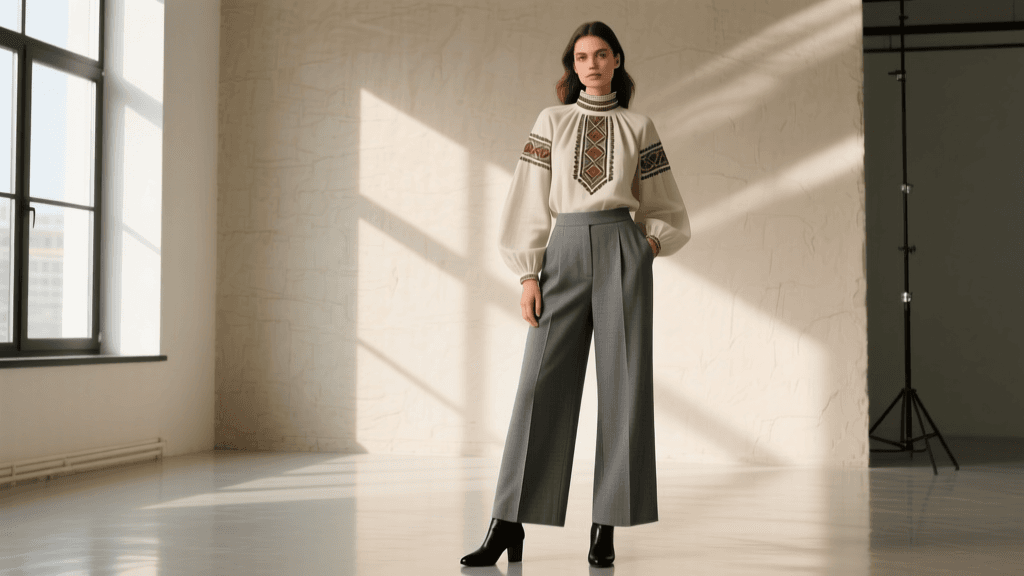
For a sophisticated daytime look, pair an Olt region black-and-white ie with high-waisted, wide-leg wool trousers in charcoal or deep navy. Tuck the front of the blouse in slightly to define the waist while allowing the back to drape naturally. Layer with a structured, collarless blazer in a sustainable Tencel-wool blend. Footwear should be a pointed-toe leather mule with a sculptural heel. This look respects the garment's heritage while adhering to the sharp, architectural silhouettes favored in 2026 corporate and creative environments.
Look 2: Weekend Bohemian (Market Days & Casual Outings)
Embrace the romantic volume of the blouse by pairing a vibrant Bukovina ie with dark-wash, straight-leg selvedge denim. To modernize the silhouette, add a wide, corset-style belt crafted from upcycled vegan leather or vegetable-tanned leather in a cognac hue. This cinches the waist and prevents the outfit from looking like a historical costume. Finish with chunky, lug-sole Chelsea boots and a woven rattan crossbody bag. The juxtaposition of delicate hand-embroidery against rugged denim and heavy hardware is a hallmark of 2026 neo-heritage streetwear.
Look 3: Evening Elegance (Dinners & Cultural Events)
Transform a delicate Muscel ie with metallic threading into evening wear by pairing it with a bias-cut, floor-length skirt in heavy silk crepe or sustainable cupro. Choose a skirt color that matches the secondary thread color in the blouse's embroidery. Keep jewelry minimal—perhaps a single pair of sculptural brass drop earrings—to allow the metallic threads of the altiță to catch the light. As noted by textile conservation experts at The Metropolitan Museum of Art's Costume Institute, allowing historical garments to remain the focal point of an ensemble by stripping away excessive modern accessories is key to authentic contemporary styling.
Sustainable Sourcing: Where to Buy Authentic Ie Blouses in 2026
As demand for authentic folk dress has surged, so has the market for mass-produced, machine-embroidered imitations. To support the true revival and ensure ethical compensation for artisans, buyers must seek out certified cooperatives and transparent heritage brands. Below is a 2026 sourcing guide and price comparison for authentic, ethically produced ie blouses.
| Sourcing Channel | Material & Technique | 2026 Price Range (USD) | Ethical & Sustainability Focus |
|---|---|---|---|
| Artisan Cooperatives (Direct) | 100% Organic Hemp, Hand-spun, Naturally dyed threads, 100+ hours of hand-embroidery. | $450 - $800 | Direct-to-maker compensation, preservation of rural economies, zero-carbon hand-stitching. |
| Heritage Revival Brands | GOTS-certified Linen, blend of hand and machine-assisted base construction, hand-finished embroidery. | $220 - $400 | Fair-trade certified workshops, regenerative agriculture sourcing for flax/hemp. |
| Vintage & Archival Dealers | Pre-1980s cotton/linen, historical natural dyes, vintage hand-stitching. | $300 - $1,200+ | Circular fashion, zero new resource extraction, requires specialized textile restoration. |
When purchasing, always request a macro photograph of the reverse side of the embroidery. Authentic hand-embroidery will show slight irregularities and the threads will be carried neatly across the back, whereas machine-made imitations will feature uniform, locked stitching and often a layer of stabilizing backing paper.
Care and Preservation for Hand-Embroidered Textiles
The longevity of a hand-embroidered ie depends entirely on proper care. The heavy embroidery threads can easily distort the delicate base fabric if washed incorrectly. In 2026, the standard for caring for heritage textiles involves pH-neutral, enzyme-free detergents specifically formulated for natural cellulosic fibers like linen and hemp.
Never machine wash or wring an authentic ie. Instead, submerge the garment in cold water with a gentle textile wash for no more than 15 minutes. Rinse thoroughly in cold water and gently press out excess moisture by rolling the blouse in a clean, dry cotton towel. Lay the garment flat on a drying rack, away from direct sunlight, which can fade natural dyes. When the blouse is slightly damp, use a low-heat steam iron on the reverse side of the embroidery, placing a pressing cloth between the iron and the fabric to protect the raised stitches from being crushed.
For long-term storage, fold the blouse using acid-free archival tissue paper to prevent hard creases from breaking the embroidery threads over time. Store in a breathable cotton garment bag in a cool, dry environment, ensuring the textile remains a vibrant, wearable piece of history for decades to come.
Conclusion
The Romanian ie is far more than a relic of Eastern European history; it is a dynamic, living garment that perfectly aligns with the 2026 ethos of intentional, sustainable, and deeply personal style. By understanding its anatomy, respecting its regional variations, and styling it with modern tailoring, we participate in a vital cultural revival. Investing in an authentic, ethically sourced ie not only elevates your personal wardrobe but actively sustains the rural artisan communities that keep this magnificent textile tradition alive.