Alpine Schuhplattler Dance Costumes & Tracht Guide 2026
Mastering the Alpine Rhythm: Schuhplattler Dance Tracht for 2026
As we prepare for the vibrant 2026 Gaufest calendar and regional Alpine folk festivals, the intersection of traditional garment construction and high-intensity folk dance has never been more relevant. The Schuhplattler—a traditional Bavarian and Tyrolean folk dance characterized by rhythmic stomping, thigh-slapping, and rapid spinning—demands far more from a garment than static festival wear. For dancers and cultural enthusiasts attending events like the 2026 Oberbayern Gaufest, understanding the precise tailoring, material weights, and structural requirements of dance-optimized Tracht is essential for both performance and authenticity.
Unlike standard Oktoberfest attire, which often prioritizes fashion over function, authentic Schuhplattler costumes are engineered for extreme kinetic movement. According to guidelines maintained by the Bayerischer Trachtenverband (Bavarian Costume Association), regional dance groups must adhere to strict historical and functional standards to preserve the cultural integrity of the performance. This guide breaks down the exact specifications for Dirndls, Lederhosen, and footwear required for the 2026 folk dance season.
The Mechanics of the Dance: Why Standard Tracht Fails
The Schuhplattler consists of several demanding movements: the Wiegen (rhythmic rocking), the Schnalzen (finger snapping), the Plattln (slapping of thighs, knees, and shoes), and the Drehen (rapid spinning of the female partner). A standard fashion Dirndl or mass-produced tourist Lederhosen will tear, restrict movement, or cause injury under these conditions. The garments must act as a second skin for the male dancers while providing dramatic, weighted flair for the female dancers.
Dirndl Construction for the "Drehen" (Spinning)
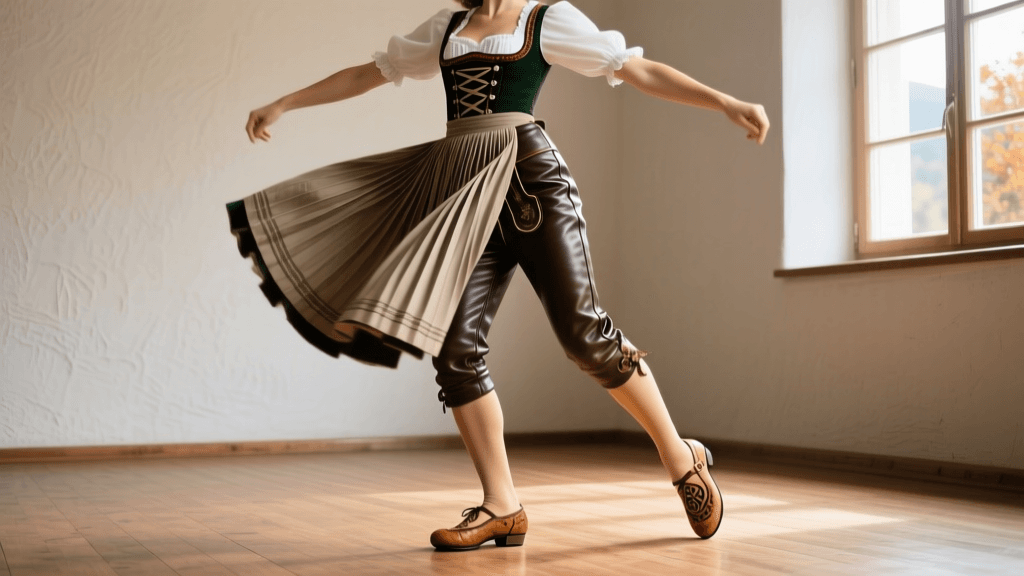
The female role in the Schuhplattler centers on the Drehen, where the dancer is spun rapidly by her partner. The physics of this movement dictate the construction of the Dirndl skirt and apron.
Skirt Circumference and Fabric Weight
For a proper bell-shape flare during spins, a dance Dirndl skirt must have a minimum circumference of 3.5 to 4.5 meters at the hem. Standard festive Dirndls often use only 2.5 meters, which results in a stiff, narrow silhouette that restricts the dancer's momentum. In 2026, master tailors recommend medium-weight cotton-linen blends (approximately 180-220 g/m²). Heavy wool is too hot for summer Gaufests, while lightweight silk lacks the structural memory to hold the pleats during rapid rotation.
The Weighted Apron (Schürze)
A critical, often overlooked element is the apron. During high-speed spins, an unweighted cotton apron will fly upward, violating traditional modesty standards and disrupting the visual line of the dance. Authentic dance aprons feature a subtle lead or heavy cotton thread woven into the bottom hem. This weighting ensures the apron remains flush against the skirt, flaring beautifully without flipping over the waistband.
Bodice Structure and Sleeve Mobility
The bodice must feature reinforced steel boning rather than flexible plastic, providing the core support needed to maintain posture while being pulled and spun by a partner. Furthermore, sleeve selection is vital. While Puffärmel (puff sleeves) are popular, they can restrict the shoulder joint during the Schnalzen (snapping) and arm-raising sequences. Short sleeves or tailored cap sleeves are preferred by competitive 2026 dance troupes for maximum rotator cuff mobility.
Lederhosen: Selecting Leather for the "Plattln" (Slapping)
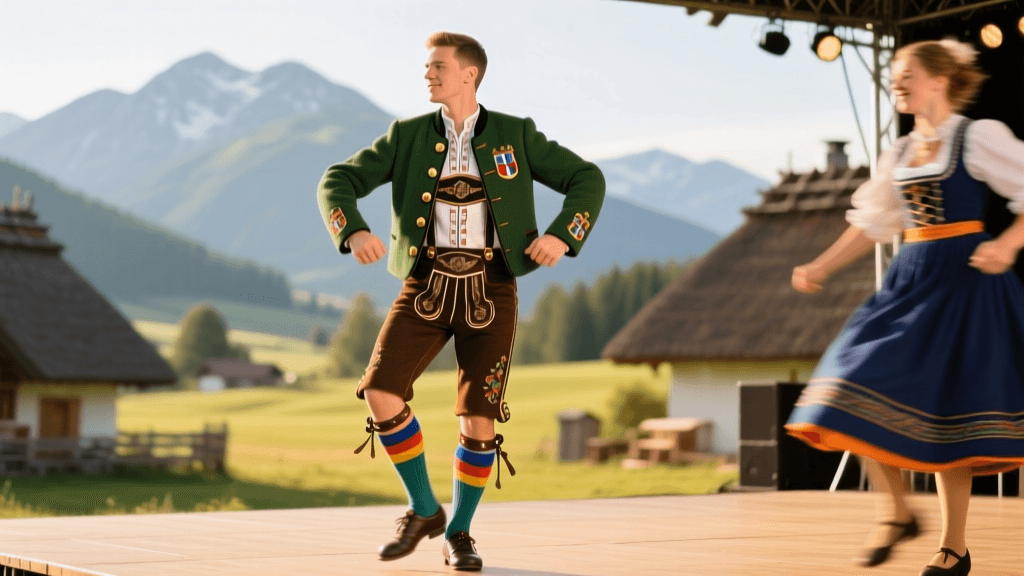
The male dancer's role is percussive. The Plattln involves striking the thighs, knees, and heavy shoe soles with open palms at high velocity. The Lederhosen must absorb this impact while allowing deep, squatting lunges.
Leather Type and Thickness
Authentic dance Lederhosen are crafted from Hirschleder (deer leather) or high-grade Bundleder. For the Schuhplattler, the leather must be brain-tanned and smoked, yielding a material that is both breathable and durable. Crucially, the thickness must be between 1.1mm and 1.3mm. Thinner leather (0.8mm) will cause severe bruising to the dancer's thighs after repeated slapping, while thicker leather (1.5mm+) will not gather the traditional soft wrinkles and will restrict deep knee bends.
Embroidery Placement (Stickerei)
Traditional floral embroidery on the front flap and suspenders is a hallmark of regional identity. However, for dance Lederhosen, the embroidery on the thigh panels must be kept relatively flat. Raised, heavily padded embroidery can scrape the dancer's hands during rapid thigh-slapping sequences, leading to calluses and blisters over a long festival weekend.
Footwear: Haferlschuhe and Goiserer for Stomping
The percussive stomping of the Schuhplattler requires footwear that acts as a resonant drum. Standard fashion loafers or thin-soled shoes will be destroyed within a single 2026 festival season, and they offer zero shock absorption for the dancer's joints.
- Haferlschuhe: The traditional Bavarian shoe with a side-lacing system and a thick, nailed leather sole. The side lacing prevents the laces from coming undone during stomping and provides a smooth front vamp for slapping.
- Goiserer: Hand-welted shoes from the Alpine region, featuring a double-stitched, heavy leather sole. These are the gold standard for professional dance groups. In 2026, a bespoke pair of Goiserer shoes costs between €650 and €900, requiring a 12-week lead time from artisans in the Salzkammergut region.
Pro Tip for 2026: Never wear brand-new dance shoes to a Gaufest. Leather soles require a minimum of 6 to 8 weeks of break-in time to mold to the foot's arch and soften the welt for proper rhythmic flexing.
Comparison: Standard Festive Tracht vs. Schuhplattler Dance Tracht
| Garment Feature | Standard Festive Tracht | Schuhplattler Dance Tracht |
|---|---|---|
| Dirndl Skirt Width | 2.5 - 3.0 meters | 3.5 - 4.5 meters (weighted hem) |
| Bodice Boning | Flexible plastic / light wire | Reinforced flat steel boning |
| Lederhosen Leather | 0.8 - 1.0mm (soft, thin) | 1.1 - 1.3mm (dense, impact-resistant) |
| Thigh Embroidery | Raised, heavily padded 3D stitch | Flat stitch to prevent hand abrasion |
| Footwear Sole | Glued rubber or thin leather | Hand-welted, nailed double-leather |
| Estimated 2026 Cost (Full Set) | €300 - €600 | €1,200 - €2,500+ |
2026 Sourcing, Care, and Festival Guidelines
Sourcing authentic dance Tracht requires moving away from commercial retail shops and engaging directly with regional Trachtenschneidereien (traditional tailors). The Bayerisches Trachtenkulturzentrum in Holzhausen maintains an excellent directory of certified artisans who specialize in historical, movement-ready garments. When ordering for the 2026 summer Gaufest season, measurements must be submitted by late February to account for the meticulous hand-stitching and leather tanning processes.
Garment Care After High-Intensity Performance
Schuhplattler generates immense body heat and friction. After a performance, Lederhosen should never be washed with water or chemical detergents, as this strips the natural brain-tanning oils and causes the leather to stiffen into a cardboard-like texture. Instead, brush the leather with a specialized suede brush and hang it in a well-ventilated, shaded area. For the Dirndl blouse and skirt, immediate spot-cleaning of sweat marks with a damp cloth and mild castile soap prevents the setting of salts that can degrade historical cotton fibers over time.
"The Schuhplattler is not merely a dance; it is a living stress-test of Alpine textile engineering. A garment that cannot survive the Plattln is not true Tracht." — Regional Trachtenpfleger, Oberbayern.
Conclusion
Preparing for the 2026 European folk dance festivals requires a deep respect for the functional heritage of Alpine clothing. By prioritizing skirt circumference, precise leather thickness, and traditional welted footwear, dancers ensure their garments honor the history of the Schuhplattler while withstanding the rigorous physical demands of the Gaufest stage. Whether you are a seasoned troupe member or a cultural historian, investing in properly engineered dance Tracht is the ultimate expression of respect for European folk traditions.