2026 Japanese Sashiko & Noragi Luxury Streetwear Collabs
The Intersection of Heritage and Hype in 2026
As we navigate the Spring and Summer 2026 fashion cycle, the global apparel market has witnessed a profound shift in how international luxury houses and streetwear titans approach cultural heritage. Moving far beyond the superficial aesthetic appropriation of the late 2010s, the 2026 landscape is defined by deep, artisanal partnerships. At the forefront of this movement is the integration of traditional Japanese garments—specifically the Noragi silhouette and Sashiko stitching techniques—into high-end collaborative capsule collections. According to industry analyses tracked by The Business of Fashion, luxury brands are now investing directly in regional Japanese artisan cooperatives, ensuring that the historical integrity of these garments is preserved while translating them for the modern, global wardrobe. This article explores the specific mechanics, pricing, and styling of these 2026 Japanese heritage collaborations, offering a comprehensive guide for collectors and fashion enthusiasts alike.
The Rise of the Noragi Silhouette in 2026 Outerwear
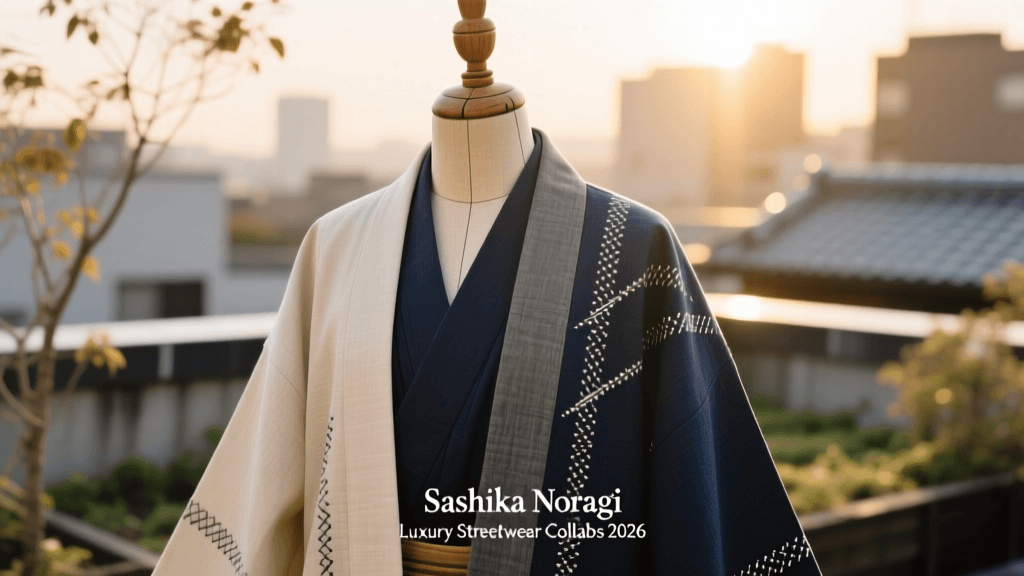
The Noragi, historically a utilitarian jacket worn by Japanese farmers and laborers, has become the definitive outerwear silhouette for 2026 luxury streetwear collaborations. Unlike the structured, tailored blazers of Western heritage, the Noragi is characterized by its relaxed, drop-shoulder construction, wide sleeves, and open front, typically secured by a simple tie or left to drape naturally. In 2026, collaborative efforts between European luxury houses and Japanese heritage brands like Kapital and Visvim have re-engineered the Noragi using advanced, weather-resistant organic textiles while maintaining the traditional T-shaped pattern cutting.
For buyers looking to invest in a collaborative Noragi this year, understanding the precise measurements and fabric weights is crucial. The 2026 standard for a luxury collaborative Noragi features a shoulder width of approximately 24 to 26 inches, a sleeve length of 23 inches (measured from the shoulder seam), and a body length of 28 to 30 inches. This oversized, boxy fit is designed to layer over heavy knitwear or tailored streetwear hoodies. The fabrics of choice for 2026 are heavy-weight Kurume Kasuri (a traditional ikat-woven cotton) and 16oz selvedge denim, often treated with natural persimmon tannin (kakishibu) for water resistance and a rich, amber-toned patina that develops over time.
Sashiko and Boro: From Mending to High-Fashion Embellishment
While the Noragi provides the structural canvas, Sashiko and Boro provide the narrative soul of the 2026 collaborations. Sashiko, translating to "little stabs," is a functional reinforcement stitching technique that originated in rural Japan to mend and insulate garments. Boro, meaning "tattered rags," refers to the patchwork textiles created through generations of Sashiko mending. In the context of 2026 luxury streetwear, these techniques have been elevated from mere repair to high-fashion embellishment, representing a philosophy of wabi-sabi—finding beauty in imperfection and transience.
The 2026 collaborative capsules are distinguishing themselves through the use of authentic, hand-stitched Sashiko rather than computerized embroidery. Brands are partnering directly with artisans in the Tohoku region, where the tradition of hand-stitching remains a vital cultural practice. As highlighted by the Victoria and Albert Museum, the historical significance of these textiles lies in their tactile nature and the human element embedded in every stitch. This year, luxury collaborators are using thick, naturally dyed indigo cotton threads, creating a stark, high-contrast geometric visual against faded, vintage-washed denim and heavy canvas bases.
2026 Collaborative Capsule Comparison
| Brand Collaboration (2026) | Garment Type | Primary Technique | Retail Price (USD) |
|---|---|---|---|
| Kapital x Global Streetwear | Heavyweight Noragi Jacket | Hand-Stitched Sashiko & Boro | $1,850 |
| Visvim x European Luxury | Haori Overshirt / Cardigan | Indigo Boro Patchwork | $3,200 |
| Porter Yoshida x Techwear | Sashiko Field Bag / Vest | Reinforced Sashiko Nylon | $650 |
| Needles x Parisian Couture | Rebuild Noragi Track-Jacket | Upcycled Vintage Boro | $1,400 |
The Zen Philosophy Behind the Stitch
To truly appreciate the 2026 collaborative pieces, one must understand the Zen spiritual underpinnings of Japanese textile arts. The practice of Sashiko is deeply meditative. The rhythmic, repetitive motion of the running stitch requires a state of mindfulness and presence, echoing the Zen principles of focus and acceptance of the present moment. When international design houses incorporate these techniques, they are not just buying a pattern; they are attempting to infuse their garments with this sense of grounded tranquility. In an era dominated by fast fashion and digital noise, the slow, deliberate creation of a Boro Noragi offers a tactile anchor. The 2026 collections heavily market this "slow fashion" ethos, appealing to a consumer base that is increasingly seeking mental wellness and spiritual connection through the objects they purchase and wear.
Material Sourcing: Kasuri Weaving and Aizome Indigo
The authenticity of a 2026 heritage collaboration relies heavily on its raw materials. Two specific Japanese textile traditions are dominating the luxury supply chain this year: Kasuri weaving and Aizome (natural indigo dyeing). Kasuri involves the meticulous tying and resist-dyeing of cotton threads before they are woven on traditional shuttle looms, resulting in patterns with slightly blurred, organic edges. The 2026 luxury capsules are sourcing premium Kurume Kasuri from Fukuoka prefecture, prized for its breathability and structural integrity.
Simultaneously, Aizome has seen a massive resurgence. Natural indigo fermentation, utilizing sukumo (dried polygonum tinctorium leaves) from Tokushima, is a highly volatile and climate-dependent process. Due to environmental shifts impacting crop yields, genuine natural indigo has become a premium luxury commodity in 2026. Collaborative brands are transparently detailing the fermentation vats and the number of dips required to achieve the deep, living blue known as "Japan Blue." Garments dyed using this method possess natural antibacterial properties and a unique, evolving fade that synthetic indigo simply cannot replicate. For a deeper dive into how these cultural elements are portrayed in modern media and fashion, the Vogue Japan Culture Archive provides extensive visual documentation of these artisanal processes.
Authentication Guide: Spotting True Sashiko vs. Machine Imitations
With the high retail prices of 2026 luxury collaborations, the market has inevitably seen an influx of machine-embroidered imitations designed to mimic the Sashiko aesthetic. For collectors and buyers, knowing how to authenticate these garments is an essential skill. Here is a practical guide to verifying authentic hand-stitched Sashiko:
- Examine the Reverse Side: True hand-stitched Sashiko uses a single thread and a running stitch. The back of the fabric will show distinct, slightly irregular dashes of thread. Machine embroidery uses a top thread and a bobbin thread, resulting in a continuous, locked stitch on the reverse side that looks overly uniform and flat.
- Check the Thread Tension: Hand-stitching naturally features minor variations in thread tension and stitch length. If the geometric patterns are mathematically perfect with zero deviation, it is likely computerized.
- Feel the Texture: Authentic Sashiko thread is heavily twisted cotton, designed to create a raised, tactile ridge on the surface of the fabric. Machine embroidery thread is often smoother, flatter, and sometimes contains synthetic polyester blends for sheen.
- Review the Provenance: Legitimate 2026 collaborations will provide a hangtag or digital passport (often via NFC chip) detailing the specific artisan cooperative or region in Japan where the stitching was completed.
Styling Heritage Collaborations for the Modern Wardrobe
Integrating a heavy, artisanal Noragi or a heavily patched Boro jacket into a contemporary 2026 wardrobe requires a balanced approach to styling. The key is to let the heritage piece serve as the undisputed focal point of the outfit, grounding it with modern, minimalist basics.
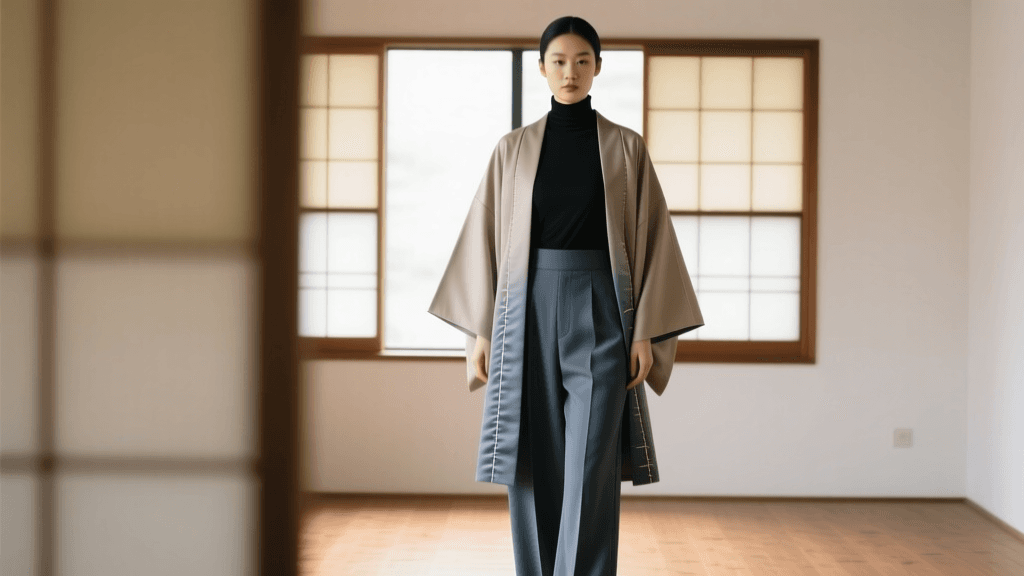
For the Noragi Jacket: Pair a drop-shoulder, indigo-dyed Noragi with relaxed-fit, pleated trousers in a neutral tone like charcoal or stone. Avoid competing patterns; the intricate Kasuri weave or Sashiko stitching provides all the visual complexity needed. Footwear should be substantial but streamlined—think chunky-soled leather derby shoes or minimalist, high-end technical sneakers. The open front of the Noragi allows for layering over a simple, high-gauge merino wool turtleneck during the cooler months of the Fall/Winter 2026 season.
For Sashiko Accessories and Vests: If a full outerwear piece feels too overwhelming, 2026 has seen a surge in Sashiko-embellished field bags, bucket hats, and lightweight vests. A Sashiko vest layered over a crisp, oversized white poplin shirt bridges the gap between traditional workwear and avant-garde office attire. When styling Boro patchwork, ensure the rest of your palette remains muted—blacks, whites, greys, and earth tones—to allow the varied shades of indigo and vintage denim to stand out vibrantly.
Conclusion: The Future of Cultural Collaboration
The 2026 landscape of Japanese fashion in international design collaborations represents a maturation of the global fashion industry. By prioritizing authentic artisan partnerships, respecting the Zen philosophies of wabi-sabi and mindfulness, and utilizing heritage techniques like Sashiko, Boro, and Kasuri weaving, luxury streetwear brands are creating garments that are not merely clothing, but wearable archives of human history. As consumers become more educated and demand greater transparency, the fusion of Japanese tradition and global design will continue to set the gold standard for meaningful, high-quality fashion in the years to come.