Styling a Japanese Haori in Your 2026 Capsule Wardrobe
The Resurgence of Heritage: The Haori in 2026
As we navigate the global fashion landscape of 2026, the collective appetite for 'quiet luxury,' sustainable textiles, and heritage craftsmanship has reached an unprecedented peak. Modern consumers are moving away from hyper-trendy, disposable fast fashion, opting instead for versatile, historically rich garments that tell a story. At the forefront of this sartorial shift is the Japanese haori—a traditional hip- or thigh-length jacket originally worn over the kimono. Once reserved strictly for formal ceremonies or traditional arts, the haori has been fully embraced by contemporary stylists as the ultimate transitional layering piece for the modern capsule wardrobe.
Mixing traditional Asian garments with modern Western silhouettes requires an understanding of proportion, fabric drape, and cultural respect. The haori is uniquely suited for this fusion. Its straight-line construction, open front, and wide sleeves offer a striking architectural contrast to the tailored, body-conscious, or oversized fits of contemporary 2026 streetwear and office attire. Whether you are looking to elevate a minimalist workwear rotation or add an artisanal touch to your weekend wardrobe, integrating a haori is a masterclass in cross-cultural styling.
Understanding the Anatomy and History
To style the haori effectively, one must first understand its construction. According to the Victoria and Albert Museum, the haori evolved significantly during the Edo period, transitioning from a practical outer layer for warmth to a highly regulated status symbol, and eventually to a canvas for exquisite textile arts. Unlike Western jackets, the haori features no buttons, zippers, or darts. It is constructed from straight panels of fabric, which means it does not conform to the body's curves but rather drapes over them, creating a fluid, geometric silhouette.
Key anatomical features to consider when styling include:
- The Eri (Collar): Typically 8cm to 10cm wide, the collar folds back at the neck and extends straight down the front. This deep V-neckline is incredibly flattering and perfect for framing modern inner layers like turtlenecks or crewneck tees.
- The Sode (Sleeves): Traditional haori sleeves feature a deep drop (often 45cm to 60cm) and an open underarm area known as the aki. This ventilation was originally designed for airflow and ease of movement over bulky kimono layers, but in 2026, it provides a dramatic, breezy drape that pairs beautifully with sleeveless or cap-sleeve modern tops.
- The Haori Himo (Ties): These are the decorative braided cords used to tie the jacket at the chest. While traditionally tied in specific knots, modern wearers often leave the haori completely open for a relaxed, effortless look, or use minimalist metal clasps for a contemporary edge.
Selecting the Right Fabric for 2026
The material of your haori will dictate how it functions within your modern wardrobe. In 2026, we are seeing a massive surge in sustainable, heritage-meets-innovation textiles. While vintage silk remains a prized collector's item, modern artisans are utilizing organic linens, hemp, and innovative Tencel-silk blends that offer easier care and year-round wearability.
According to the Metropolitan Museum of Art's Heilbrunn Timeline of Art History, the mastery of Japanese dyeing techniques such as shibori (tie-dye) and yuzen (resist dyeing) has been passed down through generations. Today, these techniques are being applied to modern, eco-friendly fabrics. When sourcing a haori for daily wear, look for aizome (natural indigo) dyed cotton or linen. Natural indigo not only provides a rich, living color that fades beautifully over time, but it also possesses natural antibacterial properties, making it ideal for garments worn close to the skin in warmer months.
Three Ways to Style a Haori in 2026
Integrating a traditional piece into a modern wardrobe is all about balancing volumes and contrasting textures. Here are three highly actionable, contemporary styling formulas for 2026.
1. The Elevated Office Look (Business Casual)
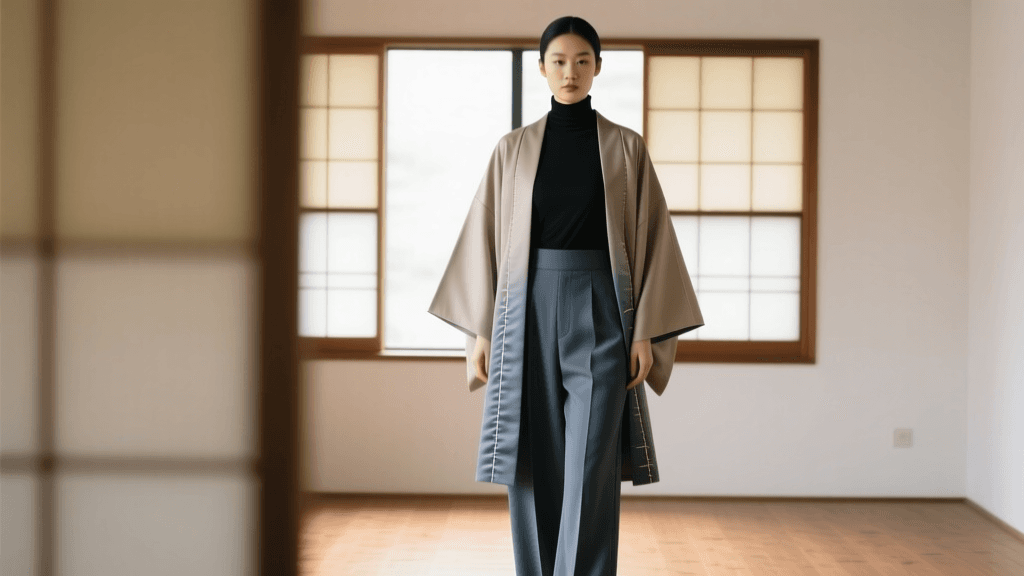
The modern office dress code in 2026 heavily favors relaxed tailoring and fluid silhouettes. Swap out your standard structured blazer for a mid-weight, solid-color linen haori.
- The Base: A crisp, white organic cotton poplin button-down shirt, left slightly unbuttoned at the collar.
- The Bottoms: High-waisted, wide-leg charcoal wool trousers with a subtle front pleat. The wide leg mirrors the volume of the haori sleeves, creating a cohesive, architectural line.
- The Footwear: Minimalist leather loafers or sleek, pointed-toe ankle boots.
- Styling Tip: Choose a haori in a muted tone like slate grey, deep navy, or olive. Roll the sleeves of the inner poplin shirt just past the elbow to contrast with the wide, draping sleeves of the haori, highlighting the layering effect.
2. Weekend Streetwear Edge
Streetwear in 2026 continues to embrace exaggerated proportions and artisanal craftsmanship. A cropped or standard-length haori serves as the perfect statement outer layer for transitional spring and autumn weather.
- The Base: A heavyweight (280gsm or higher) vintage-wash graphic tee or a premium blank cotton t-shirt in an earthy tone like ochre or rust.
- The Bottoms: Relaxed-fit, raw selvedge denim or structured cargo trousers.
- The Footwear: Chunky archival sneakers or rugged leather work boots.
- Styling Tip: Opt for a haori featuring traditional sashiko (decorative reinforcement stitching) or subtle kasuri (ikat) patterns. The intricate, hand-stitched textures of the haori elevate the casual nature of the denim and cotton tee, bridging the gap between workwear and high fashion.
3. Evening Minimalist Elegance
For evening events, dinner dates, or gallery openings, a vintage silk haori offers an unparalleled level of sophistication and movement.
- The Base: A bias-cut, midi-length silk or satin slip dress in a solid, neutral color (champagne, black, or emerald).
- The Outer Layer: A vintage silk haori featuring a subtle rinzu (silk damask) weave or a delicate, hand-painted yuzen motif on the lower hem and sleeves.
- The Footwear: Strappy minimalist heels or embellished mules.
- Styling Tip: Because the haori is open at the front, it creates a long, unbroken vertical line over the slip dress, which is incredibly elongating. Secure the haori loosely at the waist with a thin, modern leather belt worn over the haori to define the silhouette and add a contemporary, avant-garde twist to the traditional garment.
Fabric Comparison Chart for Modern Styling
Choosing the right fabric is critical for ensuring your haori fits the context of your modern wardrobe. Below is a comparison of the most popular haori materials available in the 2026 market.
| Fabric Type | 2026 Price Range (USD) | Drape & Weight | Care Requirements | Best Modern Application |
|---|---|---|---|---|
| Vintage Silk (Pre-1980s) | $150 - $600+ | Fluid, lightweight, delicate | Dry clean only; avoid direct sunlight | Evening wear, gallery events, formal layering |
| Artisanal Linen / Hemp | $180 - $350 | Structured, breathable, medium weight | Machine wash cold, line dry | Office wear, smart casual, summer layering |
| Sashiko-Quilted Cotton | $220 - $450 | Heavy, textured, rigid drape | Hand wash or gentle cycle | Streetwear, autumn outerwear, casual weekends |
| Tencel-Silk Blend | $120 - $280 | Buttery soft, heavy drape, wrinkle-resistant | Machine wash delicate, tumble dry low | Travel capsules, resort wear, everyday luxury |
Sourcing, Pricing, and Authenticity
The market for traditional Asian garments has expanded significantly, but authenticity and ethical sourcing remain paramount. In 2026, the Agency for Cultural Affairs, Government of Japan continues to emphasize the importance of supporting certified traditional craftspersons to keep heritage techniques alive. When investing in a new, artisan-made haori, look for certifications or direct partnerships with weaving cooperatives in regions like Kyoto, Niigata, or Okinawa.
For vintage pieces, the secondary market is thriving. Specialized online curators and dedicated vintage markets in Tokyo (such as the Oedo Antique Market) and global platforms offer incredible mid-century silk haori. When buying vintage, always check the condition of the silk along the fold lines, as this is where the fabric is most prone to dry rot and tearing. Expect to pay between $80 and $250 for a high-quality, wearable vintage silk haori in excellent condition.
Care and Maintenance for the Modern Owner
Proper care ensures that your haori remains a staple in your wardrobe for decades. Modern lifestyles require practical maintenance routines that respect the garment's traditional construction.
- Airing Out: After wearing, hang your haori on a wide, padded hanger in a well-ventilated area away from direct sunlight. This allows any moisture or odors to dissipate naturally without the need for frequent washing.
- Washing: Never machine-wash vintage silk or heavily embroidered pieces. For modern linen or cotton haori, use a pH-neutral, eco-friendly detergent on a cold, delicate cycle. Always air dry flat or on a padded hanger to maintain the straight-line structure of the seams.
- Storage: Traditional Japanese garments are often stored folded, using a specific method that prevents permanent creases along the same lines. If you prefer to fold your haori for drawer storage, place acid-free tissue paper along the fold lines to protect the fibers and rotate the folds periodically. If hanging, use breathable cotton garment bags to protect against dust and moths, avoiding plastic bags which can trap moisture and cause mildew.
'The beauty of the haori lies in its refusal to conform to the body. It creates a space between the wearer and the garment—a space that allows for movement, breath, and a quiet sense of personal elegance.' — Contemporary Textile Curator, 2026.
Conclusion
Mixing traditional Asian pieces with modern wardrobes is not about creating a costume; it is about appreciating the architectural brilliance and artisanal history of the garment and allowing it to converse with contemporary fashion. The Japanese haori, with its rich history, sustainable fabric innovations, and unparalleled versatility, stands out as one of the most valuable additions to a 2026 capsule wardrobe. By understanding its anatomy, selecting the right textile for your lifestyle, and applying thoughtful styling formulas, you can honor the heritage of the haori while forging a distinctly modern, global personal style.