Ming Dynasty Hanfu: Decoding Color Codes and Rank Badges
The Sartorial Laws of the Ming Dynasty
When the Ming Dynasty (1368–1644) overthrew the Mongol-led Yuan Dynasty, the restoration of Han Chinese cultural identity became a paramount political and social objective. Nowhere was this more visible than in the realm of textiles and clothing. The Ming government instituted rigorous sumptuary laws—detailed sartorial codes that dictated exactly what colors, fabrics, and motifs a person could wear based on their social rank, occupation, and gender. For modern Hanfu enthusiasts, historians, and reenactors, understanding these Ming Dynasty color codes and rank badges (known as Buzi) is essential for achieving historical accuracy and showing respect for the deep symbolism woven into traditional Chinese garments.
According to the Metropolitan Museum of Art, the Ming era saw a phenomenal resurgence of Han Chinese cultural identity, heavily reflected in the revival and codification of ancient textile arts, silk weaving techniques, and strict dress codes that separated the imperial court from the common populace. Today, as the Hanfu movement experiences a global renaissance, decoding these historical rules allows modern wearers to select garments that are not only visually stunning but culturally resonant.
The Imperial Color Hierarchy: Who Could Wear What?
In Ming Dynasty China, color was never merely an aesthetic choice; it was a visual language tied to the Wu Xing (Five Elements) theory, cosmology, and the strict social hierarchy. The government strictly regulated dye usage, reserving the most expensive and vibrant pigments for the elite.
Imperial and Noble Colors
- Bright Yellow (Ming Huang): The ultimate symbol of imperial power, representing the earth element and the center of the universe. By Ming law, bright yellow was strictly reserved for the Emperor, the Empress, and the Dowager Empress. Even the use of golden-yellow thread in commoners' embroidery was heavily restricted.
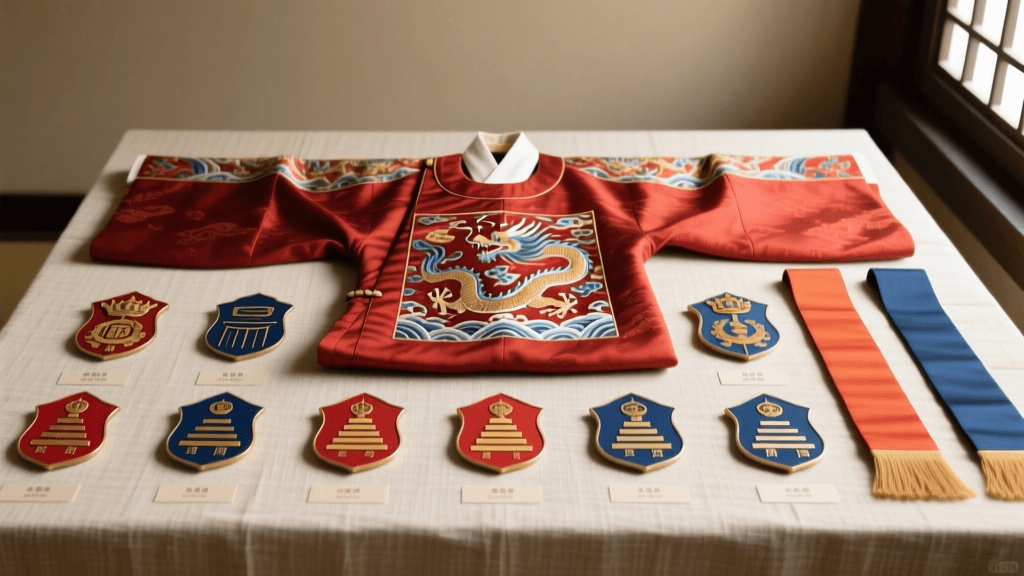
- Scarlet and Crimson Red: Representing fire, summer, and auspiciousness. High-ranking civil and military officials (typically ranks 1 through 4) were permitted to wear crimson robes for court assemblies. Red was also the mandated color for imperial wedding garments, a tradition that trickled down to commoners, allowing them to wear red only on their wedding day as a form of 'borrowed' imperial grace.
- Purple and Deep Magenta: While historically rare due to the difficulty of extracting purple dyes, deep purples and magentas were often favored by high-ranking nobility and imperial consorts, symbolizing spiritual awareness and high status.
Colors for Officials, Scholars, and Commoners
- Blue and Green: Associated with the wood element and spring. Lower-ranking officials (ranks 5 through 9) typically wore robes in various shades of blue, cyan, or green. Scholars and literati also favored these colors, as they represented growth, vitality, and intellectual pursuit.
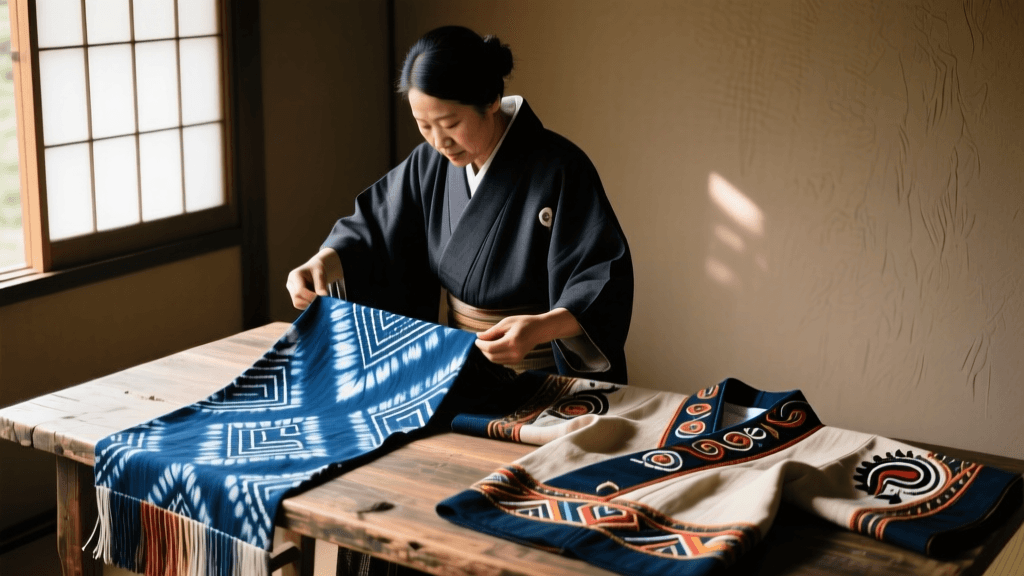
- Black and Dark Navy: Representing water and winter. Black was a highly respected color for scholars, judges, and Daoist priests. The iconic Daopao (scholar's robe) was frequently dyed in deep indigo or black, accented with subtle white or silver embroidery.
- White, Hemp, and Earth Tones: Commoners, merchants, and peasants were largely restricted to undyed hemp, raw silk, cotton, and muted earth tones. Bright whites were heavily associated with mourning and were taboo for festive or daily wear.
'The Ming sumptuary laws were not just about restricting luxury; they were about maintaining cosmic and social order. To wear a color above one's station was considered an act of rebellion against the heavens themselves.' — Historical Textile Analysis, Ming Archives.
Buzi (Mandarin Squares): Decoding the Rank Badges
While color established the general tier of a wearer, the Buzi (rank badge) provided exact bureaucratic identification. Introduced formally during the Ming Dynasty and later adopted by the Qing, the Buzi was a square embroidered or woven badge affixed to the front and back of an official's Bufu (rank robe). As detailed by the Britannica encyclopedia, the buzi system was strictly regulated, utilizing specific birds for civil officials (representing literary elegance and virtue) and mythical or fierce beasts for military officials (representing courage and martial prowess).
Table: Civil vs. Military Rank Badges in the Ming Dynasty
| Rank | Civil Official (Birds) | Military Official (Beasts) |
|---|---|---|
| 1st Rank | Red-Crowned Crane | Qilin (Mythical Chimera) |
| 2nd Rank | Golden Pheasant | Lion |
| 3rd Rank | Peacock | Leopard |
| 4th Rank | Wild Goose | Tiger |
| 5th Rank | Silver Pheasant | Bear |
| 6th Rank | Egret | Panther |
| 7th Rank | Mandarin Duck | Rhinoceros |
| 8th Rank | Quail | Rhinoceros |
| 9th Rank | Paradise Flycatcher | Sea Horse (Mythical) |
For modern collectors and reenactors, sourcing a historically accurate Buzi requires attention to technique. Ming-era badges were often woven using the Kesi (cut silk) tapestry technique or embroidered with peacock feather threads and spun gold. When purchasing modern replicas, look for badges that utilize couching techniques for gold threads rather than cheap metallic printing.
Practical Guide: Sourcing Authentic Ming-Style Hanfu Today
As reported by Smithsonian Magazine, the modern Hanfu movement has sparked a massive revival in traditional garment manufacturing. However, navigating the market requires a keen eye for historical accuracy versus modern theatrical costumes. If you are attending a formal event, a historical reenactment, or a traditional wedding, here is how to accurately select, measure, and budget for Ming-style Hanfu.
Key Garments and Measurements
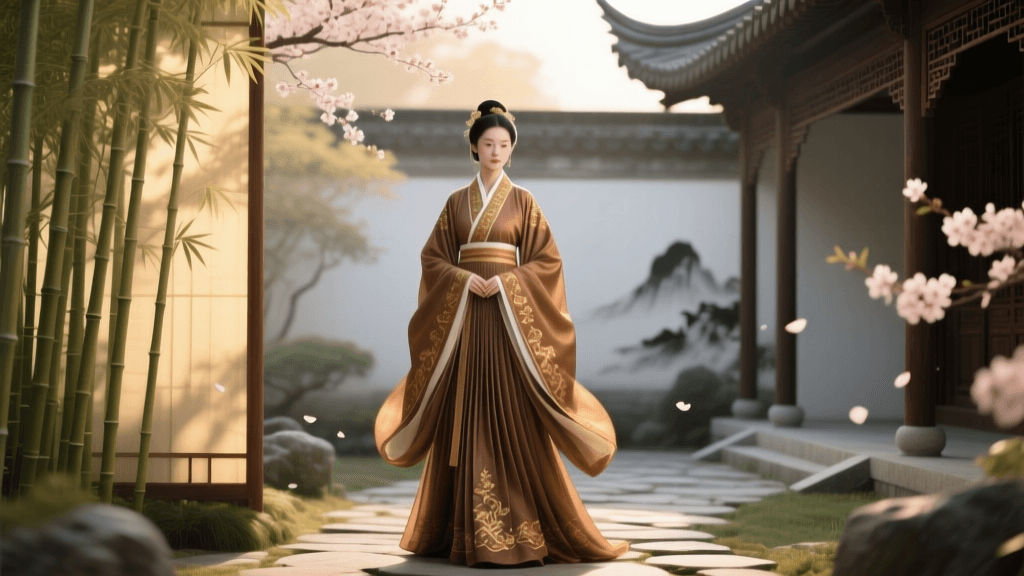
The quintessential Ming Dynasty silhouette for women revolves around the Mamianqun (horse-face skirt) paired with a Pifeng (cape) or an Ao (lined jacket). For men, the Daopao (Daoist/scholar robe) or the Yisan (a garment with Ming royal and military origins) are highly appropriate.
- Mamianqun (Horse-Face Skirt): For a modern wearer of average height (160cm - 165cm), request a skirt length of 100cm to 105cm. The waistband should be 10cm to 12cm wide, made of sturdy cotton or linen to grip the torso and support the heavy silk of the skirt. The skirt must feature two flat panels (the 'horse faces') and structured pleats on the sides.
- Daopao (Scholar's Robe): This cross-collared robe features side slits and hidden side panels. The ideal length is 130cm to 140cm (grazing the ankles). The sleeve span (from cuff to cuff) should be expansive, ideally 200cm to 220cm, with the characteristic Ming 'pipa' shaped sleeves that narrow at the wrist.
- Pifeng (Cape/Jacket): A straight-collared, open-front overgarment. Length should fall just below the hips (75cm to 85cm), with sleeve lengths ending just past the wrist bone to reveal the intricate cuffs of the inner garments.
Fabric Selection: The Mark of Authenticity
Ming Dynasty clothing was famous for its heavy, structured silks. Avoid flimsy, sheer chiffons or cheap satins, which belong to modern fantasy costumes, not historical Ming attire.
- Silk Jacquard and Brocade: The gold standard for Mamianqun. Look for Zhijin (woven gold) techniques where the metallic threads are integrated into the loom weave, not printed on top. Cost: $120 - $250 USD.
- Mulberry Silk Crepe and Linen Blends: Excellent for inner garments, summer Ao jackets, and scholar robes. These fabrics provide the necessary drape and breathability. Cost: $60 - $110 USD.
- Faux Silk / High-Grade Polyester: Acceptable for beginners or those on a strict budget. Modern textile mills in Hangzhou produce polyester jacquards that mimic the weight and sheen of Ming brocades remarkably well. Cost: $40 - $70 USD.
Budgeting and Timing for Custom Orders
If you are ordering from specialized Hanfu artisans (often based in Hangzhou, Suzhou, or via specialized international boutiques), timing is crucial. Off-the-rack garments made from pre-woven jacquard fabrics typically ship within 3 to 7 days. However, if you require a custom-woven Mamianqun with specific auspicious motifs (like the 'Hundred Boys' pattern for weddings or 'Cloud and Dragon' motifs for formal ceremonies), the loom setup and weaving process will take 45 to 60 days. Budget an additional $50 to $100 for custom tailoring to ensure the waistband and shoulder seams align perfectly with your modern proportions while maintaining historical drape.
Conclusion
Wearing Ming Dynasty Hanfu is an exercise in historical storytelling. By respecting the profound symbolism of the color codes and the intricate language of the Buzi rank badges, modern enthusiasts do more than just wear beautiful clothes; they resurrect a complex, vibrant era of Asian history. Whether you are investing in a heavy, woven-gold Mamianqun for a wedding or a modest, indigo-dyed Daopao for a cultural festival, understanding these sartorial laws ensures your garment is a true testament to the mastery of traditional Chinese textile arts.