2026 Luxury Collabs: Japanese Sashiko and Nishijin-Ori Textiles
The Intersection of Heritage and Haute Couture in 2026
The global fashion landscape of 2026 has decisively pivoted away from transient micro-trends, embracing a profound appreciation for slow craftsmanship and cultural preservation. At the forefront of this movement are international design collaborations that integrate traditional Japanese textile techniques into modern luxury garments and accessories. European heritage houses and avant-garde streetwear labels are increasingly partnering with master artisans from Kyoto and the Tohoku region, elevating centuries-old practices like Sashiko stitching and Nishijin-Ori weaving onto the world's most prestigious runways. These partnerships are not merely aesthetic appropriations; they are vital economic lifelines that sustain endangered artisanal guilds while offering contemporary consumers garments of unparalleled structural integrity and historical resonance.
Sashiko: From Peasant Mending to 2026 Luxury Embellishment
Originating as a practical method for reinforcing and insulating workwear in rural Japan, Sashiko (literally 'little stabs') is characterized by its simple, geometric running stitch. In 2026, luxury collaborations have reimagined Sashiko, transforming it from a symbol of utilitarian poverty into a hallmark of bespoke haute couture. International designers are working directly with artisans in Aomori and Iwate prefectures to apply micro-Sashiko techniques to high-end denim, structured wool outerwear, and even leather goods.
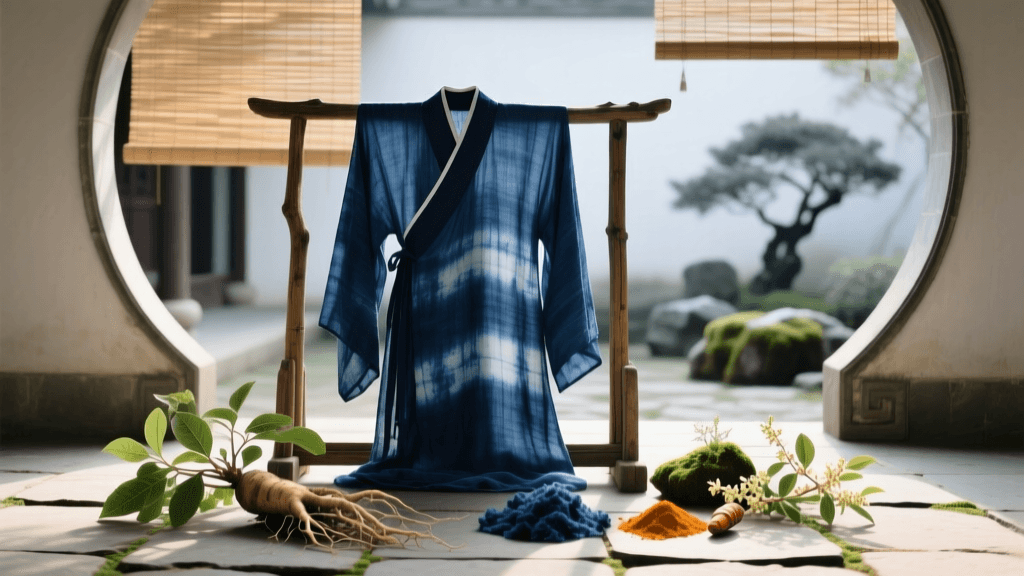
The technical execution of these 2026 collaborative pieces requires immense precision. While traditional Sashiko utilizes a stitch length of roughly 3 to 5 millimeters, contemporary luxury adaptations often employ micro-stitches measuring exactly 1.5 to 2 millimeters. This denser stitch pattern not only creates a more intricate visual texture but also significantly increases the tensile strength of the base fabric. Artisans use specialized, hand-spun cotton threads dyed with natural indigo (sukumo), which possesses natural antibacterial properties and fades uniquely over time, ensuring that every collaborative jacket or tote bag develops a bespoke patina unique to its wearer.
Nishijin-Ori: Weaving the Future of Global Accessories
If Sashiko represents the art of surface embellishment and repair, Nishijin-Ori represents the pinnacle of structural textile creation. Hailing from the Nishijin district of Kyoto, this traditional jacquard weaving technique involves dyeing threads before they are woven, allowing for incredibly complex, multi-colored patterns that are integrated directly into the fabric's warp and weft. According to the Ministry of Economy, Trade and Industry (METI), Nishijin-Ori remains one of Japan's most rigorously protected traditional crafts, requiring years of apprenticeship to master the operation of the specialized looms.
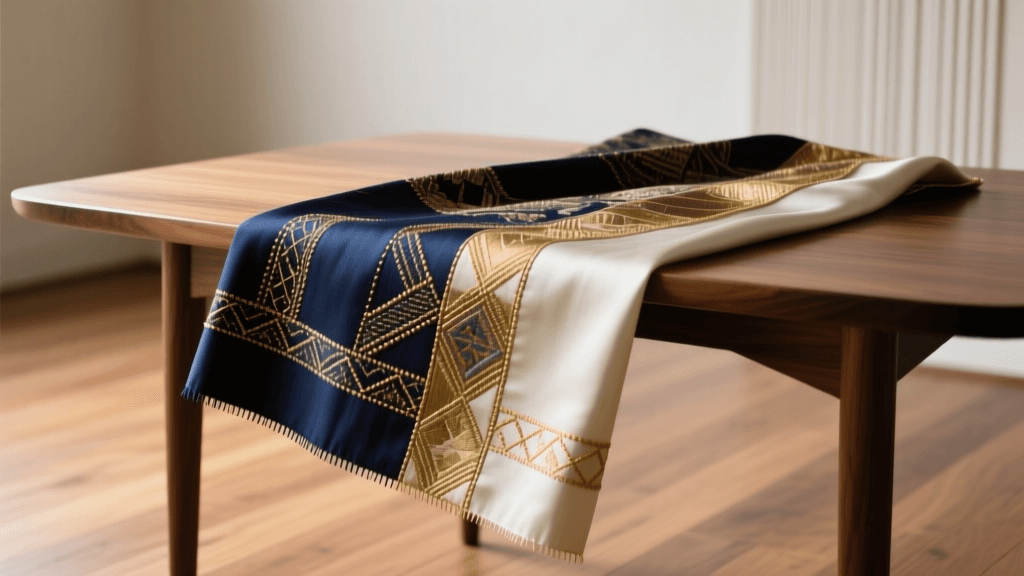
In 2026, international luxury houses are utilizing Nishijin-Ori for highly specialized, low-volume accessory components. Rather than producing full bolts of fabric, Kyoto weavers are engineering narrow, hyper-dense textile panels specifically designed for sneaker uppers, handbag structural flaps, and corsetry boning channels. The integration of metallic threads—traditionally created by applying gold or silver leaf to washi paper and slicing it into 0.3-millimeter strips—has been adapted for 2026's luxury footwear market, providing a lightweight, flexible, yet remarkably durable alternative to synthetic metallic leathers. The historical depth of this technique, as documented by institutions like the Metropolitan Museum of Art, provides a rich narrative that modern luxury consumers actively seek out.
2026 Collaborative Textile Comparison Chart
For collectors and fashion historians navigating the 2026 luxury market, understanding the distinct characteristics, origins, and market valuations of these collaborative textiles is essential. The following table outlines the primary Japanese techniques currently dominating international design partnerships.
| Technique | Origin Region | 2026 Luxury Application | Average Collab Price Point (USD) | Production Time (Per Yard) |
|---|---|---|---|---|
| Sashiko (Hand-Stitched) | Tohoku (Aomori/Iwate) | Denim outerwear, leather bag paneling | $2,800 - $6,500 | 40 - 80 hours |
| Nishijin-Ori (Jacquard) | Kyoto (Nishijin District) | Sneaker uppers, structural corsetry, ties | $1,500 - $4,200 | 15 - 30 hours |
| Kanoko Shibori (Tie-Dye) | Aichi (Arimatsu) | Silk evening wear, scarf layering | $3,200 - $8,000 | 100+ hours |
| Boro (Patchwork Mending) | National (Curated Guilds) | Archival outerwear, bespoke suiting | $4,500 - $12,000 | Variable (Decades of layering) |
How to Authenticate and Source 2026 Collaborative Pieces
As the demand for authentic Japanese craftsmanship surges in 2026, the market has unfortunately seen an influx of machine-made imitations masquerading as hand-finished artisanal collaborations. Whether you are acquiring a limited-edition Sashiko-embellished denim jacket from a Parisian luxury house or a Nishijin-Ori woven tote, knowing how to authenticate the textile is paramount.
Authenticating Hand-Sashiko vs. Machine Embroidery
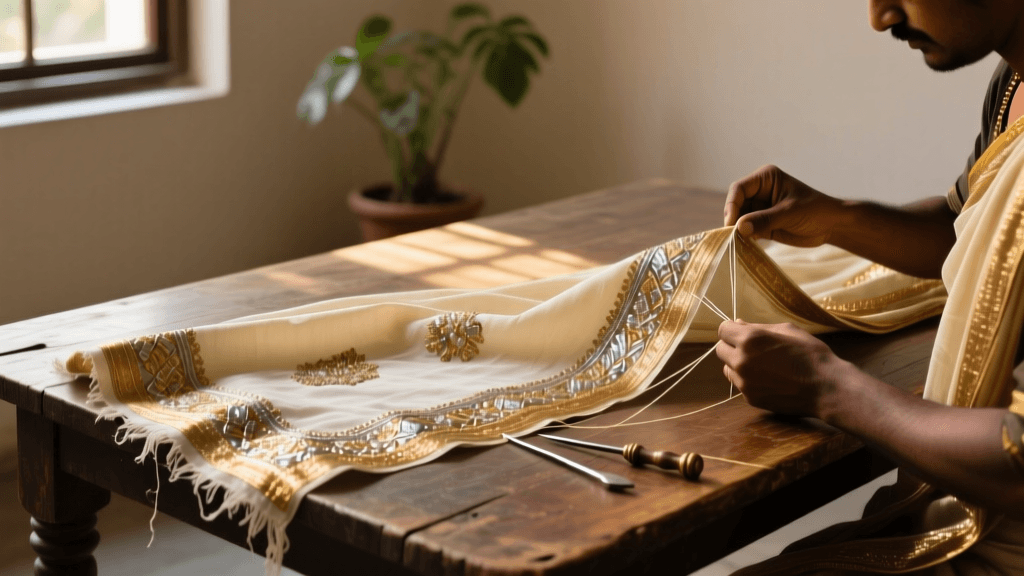
The most reliable method for verifying authentic hand-stitched Sashiko is to examine the reverse side of the fabric. Machine embroidery relies on a continuous bobbin thread that runs parallel to the top stitch, creating a uniform, locked stitch on the back. Genuine hand-Sashiko, however, utilizes a single continuous thread that weaves in and out of the fabric. On the reverse side, you will see the 'floats' of the thread crossing the back of the fabric in a mirror image of the front pattern, with no separate bobbin thread. Additionally, authentic 2026 collaborative pieces will feature slight, intentional variations in stitch tension—a hallmark of the human hand that master artisans of the Japan Kogei Association proudly preserve.
Verifying Nishijin-Ori Integrity
Authentic Nishijin-Ori is woven, not printed or embroidered onto a base cloth. To verify this, hold the fabric up to a strong light source. In true jacquard weaving, the pattern is created by the intersection of the warp and weft threads; therefore, the colors and patterns will be visible, albeit reversed, on the back of the textile. If the back of the fabric is a solid color with loose, messy thread floats or a fused backing, it is likely a modern digital print or a surface appliqué, not authentic Nishijin-Ori.
Investment Value and Care Instructions for Heritage Textiles
Purchasing a 2026 collaborative piece featuring traditional Japanese textiles is not merely a fashion transaction; it is an investment in wearable art and cultural preservation. To maintain the structural integrity and monetary value of these garments, strict archival care protocols must be followed.
- Climate Control: Store Nishijin-Ori and silk Shibori pieces in a climate-controlled environment maintaining a relative humidity (RH) of exactly 45% to 55%. Fluctuations in humidity can cause the metallic paper threads in Nishijin-Ori to become brittle and snap.
- Light Exposure: Natural indigo-dyed Sashiko threads are highly photosensitive. Garments should be stored in opaque, acid-free garment bags and kept away from direct UV light to prevent premature, uneven fading.
- Cleaning Protocols: Never dry-clean authentic Boro or Sashiko collaborations unless the cleaning facility specializes in archival Japanese textiles. The harsh chemicals used in standard commercial dry cleaning will strip the natural oils from hand-spun cotton and degrade the natural indigo dye. Spot cleaning with distilled water and a soft, natural-bristle brush is the recommended maintenance method for 2026 releases.
Preserving Heritage Through Global Trade
The international design collaborations of 2026 represent a critical evolution in the survival of Asian traditional garments and textiles. By integrating Sashiko and Nishijin-Ori into global luxury supply chains, international brands are providing the financial capital necessary for aging master artisans to take on new apprentices. This cross-cultural exchange ensures that the profound philosophy of wabi-sabi—finding beauty in imperfection and transience—and the meticulous discipline of Japanese weaving continue to thrive, shaping the future of global fashion while honoring the sacred traditions of the past.