Antique Banarasi Sari Zari Restoration & Storage Guide 2026
The Legacy and Vulnerability of Real Zari in Banarasi Silk
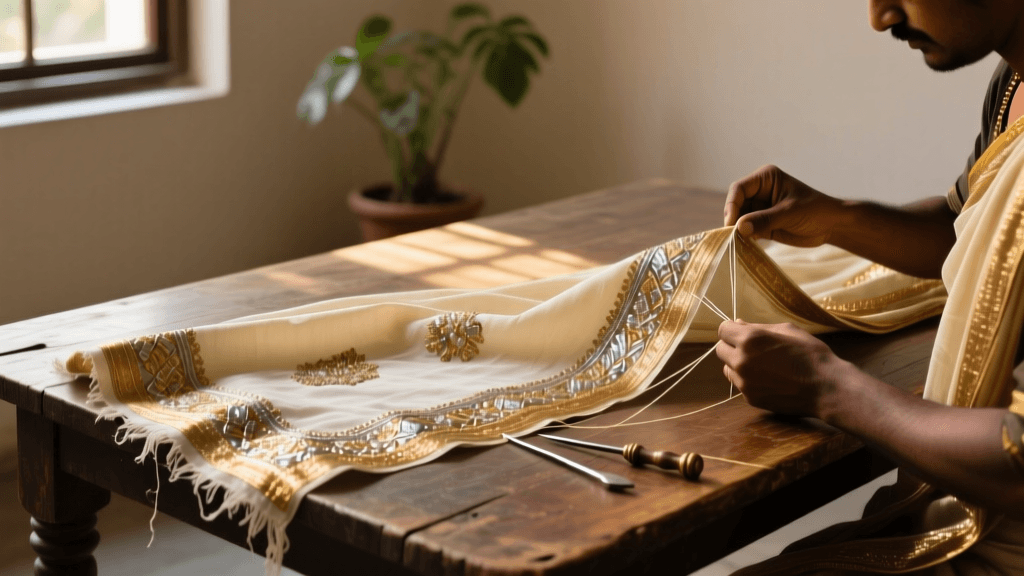
Banarasi silk saris are not merely garments; they are woven tapestries of cultural heritage, generational wealth, and unparalleled artisanal skill. Originating from the holy city of Varanasi, these textiles are defined by their opulent use of zari—intricate metallic threads that create breathtaking brocade patterns. However, as we navigate the preservation landscape in 2026, collectors and families face a critical challenge: the degradation of both the silk fibroin and the metallic zari threads. Unlike modern synthetic alternatives, antique real zari (known as asli zari) is crafted from a silk core wrapped with flattened silver wire and electroplated with pure gold. This complex metallurgical structure makes it highly susceptible to environmental factors, requiring specialized care that bridges traditional Indian textile practices with modern 2026 conservation science.
Identifying Real Zari vs. Synthetic Imitations
Before initiating any restoration protocol, it is imperative to authenticate the zari. In the 2026 vintage market, distinguishing between real metallic zari, tested silver zari, and synthetic polyester imitations dictates the cleaning methodology.
- Visual and Tactile Inspection: Real zari possesses a distinct, slightly uneven texture and a deep, warm luster that synthetic threads cannot replicate. Synthetic zari often appears overly uniform and excessively shiny.
- The Burn Test (Destructive): While conservators avoid this on intact garments, testing a single loose thread from an inner hem reveals the truth. Real zari leaves behind a fine, white ash (the silk core) and a metallic residue (the silver/gold wire). Synthetic zari will melt into a hard, black plastic bead.
- X-Ray Fluorescence (XRF): For high-value museum pieces, non-destructive XRF scanning is the 2026 gold standard to determine the exact elemental composition of the metallic wrapping without touching the textile.
The Chemistry of Zari Tarnish and Silk Degradation
Understanding the chemistry of deterioration is the first step toward effective preservation. Tarnish on zari is primarily caused by the oxidation of the silver core. When exposed to atmospheric sulfur compounds, high humidity, and the acidic oils from human skin, the silver reacts to form silver sulfide, manifesting as a dull, black, or greenish film over the gold plating. Simultaneously, the silk core of the zari and the base silk fabric suffer from hydrolysis and photo-oxidation. According to guidelines published by the Victoria and Albert Museum Conservation Department, silk proteins break down rapidly when exposed to fluctuating relative humidity (RH) and ultraviolet (UV) radiation, leading to 'shattered' silk that crumbles under its own weight.
Essential 2026 Climate Monitoring for Textile Archives
Storing heirloom Banarasi saris in a standard cedar chest or a dark closet is no longer sufficient. In 2026, micro-climate monitoring is accessible and essential for home archivists. The ideal environment for silk and metallic threads is a stable temperature of 65°F to 70°F (18°C to 21°C) with a Relative Humidity (RH) strictly maintained between 45% and 50%.
To achieve this, modern collectors utilize smart hygrometers and automated climate control systems. Devices like the Govee Smart Hygrometer H5179 or the SwitchBot Indoor/Outdoor Thermo-Hygrometer allow you to set automated alerts to your smartphone if the RH in your storage room deviates by even 3%. If humidity spikes, these systems can automatically trigger smart dehumidifiers, preventing the moisture accumulation that accelerates silver sulfide formation on your zari threads.
Step-by-Step Zari Restoration and Cleaning
If your antique Banarasi sari exhibits tarnished zari, never use liquid silver polishes, commercial jewelry dips, or water-based cleaners. These products will strip the delicate gold electroplating, permanently ruining the thread and staining the surrounding silk. Instead, follow these dry conservation techniques:
- Surface Dusting: Use a museum-grade, ultra-soft hake brush (made from goat or squirrel hair) to gently sweep away particulate dirt. Always brush in the direction of the weave to avoid snagging the metallic threads.
- Chemical Sponge Cleaning: For embedded grime, conservators use vulcanized rubber soot sponges. These dry sponges lift dirt and oxidized surface oils through micro-abrasion without introducing moisture. Gently dab (do not rub) the tarnished zari areas.
- Micro-Crystalline Wax Application: To protect newly cleaned zari from immediate re-oxidation, a microscopic layer of Renaissance Wax or a similar conservation-grade micro-crystalline wax can be applied using a soft, lint-free cotton swab. This creates an inert barrier against atmospheric sulfur.
Pest Management: Defending Against Silverfish and Carpet Beetles
The silk core of the zari and the Banarasi silk base are prime targets for protein-eating pests like silverfish and carpet beetles. In 2026, integrated pest management (IPM) for textiles relies on prevention rather than chemical pesticides, which can off-gas and damage metallic threads.
- Pheromone Traps: Place non-toxic sticky pheromone traps in the corners of your textile storage room to monitor and intercept breeding adult beetles.
- Freezing Protocol: If an infestation is suspected, the Smithsonian Museum Conservation Institute recommends the freezing method. Seal the sari in a breathable cotton bag, place it inside an airtight polyethylene bag, and freeze it at -20°C (-4°F) for 72 hours. Thaw it slowly at room temperature before removing it from the sealed bag to prevent condensation from forming on the metallic zari.
Archival Storage: What Works and What Ruins Heirlooms
The materials that directly touch your Banarasi sari will dictate its lifespan. The following table compares common storage materials based on 2026 conservation standards:
| Storage Material | Pros | Cons | Conservation Verdict |
|---|---|---|---|
| Unbleached Muslin | Breathable, traditional, washable. | Can harbor acidity if not pre-washed; not a moisture barrier. | Excellent for outer wrapping and rolling. |
| Acid-Free Tissue Paper | pH neutral, prevents hard creases, buffers moisture. | Single-use; tears easily. | Mandatory for stuffing folds and separating layers. |
| Plastic Bins (Polypropylene) | Blocks dust, pests, and water leaks. | Traps moisture; off-gases if not archival grade. | Good for outer secondary storage only; never let silk touch plastic. |
| PVC / Vinyl Garment Bags | Cheap, transparent. | Emits hydrochloric acid as it degrades; traps humidity. | Never use. Highly destructive to silk and zari. |
| Cedar Wood Chests | Repels moths naturally. | Cedar oil stains silk and accelerates metallic tarnish. | Avoid direct contact; line completely with barrier foil and muslin. |
For long-term storage, the sari should be gently rolled around an acid-free, archival-quality cardboard tube (buffered to a pH of 8.5). Rolling prevents the permanent creasing and 'shattering' of silk that occurs when heavy zari-laden garments are folded for years. Wrap the rolled sari in pre-washed, unbleached muslin, and store it horizontally in a dark, climate-controlled room.
The Seasonal Airing Ritual (Dhoop Dikhana)
In Indian tradition, the post-monsoon practice of Dhoop Dikhana (showing the garments to the gentle sun and air) is a time-honored method to refresh saris. However, modern conservation requires adapting this ritual. Direct UV radiation will fade the vibrant silk dyes and weaken the fibers. In 2026, the recommended approach is to drape the sari over a padded, fabric-covered railing in a heavily shaded, well-ventilated indoor area or a screened porch for a few hours. This allows trapped moisture and stale odors to dissipate without exposing the textile to harmful ultraviolet rays or outdoor pollutants.
When to Call a Professional Textile Conservator
While home maintenance can stabilize a garment, severe structural damage requires professional intervention. If your Banarasi sari exhibits widespread silk shattering, detached zari wefts, or severe biological staining (mold), do not attempt DIY repairs. According to the American Institute for Conservation (AIC), attempting to wash or iron a shattered silk garment will result in irreversible loss. Professional conservators utilize specialized techniques such as adhesive-backed silk crepeline stabilization and localized humidification to relax severe creases safely. When seeking a professional, always verify their credentials through recognized heritage organizations and request a detailed condition report and treatment proposal before surrendering your heirloom.
Conclusion
Preserving an antique Banarasi silk sari is an act of cultural stewardship. By understanding the delicate chemistry of real zari, leveraging 2026 smart climate technology, and adhering to strict archival storage protocols, you can halt the march of time. These magnificent garments, woven with threads of silver and gold, deserve to survive not just as relics of the past, but as vibrant, intact heirlooms for the generations yet to come.