Eco-Friendly Hanfu: Chinese Natural Dye Plants 2026
The Renaissance of Cao Mu Ran in 2026
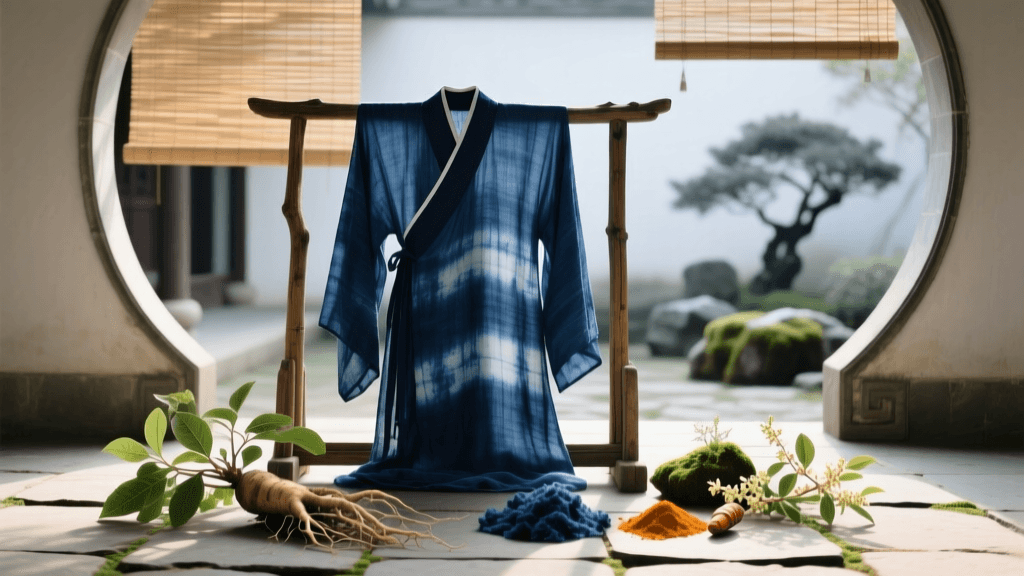
As the global fashion industry faces intense scrutiny over chemical pollution and water waste, the traditional Chinese art of Cao Mu Ran (grass and wood dyeing) has experienced a monumental resurgence in 2026. For Hanfu enthusiasts and sustainable fashion designers alike, sourcing natural Chinese dye plants is no longer just a historical reenactment; it is a vital, eco-friendly alternative to synthetic azo dyes. According to The Metropolitan Museum of Art, the historical mastery of Chinese textile dyeing relied heavily on the botanical wealth of the region, a tradition that modern eco-conscious artisans are reviving with scientific precision. In 2026, the integration of smart-temperature vats and closed-loop water filtration has made botanical dyeing more accessible and environmentally benign than ever before.
Top Chinese Natural Dye Plants for Eco-Friendly Hanfu
Persicaria tinctoria (Chinese Indigo / Liao Lan)
Unlike tropical indigo varieties, Persicaria tinctoria thrives in the temperate climates of northern and central China. The leaves contain indican, which must be hydrolyzed and oxidized to produce the iconic deep blue. In 2026, artisanal studios utilize fermented rice wine and wood ash lye to maintain the vat at an optimal pH of 10.5. This traditional reduction method ensures that the dye penetrates silk and ramie fibers without the need for toxic sodium dithionite, yielding a rich, colorfast blue that defines classic Ming Dynasty-style outerwear.
Rubia cordifolia (Chinese Madder / Qian Cao)
Prized for its rich, warm reds, Chinese madder roots contain anthraquinones, primarily alizarin and purpurin. The critical challenge with madder is temperature control. Modern induction dye vats in 2026 are programmed to hold the bath strictly at 60°C. Exceeding this temperature extracts unwanted brown tannins, muddying the vibrant crimson. When mordanted with aluminum potassium sulfate (alum), Qian Cao yields a brilliant, colorfast scarlet perfect for festive Hanfu skirts and ceremonial sashes.
Phellodendron amurense (Amur Cork Tree / Huang Bo)
The inner bark of the Amur Cork Tree is rich in berberine, yielding a striking, luminous yellow. Historically, Huang Bo was used to dye imperial manuscripts and summer garments because berberine acts as a natural insect repellent, protecting silk from moths and silverfish. Today, it remains a favorite for lightweight, breathable summer Hanfu. It functions as a direct dye on protein fibers like silk, requiring no metallic mordant, which significantly reduces the heavy metal footprint of the dyeing process.
Gardenia jasminoides (Zhi Zi)
Gardenia fruits produce crocin, the same water-soluble carotenoid found in saffron. It yields a brilliant, sunny yellow to warm orange depending on the mordant used. While gardenia is notoriously fugitive (prone to fading in sunlight), 2026 advancements in natural tannin binders, such as gallnut extracts, have vastly improved its lightfastness, making it viable for outerwear and travel wardrobes.
2026 Plant Comparison and Sourcing Guide
To help you plan your sustainable dyeing projects, here is a comprehensive comparison of these botanical dyes, including current 2026 market pricing for dried, organic-certified materials sourced from sustainable cooperatives in Yunnan and Zhejiang provinces.
| Botanical Name | Common Name | Target Color | Mordant Required | Lightfastness | 2026 Avg Cost (per kg) |
|---|---|---|---|---|---|
| Persicaria tinctoria | Chinese Indigo | Deep Blue | None (Vat Reduction) | Excellent | $28 - $35 |
| Rubia cordifolia | Chinese Madder | Crimson Red | Alum (15% WOF) | Very Good | $22 - $26 |
| Phellodendron amurense | Amur Cork Tree | Luminous Yellow | None (Direct Dye) | Good | $30 - $40 |
| Gardenia jasminoides | Gardenia Fruit | Warm Orange/Yellow | Alum or Tannin Binder | Fair to Good | $18 - $24 |
Step-by-Step Sustainable Dyeing Process for Silk Hanfu
Achieving professional, colorfast results requires meticulous preparation. Follow this standardized 2026 protocol for dyeing 500 grams of raw silk fabric.
Step 1: Scouring with Soap Nuts
Raw silk contains sericin, a natural gum that resists dye. Instead of harsh synthetic detergents, boil 50 grams of crushed Wu Huan Zi (Chinese soap nuts) in 10 liters of water for 30 minutes. Submerge the silk and simmer at 80°C for one hour. This natural saponin gently removes the gum, leaving the silk soft and highly receptive to dye.
Step 2: Mordanting
For madder and gardenia dyes, prepare a mordant bath using 15% Weight of Fiber (WOF) alum and 5% WOF cream of tartar. Dissolve in warm water, add the scoured silk, and hold at 60°C for 45 minutes. As detailed in Britannica's textile technology archive, the use of alum and cream of tartar remains the gold standard for forming a stable coordination complex between the fiber and the dye molecule. Soy milk is also increasingly used in 2026 as a vegan protein binder to enhance dye uptake on plant-based fibers like ramie and hemp.
Step 3: Extraction and Dyeing
Use a 1:20 dye-to-water ratio. For madder, steep the roots overnight in cold water, then gently heat to 60°C. Add the mordanted silk and maintain the temperature for 90 minutes, stirring gently with a wooden rod to ensure even penetration.
Step 4: Oxidation and Rinsing
For indigo, dip the fabric for 3 minutes, then expose it to the air for 15 minutes to allow oxidation. Repeat this cycle 4 to 6 times to build depth. Finally, rinse all dyed fabrics in cool, pH-neutral water until the runoff is completely clear.
Environmental Impact and Water Conservation
The shift toward Cao Mu Ran is not merely aesthetic; it is a critical environmental intervention. According to the Food and Agriculture Organization (FAO), the sustainable harvesting of non-wood forest products, including dye plants, supports rural economies while preserving biodiversity. In 2026, leading Hanfu ateliers have adopted closed-loop greywater systems. Because natural dyes are entirely biodegradable and free from heavy metals and azo compounds, the exhausted dye baths can be safely neutralized and used to irrigate botanical gardens or agricultural plots. This zero-waste philosophy aligns perfectly with the ethos of traditional Chinese harmony between humanity and nature.
Caring for Naturally Dyed Hanfu
To preserve the botanical brilliance of your garments, avoid direct sunlight when drying. Always wash naturally dyed Hanfu by hand in cool water using a pH-neutral, plant-based detergent. Store the garments in breathable cotton bags with cedar blocks to maintain the integrity of the natural fibers and the delicate botanical pigments. By embracing these ancient plants and modern eco-friendly methodologies, you ensure that your wardrobe is as kind to the earth as it is beautiful to behold.