Hanfu on Global Runways: 2026 International Fashion Week Trends
The Renaissance of Hanfu in High Fashion
As the Spring/Summer and Fall/Winter 2026 collections illuminate the runways of Paris, Milan, and New York, a profound sartorial shift is undeniable. Hanfu, the traditional dress of the Han Chinese, has transcended its historical and ceremonial roots to become a defining pillar of global haute couture. No longer confined to niche cultural festivals or period dramas, the structural brilliance of Hanfu is being deconstructed, reimagined, and elevated by top-tier international fashion houses and avant-garde Chinese designers alike.
In 2026, the global fashion industry has moved past the superficial appropriation of 'Oriental' motifs. Instead, designers are deeply engaging with the complex tailoring, zero-waste cutting techniques, and philosophical underpinnings of traditional Chinese garments. From the architectural pleats of the Mamianqun to the minimalist drape of the Song Dynasty Beizi, Hanfu elements are dictating the silhouette of modern luxury. This comprehensive guide explores the defining Hanfu trends on the 2026 international runways, the innovative textiles driving this movement, and how you can translate these high-fashion concepts into your everyday wardrobe.
Key Hanfu Silhouettes Dominating the 2026 Runways
The 2026 fashion weeks have showcased a mastery of traditional Hanfu forms, adapting them for contemporary mobility and modern aesthetics. Here are the three primary silhouettes commanding the global stage this year.
1. The Architectural Mamianqun (Horse-Face Skirt)
The Mamianqun remains the undisputed star of the Hanfu runway crossover. Characterized by its flat front and back panels with heavily pleated sides, this skirt offers a striking geometric silhouette. In the 2026 collections, designers have experimented with unconventional fabrics to alter the skirt's behavior. While traditionalists rely on heavy silk brocades, runway iterations this year feature heat-set technical organzas and structured neoprene blends, allowing the pleats to maintain razor-sharp precision even in high-motion environments. Luxury retail prices for bespoke, runway-grade Mamianqun pieces currently range from $3,200 to $5,500, reflecting the immense labor required for precision pleating and hand-woven waistbands.
2. The Deconstructed Ruqun and Cross-Collar Tailoring
The Jiaoling Youren (cross-collar, right-over-left lapel) is a foundational element of Hanfu. In 2026, this neckline has been seamlessly integrated into Western-style tailored blazers and structured knitwear. Designers are playing with the asymmetry of the cross-collar, extending the lapels into dramatic, sweeping sashes that tie at the hip. The traditional Ruqun (top and skirt ensemble) has been deconstructed; runway models are seen pairing cropped, structured cross-collar jackets with high-waisted, wide-leg trousers, blending ancient modesty with modern androgyny.
3. The Minimalist Beizi (Song Dynasty Overcoat)
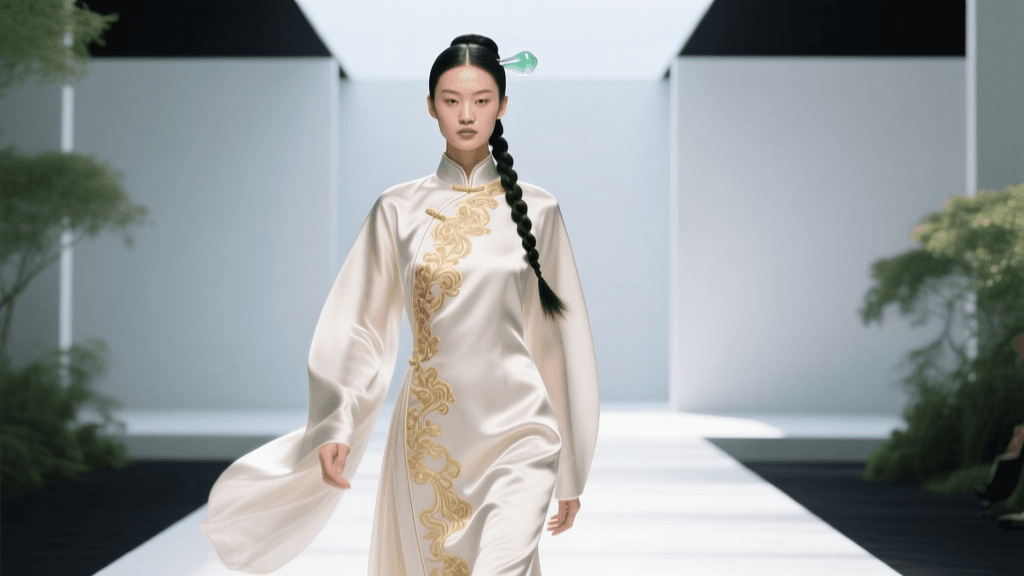
Aligning perfectly with the enduring 'quiet luxury' trend of 2026, the Beizi has emerged as the ultimate outerwear statement. Historically a long, open-front overcoat with side slits, the modern runway Beizi is crafted from fluid, heavyweight crepes and matte silks. Designers are emphasizing the verticality of the garment, using dropped shoulders and elongated sleeves to create a column-like effect that exudes effortless elegance. The lack of buttons or fasteners, relying instead on the natural drape and subtle waist ties, offers a masterclass in minimalist design.
Textile Innovations and Sustainable Heritage
The 2026 runway season is heavily defined by sustainability, and traditional Chinese textile arts are providing the perfect blueprint. Luxury houses are increasingly turning to heritage dyeing and weaving methods that boast a low environmental impact.
A major highlight this year is the resurgence of Xiangyunsha (Gambiered Canton Gauze), often referred to as 'mud silk.' This extraordinary fabric is dyed using the juice of the gambier plant and coated with iron-rich river mud, a process recognized for its deep cultural and ecological significance. According to the UNESCO Intangible Cultural Heritage listings, the sericulture and silk craftsmanship of China represent centuries of sustainable, harmonious interaction with nature. On the 2026 runways, Xiangyunsha is being used to create structured, leather-like outerwear that is entirely biodegradable and free from synthetic chemical dyes.
Furthermore, the preservation and study of these ancient textiles continue to inform modern design. Institutions like the Metropolitan Museum of Art's Asian Art Department provide crucial historical archives that contemporary designers reference to ensure the structural integrity and historical accuracy of their woven brocades and embroidery techniques. By collaborating with master weavers in Suzhou and Hangzhou, 2026 fashion houses are reviving endangered loom techniques, such as Kesi (silk tapestry), integrating them as striking, textured panels on otherwise minimalist gowns.
Runway-to-Real-Life: 2026 Hanfu Styling Guide
Translating avant-garde runway concepts into wearable, everyday fashion requires a strategic approach to proportion, fabric choice, and styling. Below is a comprehensive breakdown of how to adapt the 2026 Hanfu runway trends for your personal wardrobe.
| Runway Silhouette | Haute Couture Fabric | Everyday 2026 Alternative | Styling & Fit Advice |
|---|---|---|---|
| Architectural Mamianqun | Hand-pleated Song Brocade | High-density jacquard poly-blends | Opt for a 95cm length for urban mobility. Pair with a fitted turtleneck to balance the voluminous skirt. |
| Cross-Collar Blazer | Heavyweight Silk Crepe | Wool-blend suiting with satin lapels | Ensure the right lapel crosses cleanly over the left. Wear over a simple camisole; let the asymmetric hem dictate the outfit's flow. |
| Minimalist Beizi Overcoat | Gambiered Mud Silk (Xiangyunsha) | Washed linen or matte Tencel blends | Choose a straight-cut Beizi that hits just below the knee. Belt it loosely at the back to create a subtle blouson effect. |
| Yunjian (Cloud Shoulder) | Gold-threaded Kesi Tapestry | Detachable beaded or embroidered collars | Use as a statement accessory over a solid-colored, high-neck midi dress. Keep all other jewelry minimal. |
Actionable Styling Tips for the Modern Consumer
- Footwear Pairings: The 2026 runways have definitively moved away from pairing Hanfu exclusively with traditional cloth shoes. For a contemporary edge, style your Mamianqun with chunky, lug-sole loafers or minimalist leather mules. This grounds the ethereal nature of the silk and adds an element of urban grit.
- Layering for Climate Adaptation: Traditional Hanfu was designed for specific historical climates. For modern, climate-controlled environments or transitional weather, layer a fine-gauge merino wool turtleneck beneath a sheer, organza Ruqun top. This maintains the modesty of the cross-collar while providing necessary warmth.
- Proportion and Waist Placement: Runway stylists in 2026 are manipulating the waistline of traditional skirts to alter body proportions. If you are petite, look for Mamianqun styles with a higher, 10cm wide waistband that sits at the natural waist, elongating the legs. Taller individuals can experiment with the trending drop-waist Hanfu skirts that sit on the hips, offering a more relaxed, bohemian silhouette.
- Hardware and Fastenings: While traditional garments rely on fabric ties and hidden knots, modern commercial adaptations often introduce discreet metal hardware. When shopping for runway-inspired pieces, look for magnetic closures hidden within the cross-collar lapels or subtle metal D-rings integrated into the waist ties for easier, more secure daily wear.
The Economic and Cultural Impact
The integration of Hanfu into global fashion weeks is not merely an aesthetic choice; it is a significant economic driver. As reported by The Business of Fashion's China Market Coverage, the domestic luxury consumer's demand for 'Guochao' (national trend) products has forced international heritage brands to deeply research and respect Chinese sartorial history to remain competitive. This has resulted in unprecedented investments in traditional Chinese supply chains, supporting artisan communities and preserving ancient weaving techniques that were on the brink of extinction.
Furthermore, the 2026 runway season has sparked a global appreciation for the philosophy behind Hanfu. The concept of 'Tian Ren He Yi' (the unity of nature and humanity) is reflected in the zero-waste cutting patterns of traditional garments, where fabric is draped and folded rather than aggressively cut and discarded. As the global fashion industry grapples with its massive waste problem, the structural wisdom of Hanfu offers a sustainable, elegant path forward.
Conclusion
The presence of Hanfu on the 2026 international runways marks a maturation of cross-cultural fashion design. It is a celebration of structural ingenuity, sustainable craftsmanship, and profound historical depth. Whether you are investing in a couture Xiangyunsha coat or adapting the cross-collar blazer for your office wardrobe, embracing these trends is a way to participate in a living, breathing tradition that continues to shape the future of global style. As we move through 2026, the boundary between ancient heritage and modern haute couture will only continue to blur, proving that true elegance is, and always will be, timeless.