Decoding Kimono Seasonality: Colors, Motifs, and Timing
The Philosophy of Kisetsukan: Wearing Time on Your Sleeve
In the realm of Japanese traditional garments, the kimono is far more than a mere article of clothing; it is a wearable canvas that reflects the ephemeral beauty of the natural world. This deep cultural adherence to seasonal awareness is known as kisetsukan. Unlike Western fashion, which often operates on a binary spring/summer and autumn/winter schedule, the traditional Japanese wardrobe recognizes the subtle, micro-seasonal shifts of nature. According to the Victoria and Albert Museum, the kimono serves as a profound expression of Japanese aesthetics, where the motifs and colors worn must harmonize with, and often slightly anticipate, the natural environment.
Understanding pattern color and motif symbolism is essential for anyone looking to wear, collect, or study Asian traditions authentically. Wearing a cherry blossom motif while the trees are in full bloom is considered a faux pas; true elegance lies in anticipation. This guide decodes the strict rules of kimono seasonality, offering actionable advice on colors, motifs, timing, and the practicalities of building a seasonal wardrobe.
Spring (Haru): The Art of Anticipation
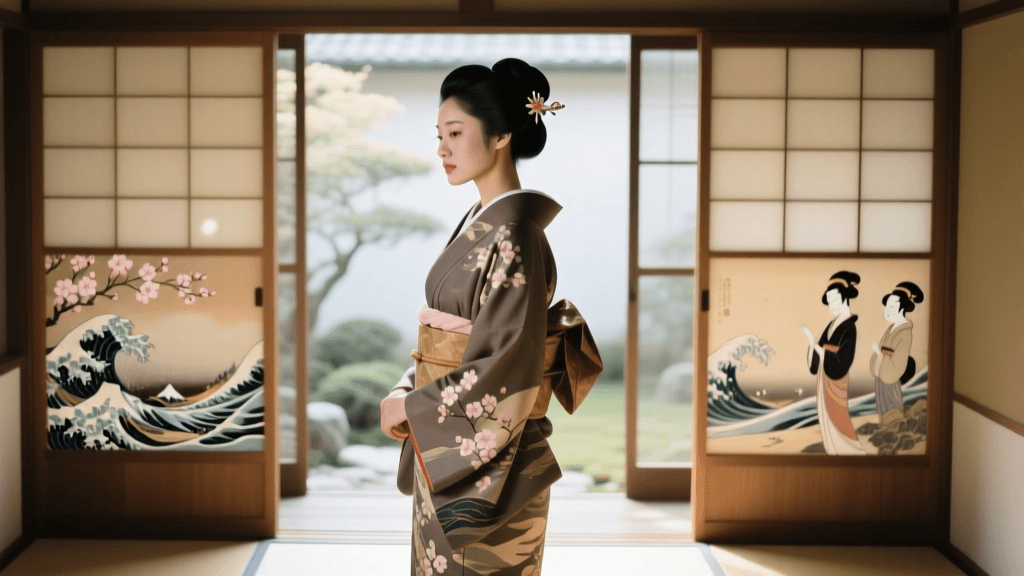
Spring in Japan is a time of renewal, marked by the famous cherry blossom (sakura) season. However, the golden rule of spring motifs is anticipation. You should begin wearing sakura motifs in late February or early March, roughly two to three weeks before the actual blossoms open. Once the real petals begin to fall, wearing the motif is considered outdated and tacky.
Key Motifs: Sakura (cherry blossom), wisteria (fuji), peony (botan), and butterflies.
Color Palette: Sakura-iro (pale, milky pink), matcha (soft yellow-green), and pale yellows reminiscent of blooming nanohana (rapeseed flowers).
Practical Timing: Transition from winter-lined kimono (awase) to unlined spring kimono (hitoe) typically around June, but for early spring (March/April), lightweight lined silk with subtle floral linings (hakkake) is preferred.
Summer (Natsu): Coolness and Transparency
Japanese summers are notoriously hot and humid. The sartorial response is to create a visual illusion of coolness through sheer fabrics and water-inspired motifs. As highlighted by The Metropolitan Museum of Art, the evolution of summer textiles showcases incredible craftsmanship in weaving and dyeing to maximize breathability and visual relief.
Key Motifs: Seigaiha (ocean waves), morning glory (asagao), fireflies (hotaru), and goldfish (kingyo).
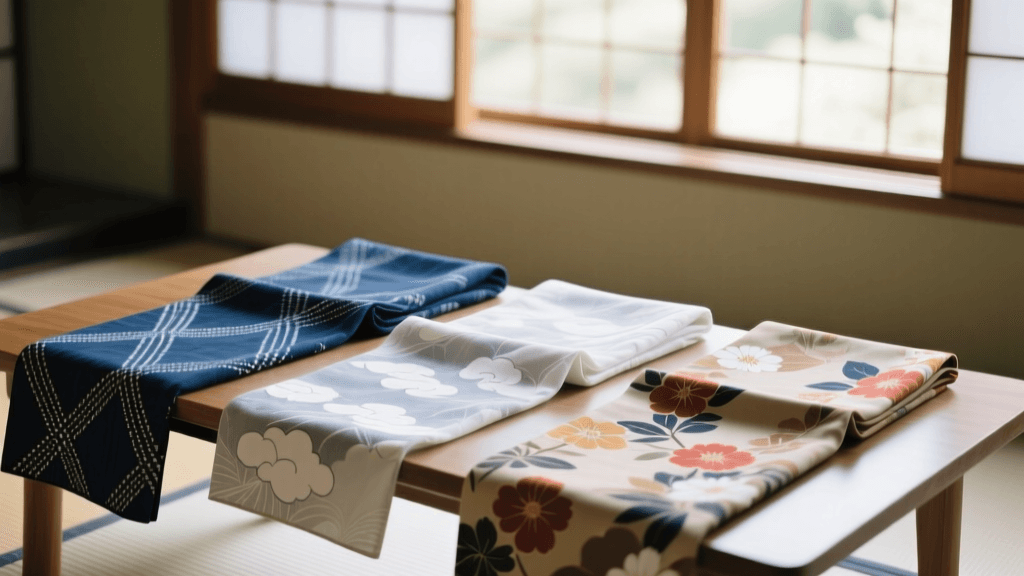
Color Palette: Indigo (ai), cool whites, pale blues, and translucent greens.
Fabric Specifics: From July to August, wearers switch to ro and sha—specialized silk gauze fabrics woven with intentional gaps to allow air circulation. A high-quality vintage ro kimono can cost between $80 and $200, while modern bespoke pieces easily exceed $1,500.
Autumn (Aki): Melancholy and Richness
Autumn motifs celebrate the turning of the leaves and the harvest. The aesthetic shifts from the cool transparency of summer to the rich, warm, and slightly melancholic tones of the falling leaves and autumn moon.
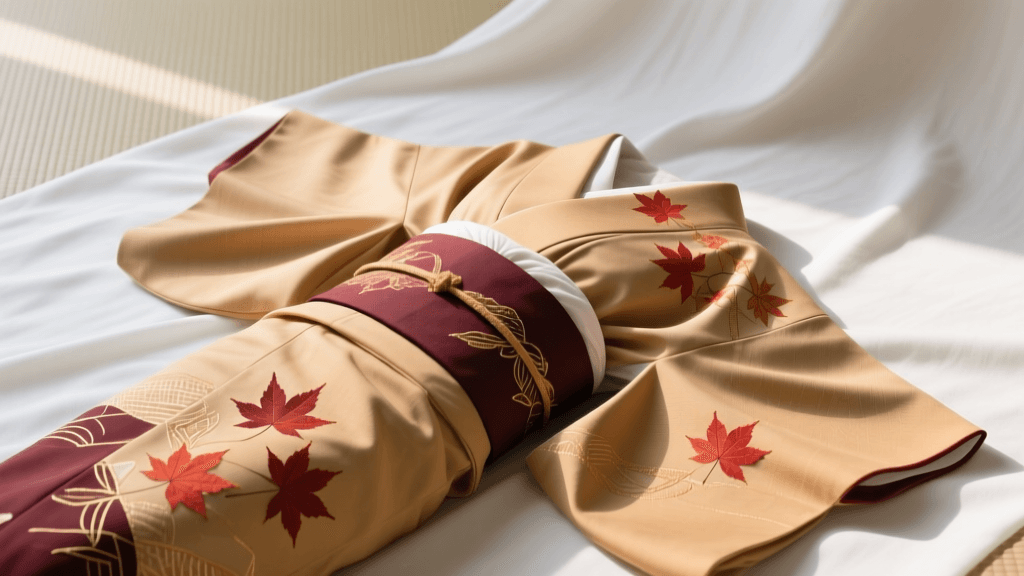
Key Motifs: Momiji (maple leaves), chrysanthemum (kiku), susuki (pampas grass), and the autumn moon.
Color Palette: Crimson, ochre, deep purples, and burnt oranges.
Practical Timing: Maple leaf motifs can be worn from late September through November. Interestingly, wearing a motif of a leaf before it turns red in nature is acceptable, but wearing green maple leaves in late autumn is a mismatch.
Winter (Fuyu): Resilience and Auspicious Symbols
Winter motifs focus on resilience, longevity, and auspicious wishes for the new year. Because nature is dormant, the symbolism relies heavily on evergreens and early bloomers that withstand the cold.
Key Motifs: Shochikubai (the 'Three Friends of Winter': pine, bamboo, and plum), snow rings (yukimochi), and camellia (tsubaki).
Color Palette: Deep navy (kon), forest green, stark white, and rich burgundy.
Formal Wear: Winter is the peak season for formal gatherings and New Year celebrations. This is the time to wear a kurotomesode (black formal kimono with crests) or a vibrant furisode (long-sleeved kimono for unmarried women), often featuring lavish gold leaf and heavy embroidery.
Seasonal Motif and Color Quick Reference Chart
| Season | Primary Motifs | Traditional Colors | Fabric Type | Timing Rule |
|---|---|---|---|---|
| Spring | Sakura, Wisteria, Peony | Pale pink, yellow-green | Awase (lined silk) | Wear 2-3 weeks before bloom |
| Summer | Seigaiha, Morning Glory | Indigo, cool white | Ro / Sha (silk gauze) | Wear during peak heat (Jul-Aug) |
| Autumn | Momiji, Chrysanthemum | Crimson, ochre, purple | Awase (lined silk) | Wear as leaves begin to turn |
| Winter | Pine, Bamboo, Plum | Navy, forest green, white | Heavy lined silk, brocade | Wear Dec-Feb, peak at New Year |
Practical Guide: Building and Sourcing a Seasonal Wardrobe
For collectors, practitioners, and cultural enthusiasts, assembling a kimono wardrobe requires an understanding of both aesthetics and physical measurements. Here is actionable advice for sourcing and fitting seasonal garments.
1. Calculating Your Mitake (Length)
Unlike Western clothing, kimono are sold based on precise body measurements. The most critical measurement is the mitake (body length). To calculate your ideal vintage kimono length, take your total height in centimeters and subtract 30 cm. For example, if you are 165 cm tall, your ideal mitake is 135 cm. When shopping online or in vintage stores in Tokyo's Shibuya or Kyoto's Higashiyama districts, always filter by mitake to ensure the hem falls correctly at your ankles without excessive folding at the waist.
2. Budgeting for Seasonal Garments
Building a four-season wardrobe can be cost-prohibitive if buying new, but the vintage market offers incredible value.
- Everyday Wear (Komon): Vintage silk komon (repeating pattern kimono) suitable for casual seasonal outings range from $50 to $150 USD.
- Formal Wear (Homongi): A visiting kimono with flowing, continuous seasonal motifs (like autumn maples or spring pines) costs between $250 and $600 USD in the vintage market.
- Summer Gauze (Ro/Sha): Because these delicate fabrics snag easily, pristine vintage summer kimono are rarer. Expect to pay $120 to $300 USD for high-quality, unblemished pieces.
3. Timing for Rentals and Bespoke Commissions
If you are visiting Japan and plan to rent a seasonal kimono in Kyoto or Kanazawa, timing is everything. For peak seasons—specifically April (spring sakura) and November (autumn maple)—you must book your rental reservation at least 2 to 3 months in advance. Popular shops like Okamoto or Yumekoubou run out of premium, seasonally accurate homongi and furisode quickly. If commissioning a bespoke yuzen-dyed kimono from an artisan, expect a lead time of 6 to 12 months, meaning you must plan your seasonal motif design nearly a year before the intended wearing date.
The Enduring Legacy of Seasonal Dress
The strict adherence to pattern color and motif symbolism in Japanese dress is a testament to a culture that deeply reveres the passage of time. As noted by cultural historians at Nippon.com, while modern lifestyles have relaxed some of the most rigid sartorial rules, the fundamental appreciation for kisetsukan remains a cornerstone of Japanese traditional arts. To wear a kimono in harmony with the seasons is to participate in a centuries-old dialogue between humanity and the natural world.
'The beauty of the kimono lies not just in its silk or its dye, but in its ability to capture a fleeting moment in nature and hold it against the body, reminding the wearer of the beautiful, transient nature of time itself.'