Sashiko & Boro: 2026 Global Luxury Fashion Collabs
The Renaissance of Sashiko and Boro in 2026
In the contemporary fashion landscape of 2026, the intersection of heritage craftsmanship and international streetwear has reached an unprecedented zenith. At the forefront of this movement are Sashiko (functional reinforcement stitching) and Boro (patchwork mending), two traditional Japanese textile techniques that have transcended their rural origins to become the cornerstone of global luxury design collaborations. As the fashion industry faces stringent 2026 circularity mandates and a consumer base that demands profound authenticity, international design houses and heritage streetwear brands are looking to Japan’s artisanal history not merely for aesthetic inspiration, but for structural and philosophical blueprints.
Today’s most coveted collaborative capsules—ranging from high-end sneaker releases to bespoke selvedge denim jackets—rely on the meticulous, hand-stitched methodologies developed centuries ago in the Tohoku region. By integrating these techniques, modern brands are offering garments that are not only visually striking but inherently sustainable, echoing a time when textiles were too precious to discard. This comprehensive guide explores the mechanics, market landscape, and practical care of Japanese Sashiko and Boro collaborations in 2026.
From Rural Necessity to Global Luxury Runways
Historically, Boro (derived from the Japanese word boroboro, meaning tattered or repaired) was born out of sheer necessity. During the Edo period, cotton and silk were reserved for the upper classes, leaving peasant farmers in northern Japan to weave garments from hemp and linen. When these garments tore, they were meticulously patched with scrap fabrics and stitched together using Sashiko running stitches to reinforce the weak points and trap insulating layers of air. According to the Metropolitan Museum of Art's Asian textile archives, these utilitarian textiles are now recognized as masterpieces of folk art, representing a profound respect for material resources.
In 2026, this philosophy of radical resourcefulness aligns perfectly with the global push toward circular fashion. According to the Ellen MacArthur Foundation's circular fashion initiatives, the modern luxury sector is actively shifting away from planned obsolescence. International design houses collaborating with Japanese artisans are utilizing Boro methodologies to upcycle deadstock luxury fabrics, transforming damaged or unsold inventory into one-of-a-kind, high-value collaborative pieces. The historical context of these garments is meticulously preserved and referenced by curators at institutions like the Victoria and Albert Museum's Asian collections, ensuring that modern collaborations remain respectful of their cultural lineage rather than slipping into mere aesthetic appropriation.
The Mechanics of Modern Artisanal Collaborations
The success of a 2026 luxury collaboration hinges on the precise execution of traditional stitching techniques. International designers working with Japanese ateliers typically employ two primary forms of Sashiko:
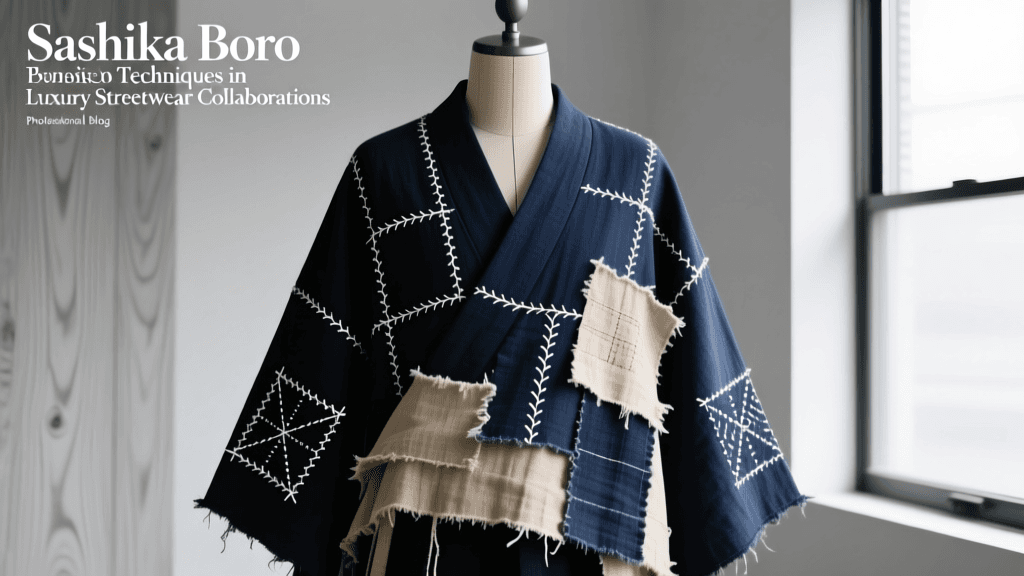
- Moyouzashi (Pattern Stitching): This technique involves creating intricate geometric patterns, such as Asanoha (hemp leaf) or Seigaiha (blue sea waves). In modern sneaker collaborations, these patterns are strategically mapped onto high-wear areas like the medial side and toe box, providing localized tensile strength while offering a striking visual contrast against premium suede or full-grain leather uppers.
- Hitomezashi (One-Stitch): Utilizing a simple running stitch on a grid, this method creates dense, overlapping layers of thread. In 2026 outerwear collaborations, Hitomezashi is frequently used to bind layers of organic cotton and recycled wool, creating a dense, wind-resistant fabric that requires no synthetic membrane coatings.
Furthermore, authentic 2026 collaborations often pair Boro patchwork with Kakishibu (persimmon tannin dyeing). This natural dyeing process not only imparts a rich, earthy brown hue to the patchwork fabrics but also acts as a natural water repellent and insect deterrent, highly prized in modern technical streetwear.
2026 Collaboration Landscape: Authentic vs. Mass-Market
As the popularity of Japanese textile fusions has surged, the 2026 market is saturated with varying tiers of quality. For collectors and designers, understanding the distinction between authentic artisanal collaborations and mass-market interpretations is critical. The table below outlines the current market landscape.
| Category | Authentic Artisanal Collab | Premium Brand Interpretation | Fast Fashion Replica |
|---|---|---|---|
| Price Range (2026) | $1,200 - $3,500 | $400 - $850 | $45 - $120 |
| Stitch Origin | Hand-stitched in Aomori/Okayama | Machine-embroidered, hand-finished | Fully machine-embroidered |
| Indigo Type | Natural fermented sukumo | Synthetic rope-dyed indigo | Chemical pigment wash |
| Durability | Generational (50+ years) | High (10-15 years) | Low (1-2 seasons) |
| Textile Base | Vintage deadstock & hand-loomed | Heavyweight shuttle-loom selvedge | Lightweight poly-blend denim |
Authentic collaborations in 2026 are characterized by their imperfections. True Sashiko relies on the human hand, meaning stitch lengths will vary slightly (typically between 2mm and 4mm), and the tension of the thread will adapt to the density of the fabric layers. Mass-market replicas, conversely, utilize computerized embroidery machines that produce perfectly uniform, rigid stitches that lack the structural flexibility and soul of hand-stitched Boro.
Sourcing and Authenticating Collaborative Garments
For collectors seeking genuine 2026 collaborative pieces, verification is paramount. When evaluating a prospective purchase, employ the following authentication steps:
- Examine the Reverse Side: Authentic Sashiko features distinct floating threads on the reverse side of the fabric, with tiny gaps between stitches. Machine embroidery will show a dense, continuous web of bobbin thread on the back, often backed by a stiff paper or synthetic stabilizer.
- Verify the Indigo: Natural Japanese indigo (sukumo) has a distinct, slightly earthy aroma and will exhibit subtle variations in shade across the garment. It also develops a unique, high-contrast fade pattern over time. Synthetic indigo tends to fade uniformly and lacks the deep, multi-dimensional undertones of fermented dye.
- Check for Artisan Documentation: Premium 2026 collaborations almost universally include a certificate of authenticity, often featuring the hanko (personal seal) of the lead artisan or the specific atelier in Japan responsible for the stitching. Some luxury houses are now integrating NFC threads woven directly into the Boro patches, linking to a digital ledger detailing the garment's exact material provenance and artisan hours.
Maintenance and Preservation for 2026 Textiles
Owning an authentic Sashiko or Boro collaborative garment requires a departure from modern, high-heat laundry habits. To preserve the integrity of the natural dyes and the structural tension of the hand-stitching, follow these meticulous care instructions:
Washing: Hand wash the garment in cold water, never exceeding 20°C (68°F). Use a specialized, pH-neutral detergent formulated for raw denim and natural dyes. Avoid aggressive wringing; instead, gently press the water out by rolling the garment in a clean, dry cotton towel.
Drying: Air dry the garment flat in a shaded, well-ventilated area. Direct ultraviolet light will rapidly degrade natural indigo and cause the organic cotton threads to become brittle. Never use a mechanical tumble dryer, as the heat will shrink the base fabric at a different rate than the patchwork, causing the Sashiko threads to pucker and snap.
Storage: Store Boro garments in breathable cotton canvas bags. To protect the natural fibers from moths and silverfish without resorting to harsh chemical mothballs, place Japanese cedar (sugi) blocks in the storage area. The cedar naturally repels insects and imparts a subtle, pleasant aroma that complements the earthy scent of the indigo and persimmon tannins.
The Future of Japanese Textile Fusions
As we move deeper into 2026, the collaboration between Japanese heritage artisans and international design houses is evolving from seasonal capsule collections into permanent, structural partnerships. Luxury conglomerates are increasingly investing directly in Japanese textile regions, funding the apprenticeship programs necessary to keep Sashiko and Boro techniques alive for the next generation. This symbiotic relationship ensures that the global fashion industry can meet its ambitious sustainability targets while honoring the profound cultural history of Asian traditions. For the discerning collector, these garments represent more than just apparel; they are wearable archives, bridging the gap between centuries-old rural ingenuity and the cutting edge of modern luxury design.