Banarasi Sari Fabrics 2026: Ahimsa vs Mulberry Silk
The Banarasi sari remains an undisputed icon of South Asian traditional dress, celebrated globally for its intricate brocade work, luxurious drape, and deep cultural significance. As we navigate through 2026, the landscape of traditional Asian garments is experiencing a profound shift. Modern consumers, designers, and heritage weavers are increasingly prioritizing sustainability, ethical production, and versatility without compromising on the regal aesthetic that defines the Banarasi weave. At the heart of this 2026 renaissance is a critical textile debate: the choice between traditional Mulberry silk and the rapidly rising Ahimsa (peace) silk. Understanding the distinct properties, weaving behaviors, and styling potentials of these two fabrics is essential for anyone looking to invest in authentic Asian traditional wear this year.
The Evolution of Banarasi Textiles in 2026
Historically, the Banarasi sari has been synonymous with pure Mulberry silk and heavy gold zari. However, the 2026 handloom market reflects a more nuanced reality. Driven by global eco-conscious movements and a younger demographic of buyers seeking lightweight, breathable alternatives for destination weddings and daytime festivities, weavers in Varanasi and surrounding districts have adapted their pit looms to accommodate alternative yarns. The Geographical Indication (GI) tag protections have been strictly enforced in 2026 to preserve the integrity of the Banarasi weave, ensuring that only textiles produced in the designated districts utilizing traditional techniques can bear the name. This protection has encouraged master weavers to experiment with Ahimsa silk, elevating it from a niche novelty to a mainstream luxury textile.
Traditional Mulberry Silk: The Heritage Gold Standard
Mulberry silk is produced through conventional sericulture, where silkworms are fed an exclusive diet of mulberry leaves. The resulting cocoons are boiled to extract a single, continuous, ultra-fine filament. This process yields a yarn that is exceptionally smooth, uniform, and possesses a naturally high, reflective sheen.
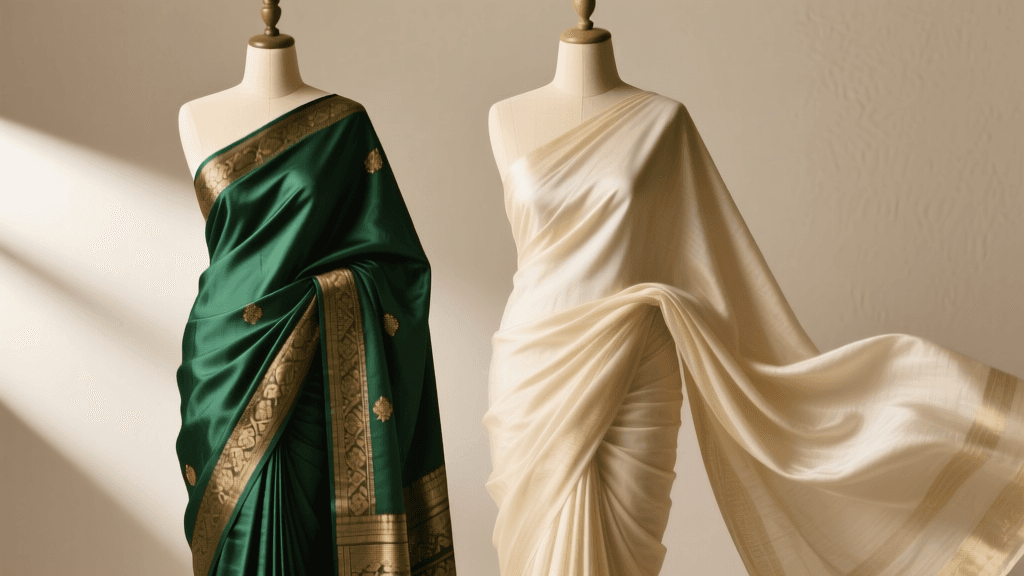
In the context of the Banarasi sari, Mulberry silk provides a heavy, structured drape that holds the intricate Jacquard loom patterns with stunning clarity. The high tensile strength of Mulberry silk allows it to bear the weight of dense metallic zari threads without tearing or warping. For 2026 bridal collections, Mulberry silk remains the undisputed champion. Its reflective quality catches the light beautifully in dimly lit banquet halls and evening ceremonies.
However, the environmental and ethical footprint of conventional sericulture has led some 2026 buyers to seek alternatives. Furthermore, Mulberry silk requires meticulous climate control; it is less breathable than wild silks and can be uncomfortably warm in tropical or humid environments. As of 2026, a genuine, handwoven Mulberry silk Banarasi sari with real gold and silver zari typically starts at ₹35,000 ($420 USD) and can easily exceed ₹150,000 ($1,800 USD) for heirloom pieces.
Ahimsa Silk: The Rise of Cruelty-Free Luxury
Ahimsa silk, often referred to as peace silk, is harvested without harming the silkworm. Instead of boiling the cocoons, the moths are allowed to naturally hatch and leave the cocoon. Because the emerging moth breaks the continuous silk filament, Ahimsa silk must be spun rather than reeled, resulting in a yarn that has a slightly textured, slubby appearance akin to raw silk or cotton.
In 2026, Ahimsa silk has become the fabric of choice for the eco-conscious fashionista. When woven on a Banarasi loom, Ahimsa silk produces a fabric with a beautiful, understated matte finish. It lacks the blinding gloss of Mulberry silk, offering instead a soft, pearlescent glow that is highly sought after for daytime events, pastel-dyed garments, and minimalist contemporary styling.
The breathability of Ahimsa silk is vastly superior to Mulberry silk. Its porous structure allows for excellent air circulation, making it ideal for summer weddings and tropical climates. While it is lighter in weight, master weavers in 2026 have perfected the art of tightening the weave to ensure the fabric still supports moderate zari work. Pricing for authentic Ahimsa Banarasi saris in 2026 generally ranges from ₹18,000 to ₹28,000 ($215 to $335 USD), making it a slightly more accessible entry point into luxury handloom, though the labor-intensive spinning process keeps it firmly in the premium category.
2026 Fabric Comparison Chart: Mulberry vs. Ahimsa
| Feature | Mulberry Silk | Ahimsa (Peace) Silk |
|---|---|---|
| Visual Finish | High gloss, reflective sheen | Matte, soft pearlescent glow |
| Texture | Ultra-smooth, uniform | Slightly slubby, spun texture |
| Drape & Weight | Heavy, structured, formal | Lightweight, fluid, breathable |
| Zari Compatibility | Excellent for heavy, dense motifs | Best for delicate, scattered motifs |
| 2026 Price Range | ₹35,000 - ₹150,000+ ($420 - $1,800+) | ₹18,000 - ₹28,000 ($215 - $335) |
| Ethical Profile | Conventional sericulture | Cruelty-free, non-violent harvest |
Zari Compatibility and Weaving Techniques
The magic of the Banarasi sari lies in its zari—the metallic thread used to create the elaborate brocade motifs. In 2026, the industry has seen a massive shift toward tested zari (copper or silver wire electroplated with gold) and vegan zari alternatives, moving away from pure gold due to cost and weight.
Mulberry silk provides a rigid, smooth canvas that is perfect for heavy, continuous zari patterns like the traditional jal (trellis) or dense butidar (floral motifs). The smooth surface allows the metallic threads to lie flat and reflect maximum light.
Ahimsa silk, with its spun and slightly uneven texture, interacts with zari differently. The metallic threads tend to sink slightly into the textured yarn, creating a beautiful, antique, or oxidized effect. Weavers in 2026 often pair Ahimsa silk with minimalist zari borders and scattered butis (small motifs) to prevent the fabric from becoming too stiff. The combination of matte silk and antique-finish tested zari is currently the most requested aesthetic for modern, bohemian-inspired traditional wardrobes.
Styling and Climate Considerations for 2026
Choosing between these two textiles heavily depends on the climate of your event and your personal styling preferences.
- Winter and Evening Events: Opt for Mulberry silk. Its heavier weight provides warmth, and its high sheen pairs beautifully with heavy polki or kundan jewelry under artificial evening lighting.
- Summer and Destination Weddings: Ahimsa silk is the superior choice. Its breathability prevents overheating, and its matte finish looks incredibly elegant in natural sunlight or beachside settings.
- Modern Draping Styles: If you plan to drape your sari in a contemporary style, such as the dhoti drape or a pre-stitched gown silhouette, the fluid, lightweight nature of Ahimsa silk offers much better maneuverability and comfort than the stiff Mulberry alternative.
Sourcing Authentic Banarasi Silk in 2026
The proliferation of power-loom replicas remains a significant challenge in the traditional garment market. To ensure you are purchasing genuine handloom Banarasi silk, buyers in 2026 must look for the official Silk Mark label. According to the Silk Mark Organisation of India, this holographic certification is the only foolproof way to verify that the base fabric is 100% natural silk and not a synthetic polyester blend.
Additionally, the Food and Agriculture Organization (FAO) highlights the importance of supporting sustainable sericulture initiatives. When purchasing Ahimsa silk, request documentation or certifications from the retailer that verify the non-violent harvesting process, as the term "peace silk" is sometimes misused by marketers for marketing purposes without the ethical backing. Always buy from established cooperatives or verified heritage boutiques that maintain direct relationships with weaver clusters in Varanasi, Azamgarh, or Mirzapur.
Care and Maintenance for Longevity
Both Mulberry and Ahimsa silks require specialized care to maintain their structural integrity and color vibrancy.
- Dry Cleaning: Always dry clean your Banarasi saris. The metallic zari threads can tarnish or bleed if exposed to water and harsh detergents.
- Storage: Store your saris in breathable cotton bags or wrap them in unbleached muslin cloth. Avoid plastic covers, which trap moisture and cause the silk to develop mildew or the zari to oxidize and turn black.
- Airing: Every six months, unfold your saris and let them air out in a shaded, well-ventilated area. This prevents permanent crease marks from forming along the fold lines, which can eventually lead to fabric tearing.
- Refolding: Change the fold lines of the sari periodically to distribute the stress on the silk fibers and zari threads evenly.
By understanding the distinct characteristics of Mulberry and Ahimsa silks, you can make an informed, ethical, and stylish investment into your traditional Asian wardrobe in 2026. Whether you choose the regal, heavy drape of Mulberry or the breathable, matte elegance of Ahimsa, the Banarasi weave continues to stand as a testament to the enduring artistry of Asian textile traditions.