Top 2026 Japanese Boro and Sashiko Global Fashion Collabs
The 2026 Renaissance of Japanese Heritage Textiles in Global Fashion
As we navigate the 2026 fashion landscape, the global appetite for superficial logomania has definitively waned, replaced by a profound demand for structural integrity, artisanal heritage, and cross-cultural storytelling. At the absolute forefront of this movement are international design collaborations centered on traditional Japanese textiles—specifically Sashiko (functional running stitch) and Boro (patchwork mending). What was once a regional necessity born of scarcity in rural Japan has evolved into a highly coveted luxury commodity, with European heritage houses and global streetwear giants partnering directly with master artisans in Aomori, Okayama, and Kyoto.
According to the Victoria and Albert Museum's Asian Collections, the historical significance of Japanese textiles lies in their profound connection to daily life and spiritual resilience. In 2026, international designers are no longer merely appropriating these aesthetics; they are engaging in equitable, long-term partnerships with Japanese weaving cooperatives. This guide provides a comprehensive, actionable breakdown of the 2026 collaboration market, offering precise buying advice, authentication techniques, and preservation protocols for the modern collector.
Decoding the Core Techniques: Sashiko and Boro in 2026
To invest intelligently in 2026 collaborations, one must understand the technical specifications that separate authentic artisan work from mass-produced imitations. The Metropolitan Museum of Art notes that traditional Boro and Sashiko were originally developed by the working classes to extend the life of precious cotton and hemp garments. Today, these techniques are applied to luxury outerwear, technical gear, and high-end denim.
Sashiko: The Geometry of Tension
Authentic 2026 Sashiko collaborations rely on hand-stitched running stitches using specially twisted, heavyweight cotton thread. The hallmark of a master artisan is the tension and spacing. In premium 2026 capsule collections, you should expect a stitch length of exactly 3 to 5 millimeters. The stitches should never perfectly lock on the reverse side; the slight irregularities in the thread pull are the literal fingerprint of the human hand. International brands are now pairing these traditional geometric patterns (like Asanoha or hemp leaf, and Seigaiha or ocean waves) with modern technical fabrics, creating garments that are both wind-resistant and historically resonant.
Boro: The Architecture of Patchwork
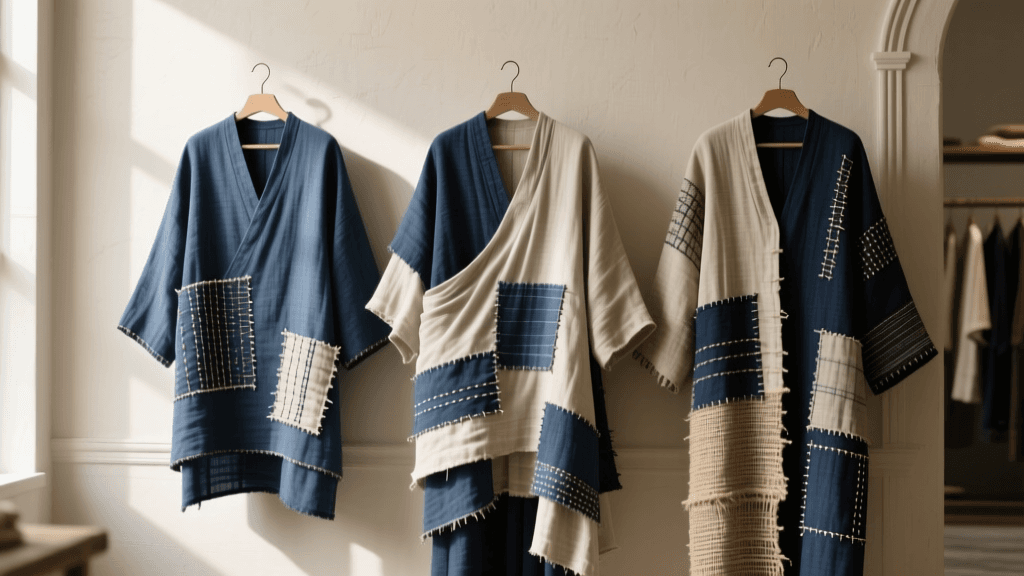
Boro translates roughly to 'tattered rags,' but in the context of 2026 luxury fashion, it represents a masterclass in textile engineering. True Boro garments are constructed by layering three to five pieces of varying indigo-dyed cottons, hemp, and occasionally modern selvedge denim, stitching them together to create a single, ultra-durable composite fabric. In 2026 high-fashion collaborations, designers are utilizing vintage, pre-1950s Japanese fabric swatches as the foundational patches, integrating them with newly loomed, natural-rope-dyed indigo cotton to create hybrid outerwear that carries a century of history.
2026 Market Comparison: Luxury vs. Artisan Direct
The market for Japanese heritage collaborations has stratified into three distinct tiers in 2026. Understanding these tiers is crucial for budgeting and setting expectations regarding lead times and material authenticity.
| Collaboration Tier | Typical Garment | 2026 Price Range (USD) | Lead Time | Material Composition | Investment Value |
|---|---|---|---|---|---|
| Tier 1: European Luxury x Master Artisan | Structured Noragi / Overcoats | $4,500 - $12,000 | 6 - 9 Months | Vintage Boro, Silk Linings, 24k Gold Thread Accents | High (Appreciates post-capsule) |
| Tier 2: Global Streetwear x Heritage Mills | Sashiko Denim Jackets / Hoodies | $800 - $2,200 | Immediate / Drop-based | 14oz Selvedge Denim, Hand-stitched Sashiko Panels | Medium (Holds value well) |
| Tier 3: Direct-to-Consumer Artisan Commissions | Custom Haori / Work Jackets | $1,500 - $3,500 | 3 - 5 Months | 100% Hand-loomed Okayama Cotton, Natural Indigo | High (Heirloom quality) |
Actionable Buying Guide: Sourcing, Sizing, and Authentication
Purchasing a heritage collaboration piece in 2026 requires a discerning eye, particularly when navigating the secondary market or limited digital drops. Here is your practical checklist for acquisition.
How to Authenticate Hand-Stitched Sashiko
- Examine the Reverse Side: Turn the garment inside out. Machine-embroidered Sashiko (often used in fast-fashion knockoffs) will show a continuous bobbin thread that locks at every stitch. Hand-stitched Sashiko will show a single, continuous thread with slight variations in tension and no locking knots between individual stitches.
- Check the Thread Composition: Authentic 2026 collaborations use high-twist, matte-finish cotton thread. If the thread has a synthetic sheen or appears overly uniform in thickness, it is likely a machine-made polyester blend.
- Inspect the Indigo: Natural indigo (sukumo) used in premium collaborations will have a slightly uneven depth of color and may exhibit a faint, earthy, fermented scent. Synthetic indigo is flat, uniform, and odorless.
Sizing and Fit Metrics for Hybrid Garments
Traditional Japanese garments like the Noragi (work jacket) and Haori feature a boxy, straight-cut silhouette with dropped shoulders and wide, kimono-style sleeves. When international brands adapt these for 2026 global markets, they often introduce subtle tailoring. Actionable Advice: If you are purchasing a Tier 1 Luxury Noragi collaboration for a contemporary streetwear drape, look for a pit-to-pit measurement of 22 to 24 inches for a size Medium. This allows for a relaxed fit over a heavyweight hoodie without the garment overwhelming your frame. For Tier 3 direct commissions, request a 'Western Taper' from the artisan, which reduces the sleeve width from 18 inches down to 14 inches at the cuff, making the garment compatible with modern smartwatches and tailored trousers.
Integrating Heritage Pieces into a 2026 Wardrobe
Styling a heavily textured Boro or Sashiko piece requires a minimalist approach to let the textile command attention. In 2026, the prevailing styling ethos for these garments is 'Elevated Utilitarian.'
Pair a heavily patched, indigo Boro Noragi jacket with wide-leg, unstructured linen trousers in a muted tone like stone or ecru. The contrast between the chaotic, dark patchwork of the jacket and the fluid, light drape of the linen creates a striking visual balance that honors the garment's artisanal roots while remaining thoroughly modern.
Footwear should remain grounded and structural. Thick-soled leather derbies or minimalist, hand-welted boots in dark brown or black provide the necessary visual weight to anchor the heavy textile of a Boro overcoat.
Care and Preservation of Hybrid Heritage Garments
The intersection of vintage textiles and modern luxury construction requires meticulous maintenance. Improper care can destroy both the natural indigo and the structural integrity of the hand-stitching.
Washing Protocols
Never dry clean Boro or Sashiko garments. The harsh chemical solvents used in commercial dry cleaning will strip the natural indigo dye and degrade the vintage cotton fibers. Instead, follow this protocol:
- Spot Clean First: Use a damp microfiber cloth with a drop of pH-neutral detergent (such as Eucalan or a specialized wool/cashmere wash) to address localized stains.
- Cold Hand Wash: If a full wash is necessary, submerge the garment in water strictly below 20°C (68°F). Agitate gently by hand for no more than three minutes.
- Rinse and Press: Rinse in cold water. Do not wring or twist the fabric, as this will warp the Sashiko stitching and cause the layered Boro patches to pucker. Press the water out by rolling the garment in a clean, dry cotton towel.
Drying and Storage
Air dry the garment flat on a mesh drying rack, completely away from direct sunlight or UV exposure, which accelerates indigo oxidation and causes uneven fading. Once dry, store the garment on a wide, padded wooden hanger to support the heavy shoulders. For long-term storage during the summer months, wrap the garment in unbleached, acid-free cotton muslin. Avoid plastic garment bags, which trap moisture and promote mildew growth on natural fibers. Place a block of untreated Japanese cedar (sugi) in the wardrobe to naturally repel moths without introducing synthetic chemical odors to the textile.
Conclusion
The 2026 landscape of Japanese fashion in international design collaborations represents a golden era for textile connoisseurs. By moving beyond superficial aesthetics and embracing the rigorous, time-honored techniques of Sashiko and Boro, global brands and master artisans are creating garments that are not merely clothing, but wearable archives of human resilience. By understanding the authentication metrics, adhering to precise sizing guidelines, and committing to rigorous preservation protocols, collectors can secure pieces that will not only define their 2026 wardrobe but will endure as heirloom artifacts for generations to come.