Miao Traditional Dress: Silverwork and Regional Styles
Introduction to Miao Clothing Heritage
The Miao people, widely known in the West as the Hmong, represent one of the most culturally vibrant and diverse ethnic groups in China. Concentrated heavily in the mountainous provinces of Guizhou, Hunan, and Yunnan, the Miao have historically lacked a formal written language. Instead, they encoded their mythology, migration history, and clan identities into their textiles. Miao traditional dress is not merely decorative; it is a wearable archive. From the deeply fermented indigo dyes to the gravity-defying silver headdresses, every stitch and hammered motif tells a story of resilience, animistic belief, and profound artistic mastery.
For textile collectors, cultural travelers, and fashion historians, understanding the regional variations of Miao dress is essential. The garments shift dramatically from one valley to the next, with changes in skirt length, silver weight, and embroidery techniques serving as geographic and clan markers. This guide explores the craftsmanship, regional distinctions, and practical aspects of acquiring and experiencing authentic Miao provincial dress.
The Crown Jewel: Miao Silver Craftsmanship
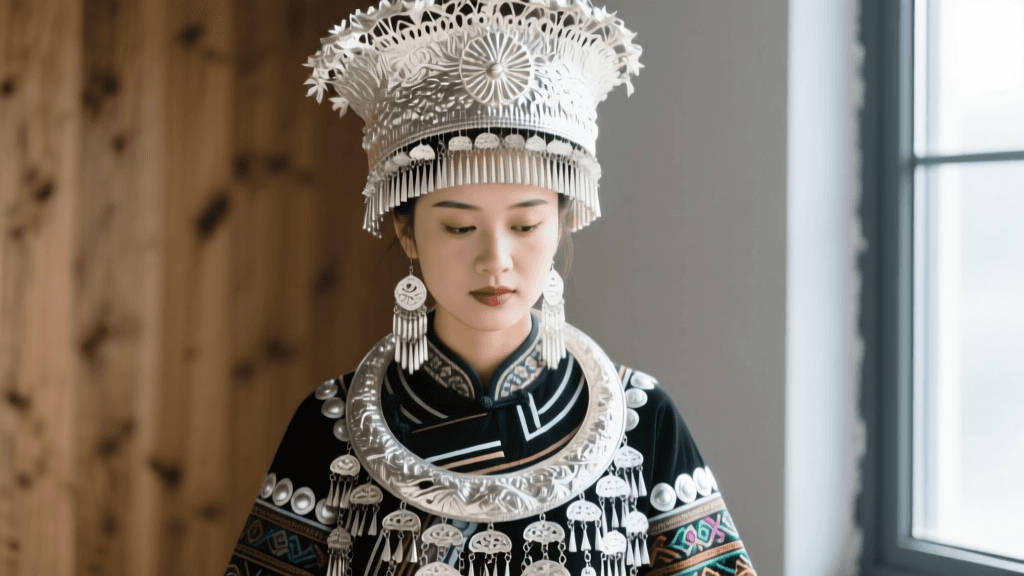
No element of Miao folk dress is more iconic—or more heavily researched—than its silverwork. Silver is believed to possess protective qualities, warding off evil spirits and illuminating the wearer with the brilliance of the moon. During major festivals, a Miao woman may wear up to 10 kilograms of solid silver, including horned headdresses, multi-layered neck rings, chest plates, and hairpins.
The craftsmanship is a recognized cultural treasure. According to cultural heritage documentation by UNESCO, the oral and material traditions of the Miao are deeply intertwined, with silversmithing passed down through patrilineal lines in specialized villages like Kongbai in Guizhou province.
Actionable Guide to Buying Miao Silver
If you are looking to acquire authentic Miao silverwork, either as an investment or for personal wear, consider the following practical details:
- Where to Buy: The best hubs for authentic silversmithing are Kaili City and Xijiang Miao Village. Avoid pre-packaged tourist shops; instead, seek out active workshops where you can hear the hammering and see the charcoal forges.
- Pricing and Costs: The market price of raw silver fluctuates, but artisan-crafted Miao silver is priced by weight plus a craftsmanship fee. Expect to pay between 15 to 35 RMB per gram for high-quality, hand-hammered pieces. A single, intricate silver butterfly hairpin (approx. 30 grams) will cost around 600 to 1,000 RMB.
- Weight and Measurements: A standard tourist-grade silver crown weighs about 1.5 to 2 kg. A full, authentic festival set (including the horned crown, chest plate, and bracelets) can weigh between 6 to 10 kg. When commissioning a neck ring, ensure the inner diameter is measured precisely to your collarbone width (typically 14-16 cm) to prevent choking or slipping during movement.
- Authenticity Check: Traditional Miao silver is often an alloy of silver, copper, and sometimes white brass to maintain structural rigidity for the large horns. Ask the silversmith for the exact silver purity (usually 925 or 990 for modern pieces, but lower for antique structural pieces).
Regional Variations Across Guizhou
The Miao are not a monolith; they are divided into numerous sub-groups, often named by outsiders based on their clothing colors or styles (e.g., Long-Skirt Miao, Short-Skirt Miao, Black Miao). Travel and cultural guides like China Highlights note that crossing a single mountain range in Guizhou can result in a complete shift in traditional dress architecture.
| Region / Sub-group | Skirt Style & Dimensions | Silver Headdress | Dominant Textile Motif | Best Festival to Visit |
|---|---|---|---|---|
| Xijiang (Leishan) Long-Skirt Miao |
Long, heavily pleated skirts reaching the calves. Requires up to 15 meters of hand-woven cotton. | Massive, wide silver horns spanning up to 1 meter across, adorned with sun and dragon motifs. | The Butterfly Mother (Mythological ancestor), dragons, and water buffalo. | Lusheng Festival (Autumn harvest) |
| Shidong (Taijiang) Short-Skirt Miao |
Short, stiff pleated skirts (resembling a tutu) worn over embroidered leggings. Skirts use about 5-7 meters of fabric. | Intricate silver combs, floral hairpins, and smaller silver crowns without the massive horns. | Mythical beasts, birds, and highly geometric abstract patterns. | Sister's Meal Festival (Spring, April/May) |
| Danzhai Batik Miao |
Short, layered skirts worn with heavily embroidered front and back aprons. | Modest silver hairpins and small floral crowns; emphasis is placed on the textile rather than heavy silver. | Roosters, birds, and organic floral wax-resist patterns. | Miao New Year (Late Autumn / Winter) |
The Art of Indigo Batik and Embroidery
While silver provides the flash, the soul of Miao clothing lies in its textiles. Miao batik and embroidery are labor-intensive processes that can take a mother several years to complete for her daughter's wedding trousseau.
Identifying Authentic Miao Batik
Batik is created using a copper canting tool to apply melted beeswax to hand-woven hemp or cotton, which is then submerged in vats of fermented indigo. As highlighted in Smithsonian Magazine's coverage of Guizhou's hidden cultural gems, the mountainous terrain has helped preserve these ancient dyeing techniques against the tide of mass production.
How to spot genuine handmade batik vs. factory prints:
- The Crackling Effect: Genuine batik features fine, web-like lines of blue bleeding through the wax cracks. Factory prints attempt to mimic this, but the lines are often too uniform or repetitive.
- The Scent Test: Authentic indigo-dyed fabric carries a distinct, earthy, slightly fermented scent mixed with a faint trace of beeswax. Synthetic prints smell of chemical dyes or nothing at all.
- The Reverse Side: Hand-dyed indigo penetrates the fibers deeply but may show slight variations in saturation on the reverse side. Printed fabrics often have a stark white reverse side with no dye penetration.
Embroidery Techniques
Miao embroidery is renowned for its complexity. The seed stitch (tiny, tightly packed knots) and the flat stitch (using pre-braided silk threads laid flat and couched down) create a three-dimensional, textured surface. A single jacket sleeve featuring the 'seed stitch' can take over 200 hours of continuous labor to complete.
Practical Guide: Commissioning and Wearing Miao Garments
For collectors, designers, or travelers wishing to commission a piece of Miao provincial dress, understanding the timeline and logistics is crucial.
Timing Your Visit
To see these garments in their full, living context, you must time your visit to align with the agricultural and lunar calendars. The Sister's Meal Festival (typically falling in April or early May) in Taijiang county is the premier event for viewing the Short-Skirt Miao silver and embroidery. The Lusheng Festival in autumn is ideal for witnessing the kinetic movement of the heavy Xijiang pleated skirts and silver horns during traditional circle dances.
Commissioning a Garment
- Measurements: Traditional Miao jackets are generally cut in a cross-collar, wrap-around style with drop shoulders. They are designed to be loose-fitting. When providing measurements to a village tailor, focus on the back width (shoulder seam to shoulder seam, typically 40-45 cm) and sleeve length (often extending past the wrist to 65-70 cm to allow for rolled cuffs).
- Timelines: A fully hand-embroidered, indigo-dyed jacket commissioned directly from an artisan in Danzhai or Shidong will take anywhere from 4 to 8 months to complete. The indigo dyeing alone requires multiple dips and oxidations over several weeks to achieve the deep, metallic blue-black hue prized by the Miao.
- Costs for Textiles: A modern, machine-embroidered festival jacket sold in tourist markets costs between 300 and 800 RMB. A genuine, hand-embroidered, naturally dyed vintage jacket (sourced from local collectors or village elders) can range from 3,000 to over 15,000 RMB, depending on the rarity of the stitch work and the age of the piece.
Care and Maintenance
Indigo-dyed garments should never be washed with harsh detergents or hot water, as this strips the natural oils and fades the dye. Spot clean with cold water and a mild, pH-neutral soap. Silver pieces must be kept away from humidity and sulfur; traditional Miao families often wrap their silver in untreated cotton cloth and store it in wooden chests lined with chalk to absorb moisture and prevent tarnishing.
Conclusion
The regional folk dress of the Miao people is a masterclass in provincial identity, material science, and artistic devotion. Whether you are marveling at the structural engineering of a Leishan silver horn, decoding the mythological butterflies on a Taijiang sleeve, or tracing the cracked wax lines of a Danzhai batik apron, you are engaging with a living, breathing textile tradition. By understanding the regional nuances, costs, and craftsmanship behind these garments, collectors and cultural enthusiasts can support authentic artisan communities while preserving one of Asia's most spectacular sartorial legacies.