Sashiko & Boro: 2026 Global Luxury Fashion Collabs Guide
The Intersection of Heritage and Haute Couture in 2026
In the ever-evolving landscape of 2026 global fashion, the intersection of heritage craftsmanship and contemporary design has reached an unprecedented zenith. Nowhere is this more evident than in the realm of Japanese traditional textiles, specifically the meticulous running stitch of Sashiko and the patchwork philosophy of Boro. Once relegated to the rural workwear of the Edo period, these techniques have now become the cornerstone of high-end international design collaborations. As the global luxury market pivots aggressively toward circularity and sustainable practices, European fashion houses and American streetwear giants are looking to Japan’s ancestral methods of repair and reinforcement to define the aesthetic and ethical standards of 2026.
This comprehensive guide explores the current state of Japanese fashion in international design collaborations, focusing on how authentic Sashiko and Boro techniques are being integrated into global luxury capsules, the economics of these partnerships, and how collectors can identify and care for these masterpieces.
The Historical Roots of Mottainai and Wabi-Sabi
To understand the 2026 luxury landscape, one must first understand the historical necessity of Boro (meaning 'rags' or 'tattered cloth') and Sashiko (meaning 'little stabs'). Originating in the harsh, snow-bound Tohoku region of northern Japan, peasant farmers and fishermen were forbidden from wearing silk or expensive cotton. Instead, they relied on locally woven hemp and linen, dyed with natural indigo (aizome) to repel insects and withstand harsh weather.
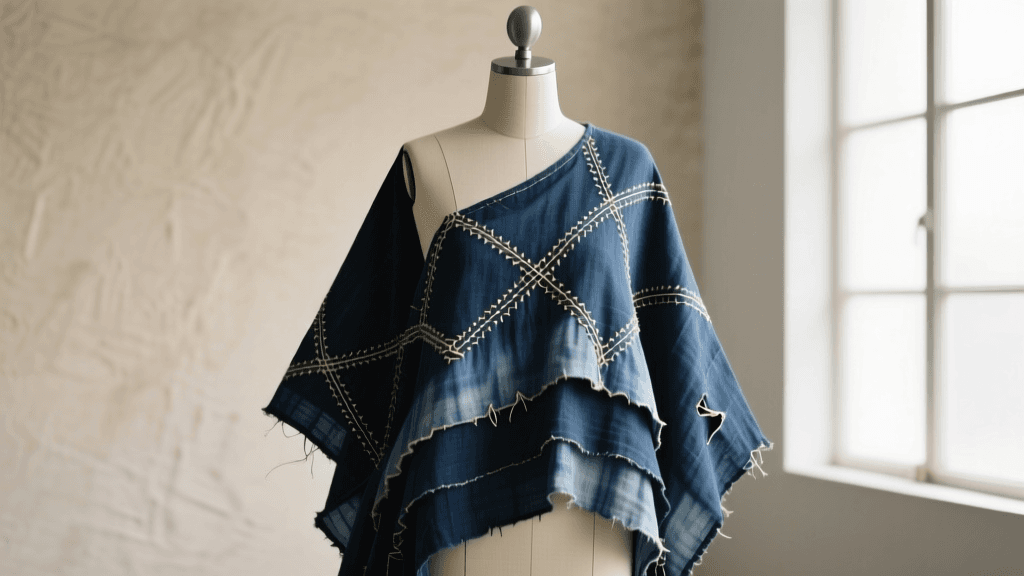
When these garments tore, they were not discarded. Driven by the philosophy of mottainai (a sense of regret concerning waste), artisans would layer scrap fabrics over the weak points and secure them with Sashiko stitching. This not only reinforced the garment but also trapped insulating air between the layers. Over generations, a single jacket could become a complex, multi-layered tapestry of indigo hues and geometric stitching. Today, this embodiment of wabi-sabi—finding beauty in imperfection and the passage of time—is exactly what international luxury brands are striving to capture in their 2026 collections.
Landmark 2026 International Design Collaborations
The year 2026 marks a distinct shift from superficial cultural appropriation to deep, equitable, and artisan-led partnerships. Global brands are no longer merely printing Sashiko patterns onto synthetic fabrics; they are flying master artisans to European ateliers and establishing direct-to-artisan supply chains.
Loewe and the Tsugaru Kogin-zashi Capsule
Spanish luxury house Loewe has long been a champion of global craftsmanship, a commitment most visibly institutionalized through the Loewe Foundation Craft Prize. In their Spring/Summer 2026 collection, Loewe debuted a groundbreaking capsule featuring Tsugaru Kogin-zashi, a highly specific, geometric variant of Sashiko native to Aomori Prefecture. By integrating these dense, diamond-patterned cotton stitches onto supple calfskin leather and woven raffia bags, Loewe has bridged the gap between Japanese agrarian heritage and Parisian runway luxury. The collaboration ensures that a cooperative of aging Aomori artisans receives direct, premium compensation, helping to fund apprenticeships for the next generation.
Kapital’s 2026 'Century Denim' Boro Evolution
Japanese heritage brand Kapital continues to set the standard for international denim collaborations. Their 2026 'Century Denim' release, developed in partnership with a major European heritage consortium, features genuine vintage Boro patchwork sourced from 19th-century Tohoku textiles, fused with modern 14oz selvedge denim. Priced at a premium $4,500 per jacket, these pieces are marketed not merely as clothing, but as wearable museum archives. The collaboration highlights the global demand for 'archival streetwear,' where the provenance of the scrap fabric is documented via an embedded NFC chip detailing the exact village and era of the original textile.
Patagonia x Okinawan Sashiko Repair Initiative
On the sustainable outdoor front, Patagonia’s 2026 'Worn Wear' global initiative has partnered with Japanese textile collectives to offer Sashiko repair services for their technical gear. Instead of discarding torn alpine shells, customers can send them to specialized repair hubs where artisans use high-tensile, weather-resistant threads to apply traditional Sashiko reinforcement patterns. This collaboration merges extreme outdoor utility with the mindful, slow-fashion ethos of Japanese mending.
The Economics of Heritage: Authentic Collabs vs. Imitations
As the demand for Boro and Sashiko aesthetics surges in 2026, the market has been flooded with fast-fashion imitations. Understanding the economic and material differences between authentic artisan collaborations and mass-market approximations is crucial for serious collectors and conscious consumers.
| Metric | Authentic 2026 Artisan Collaboration | Mass-Market Fast Fashion Imitation |
|---|---|---|
| Stitch Origin | 100% Hand-stitched by regional artisans (3-4mm stitch length) | Machine-embroidered simulated running stitch |
| Material Base | Vintage hemp, organic cotton, natural Aizome (indigo) dye | Polyester-blend denim, synthetic chemical dyes |
| Production Time | 40 to 120+ hours per single garment | Under 15 minutes per unit on an automated line |
| Artisan Compensation | Direct fair-trade wages, funding local guild apprenticeships | None (designs are copied without cultural or financial credit) |
| 2026 Retail Price | $1,800 – $5,500+ (Investment/Archive grade) | $45 – $120 (Disposable seasonal wear) |
A Collector’s Guide to Authenticating 2026 Releases
When investing in high-end Japanese collaborative pieces in 2026, authentication is paramount. The Japanese government and various cultural organizations have established rigorous certification processes to protect heritage crafts from being diluted by overseas manufacturing.
- The METI Certification Mark: The Ministry of Economy, Trade and Industry (METI) designates specific regional crafts as 'Traditional Craft Products.' When purchasing a collaborative piece, look for the official gold and red METI certification tag. This guarantees the item was handcrafted in its designated region using traditional materials. You can verify the standards of these crafts directly through the METI Traditional Crafts portal.
- Japan Kogei Association Stamps: For pieces leaning more toward fine art and museum-grade textiles, look for the seal of the Japan Kogei Association. This indicates the artisan is a recognized master, often holding the title of Living National Treasure or a regional equivalent.
- NFC Provenance Chips: In 2026, luxury brands like Kapital and Visvim embed encrypted NFC threads into the hem of Boro garments. Scanning these with a smartphone reveals the exact lineage of the scrap fabrics used, the name of the lead artisan, and the number of hours spent on the piece.
Caring for Natural Indigo and Hand-Stitched Textiles
Owning an authentic Boro or Sashiko collaborative garment requires a departure from modern, convenience-based laundry habits. Natural indigo (aizome) is a living dye that continues to oxidize and shift in color over time. Improper care can strip the dye and weaken the antique hemp fibers.
Washing and Drying Protocols
Never machine wash a genuine hand-stitched Boro garment. The agitation will cause the antique layers to separate and the natural indigo to bleed aggressively. Instead, submerge the garment in a basin of cold water (below 20°C) using a pH-neutral, eco-friendly detergent specifically formulated for natural dyes. Gently agitate by hand for no more than three minutes. Rinse thoroughly in cold water and press the garment between two clean, dry towels to absorb excess moisture. Always dry the garment flat in the shade; ultraviolet sunlight will rapidly degrade the natural indigo molecules, causing irreversible fading.
Embracing the Philosophy of Ongoing Repair
The true beauty of a Boro garment is that it is never truly 'finished.' If a collaborative jacket develops a new tear or weak point, the 2026 luxury standard dictates that it should be sent back to the brand’s atelier for 'ongoing repair.' Many high-end brands now offer lifetime Sashiko mending services, allowing the garment to continue evolving with the wearer, perfectly embodying the Asian traditional philosophy that a garment’s life cycle should span generations, not seasons.
The Future of Asian Traditions in Global Fashion
The integration of Japanese Sashiko and Boro into 2026’s international design collaborations represents a maturing of the global fashion industry. It is no longer enough for Western brands to simply borrow the visual motifs of Asian traditions; the modern consumer demands ethical sourcing, historical accuracy, and the preservation of endangered artisan communities. As institutions like the Victoria and Albert Museum continue to elevate these textiles to the status of high art, the collaborative garments produced today will undoubtedly become the highly coveted museum archives of tomorrow. By investing in these authentic partnerships, collectors are not just buying clothing—they are actively funding the survival of Japan’s most profound textile traditions.