Top Hanfu Garments for Qigong and Meditation in 2026
The Intersection of Hanfu and Mindful Movement
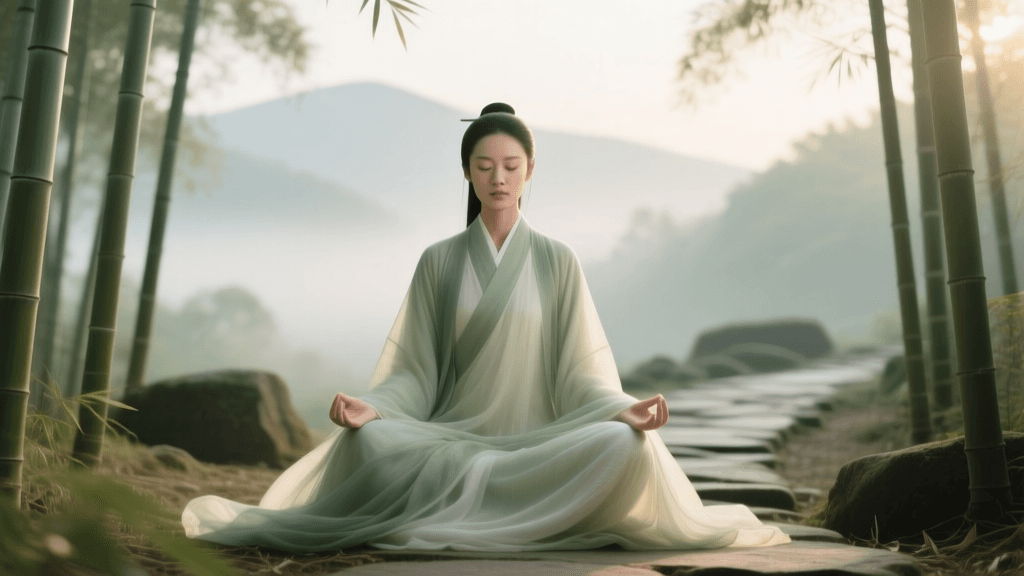
The ancient Chinese arts of Qigong and meditation are experiencing a massive global renaissance in 2026, driven by a collective desire for somatic grounding and nervous system regulation. As practitioners deepen their understanding of these disciplines, a critical yet often overlooked element of the practice is coming to the forefront: the clothing worn during the session. Traditional Chinese medicine (TCM) and martial arts have long dictated that the flow of Qi (vital energy) and blood can be severely restricted by modern, form-fitting apparel. Today, the wellness community is turning to authentic Hanfu—traditional Chinese clothing—to facilitate deeper breathwork, unrestricted movement, and enhanced energetic flow.
According to the National Qigong Association, Qigong involves coordinated posture, movement, breathing, and meditation. To achieve the profound physiological benefits associated with these practices, the body must be entirely free of physical constraints. In 2026, 'somatic dressing' has become a cornerstone of holistic wellness routines, and Hanfu offers a historically validated, ergonomically superior solution for modern meditators and Qigong practitioners.
The Philosophy of Somatic Dressing in Traditional Chinese Medicine
In TCM, the body is viewed as a network of meridians through which Qi flows. Tight waistbands, restrictive shoulder seams, and synthetic fabrics are believed to create 'dams' that stagnate this flow, particularly around the Lower Dantian (the body's primary energy center located just below the navel) and the inguinal lymph nodes. Hanfu is fundamentally designed around 'flat-pattern cutting,' a traditional tailoring method that lacks the structured shoulder seams and darts of Western clothing. This creates a draped, flowing silhouette that moves with the body rather than against it.
Research highlighted by Harvard Medical School confirms that physical comfort and the reduction of sensory distractions are vital for lowering cortisol levels during mindfulness practices. When the skin is allowed to breathe and the joints are free from tensile resistance, the parasympathetic nervous system engages more rapidly, allowing practitioners to enter meditative states with greater ease.
Top Hanfu Silhouettes for Unrestricted Qi Flow
Not all Hanfu styles are suited for active wellness practices. Highly formal garments with heavy layers or rigid collars are best reserved for ceremonies. For Qigong, Tai Chi, and seated meditation, the following silhouettes are the gold standard in 2026.
The Daopao (Taoist Robe)
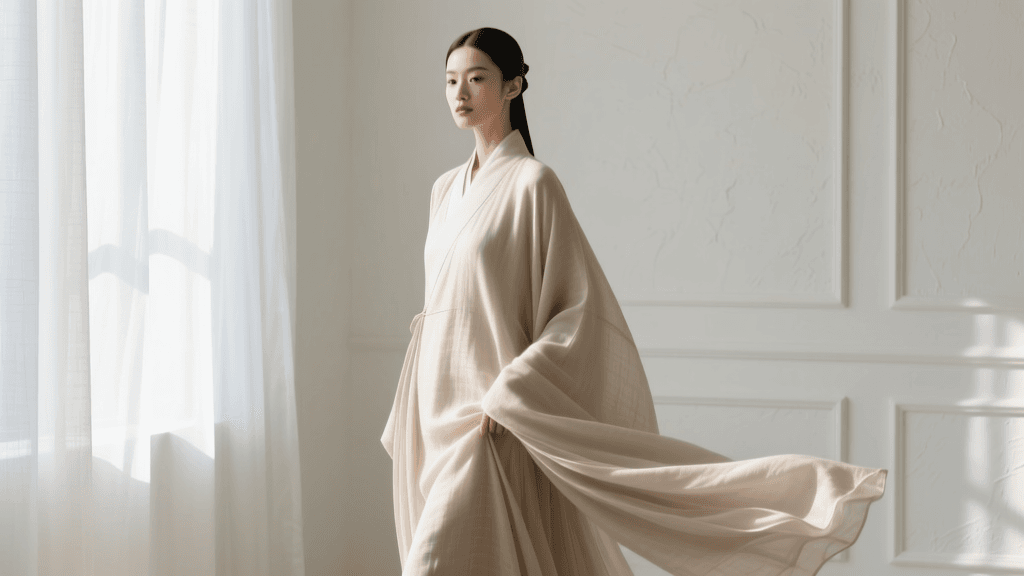
The Daopao is a cross-collared, wide-sleeved robe that has been worn by Taoist monks and scholars for centuries. It is the ultimate garment for static meditation (Zhan Zhuang) and slow-moving Qigong forms like the Eight Brocades (Ba Duan Jin). The wide sleeves allow for complete circulation of air around the arms, preventing overheating during vigorous breathwork. When performing movements that require raising the arms above the head, the draped fabric of the Daopao glides without pulling at the shoulder joints or restricting the expansion of the ribcage. In 2026, modern wellness-focused tailors have introduced lightweight, unlined Daopao made from enzyme-washed linens specifically for summer meditation retreats.
Song Dynasty Banbi and Songku
For practitioners who prefer a more streamlined silhouette or engage in more dynamic, martial Qigong, the Song Dynasty combination of the Banbi (a short-sleeved or half-sleeved cross-collar jacket) and Songku (wide-leg trousers) is ideal. The Songku features a wide, flat waistband that ties with a simple fabric sash rather than elastic or buttons. This prevents any compression of the abdomen, ensuring that deep diaphragmatic breathing remains entirely unobstructed. The wide legs allow for deep stances, such as the Horse Stance (Ma Bu), without the fabric binding at the knees or thighs.
The Duan Da (Short Jacket)
The Duan Da is a traditional short jacket often worn by martial artists. It features a Mandarin collar or a simple cross-collar and is designed for maximum mobility. In 2026, heritage brands have updated the Duan Da with hidden gussets under the arms and slightly tapered cuffs to prevent the sleeves from interfering with hand mudras or precise wrist movements during meditation. It is an excellent choice for cooler climates when layered over a thin, long-sleeved inner garment (Zhongyi).
2026 Fabric Guide: Natural Fibers for Optimal Breathability
The material of your Hanfu is just as important as the cut. Synthetic fabrics like polyester and nylon trap heat, generate static electricity, and disrupt the body's natural electromagnetic grounding. For wellness practices, 100% natural, plant-based, or animal-based fibers are mandatory. Below is a comparison of the top fabrics recommended by traditional garment artisans and wellness experts this year.
| Fabric Type | Breathability | Moisture Management | Best Practice Type | 2026 Market Price Range (USD) |
|---|---|---|---|---|
| Mulberry Silk (Chou) | High | Excellent (Thermoregulating) | Seated Meditation, Winter Qigong | $120 - $250 |
| Ramie (Zhu) | Very High | Superior (Quick-drying) | Summer Qigong, Hot Yoga Fusion | $80 - $150 |
| Organic Linen (Ma) | High | Very Good | Outdoor Meditation, Tai Chi | $90 - $180 |
| Hemp-Cotton Blend | Moderate | Good | Dynamic Qigong, Martial Forms | $60 - $110 |
Ramie and linen are particularly prized in 2026 for their 'cooling' properties in TCM, which help balance the internal heat generated during intense Qigong sessions. Furthermore, the World Health Organization has increasingly recognized the holistic benefits of integrating traditional lifestyle practices—including the use of natural, non-toxic materials—into modern preventative health routines. Garments dyed with natural plant dyes (such as indigo, madder root, and gardenia) are highly sought after, as they avoid the harsh chemical off-gassing associated with synthetic dyes, keeping the skin's microbiome healthy during prolonged wear.
Footwear and Accessories: Completing the Grounding Circuit
A complete wellness wardrobe extends to the feet. Modern rubber-soled shoes insulate the body from the earth, disrupting the grounding effect that is central to Qigong philosophy. The traditional 'Qiancengdi' (thousand-layer sole) cloth shoe is making a massive comeback in 2026 wellness circles. Hand-stitched from layers of cotton and hemp, these shoes provide a thin, flexible barrier that protects the foot while allowing the practitioner to feel the texture and temperature of the ground. This sensory feedback is crucial for maintaining balance and rooting energy through the 'Yongquan' point (Kidney 1 acupoint) on the sole of the foot.
For accessories, practitioners are advised to remove all metal jewelry, including watches and belts with metal buckles, before practicing. Metal can interfere with the body's subtle bio-magnetic field. Instead, use a simple woven cotton or silk sash to secure the trousers, tying it loosely at the side or back to avoid pressing against the Lower Dantian at the front.
Sourcing and Caring for Your Wellness Hanfu
When sourcing Hanfu specifically for meditation and Qigong in 2026, look for artisans who specialize in 'Zen' or 'Tea Ceremony' aesthetics, as these lines prioritize comfort and natural fabrics over the heavy, ornate brocades used in wedding or festival wear. Ensure that the garment features 'flat cutting' and lacks rigid interfacing in the collars.
Caring for natural fibers requires mindful maintenance. Silk and ramie should be hand-washed in cool water using a pH-neutral, plant-based detergent. Avoid wringing the fabric; instead, press the water out gently and dry the garment flat in the shade to prevent UV degradation of natural dyes. Over time, these natural fabrics will soften and mold to the practitioner's body, becoming a personalized extension of their physical form.
Conclusion
The integration of Hanfu into Qigong and meditation is not merely an aesthetic choice; it is a profound return to the somatic roots of traditional Chinese wellness practices. By selecting the appropriate silhouettes like the Daopao and Songku, and prioritizing natural, breathable fibers like ramie and silk, practitioners in 2026 can remove the physical barriers to energy flow. Embracing traditional garments allows for a deeper, more unencumbered connection to the breath, the body, and the earth, ultimately elevating the transformative power of mindful movement.