Hanfu Fabric Drape & Comfort Analysis: Top 2026 Textiles
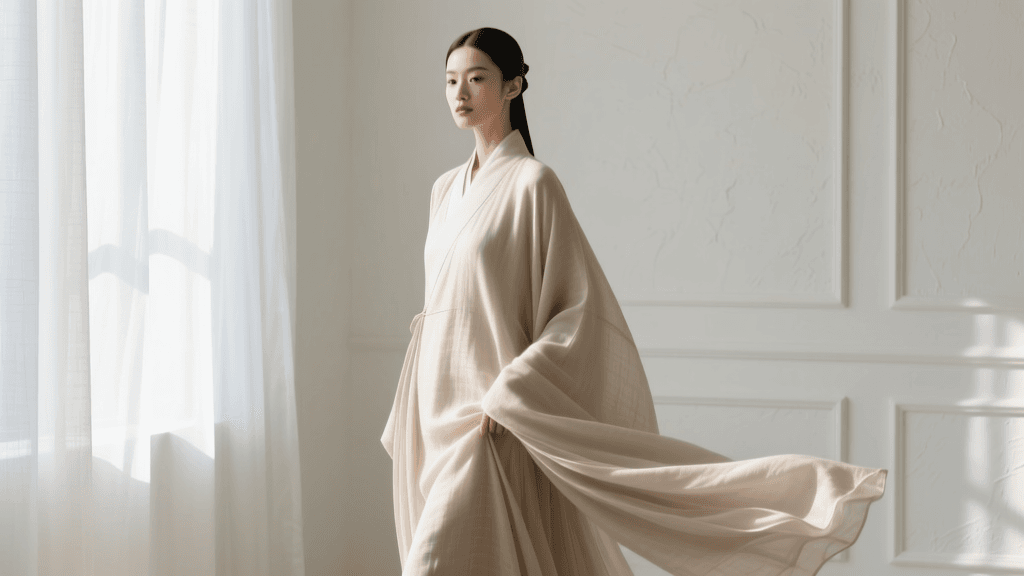
The 2026 Hanfu Renaissance: Where Tradition Meets Textile Science
As we navigate through 2026, the Hanfu movement has completely transcended its origins as a niche ceremonial or photographic hobby. Today, traditional Chinese garments are firmly integrated into the daily wardrobes of millions, heavily propelled by the Xin Zhongshi (New Chinese Style) movement. This mainstream adoption has fundamentally shifted consumer priorities. Enthusiasts are no longer satisfied with merely accurate historical silhouettes; they now demand rigorous comfort, dynamic drape, and everyday wearability. The intersection of historical authenticity and modern textile science has never been more critical.
Understanding how a fabric behaves in motion—its drape, shear stiffness, and bending length—is the key to unlocking the true elegance of traditional Asian garments. A poorly chosen textile can turn a majestic Ming Dynasty Mamianqun (horse-face skirt) into a stiff, unyielding cylinder, or cause a delicate Song Dynasty Beizi (long jacket) to cling awkwardly rather than flow gracefully. In this comprehensive 2026 analysis, we break down the physics of fabric drape, evaluate the top textiles dominating the market this year, and provide actionable guidelines for pairing fabrics with specific Hanfu silhouettes.
Understanding Fabric Drape and Hand-Feel in Traditional Garments
In textile engineering, 'drape' refers to the way a fabric hangs under its own weight. It is quantified by the drape coefficient, which measures how much a circular piece of fabric sags when supported only at its center. For Hanfu, achieving the correct historical aesthetic requires matching the drape coefficient to the garment's structural intent. Furthermore, 'hand-feel' (or fabric hand) encompasses the tactile sensations of smoothness, warmth, and stiffness against the skin, which directly dictates all-day comfort.
Historically, weavers achieved specific drapes through complex loom tensions and natural fiber processing. Today, as documented in the Victoria and Albert Museum's extensive Asian textile archives, historical garments relied heavily on the natural properties of bast fibers and cultivated silk. In 2026, we have the advantage of precision-milled natural fibers and advanced cellulosic blends that mimic historical drapes while vastly improving breathability and wrinkle resistance.
Silk: The Gold Standard for Fluidity
Mulberry silk remains the undisputed champion of traditional Chinese textiles. Its triangular prism-like fiber structure refracts light beautifully and allows for unparalleled fluid movement. However, not all silks are created equal when it comes to Hanfu. Silk weight is measured in momme (mm). A lightweight 12-momme silk chiffon offers an ethereal, floating drape ideal for summer Ruqun (blouse and skirt sets) but lacks the structural integrity to hold the sharp, knife-edge pleats of a Mamianqun.
For structured garments in 2026, the industry standard has shifted toward 22-momme to 30-momme silk charmeuse and heavy crepe de chine. These heavier weights provide a luxurious, weighted drape that pulls the fabric downward, ensuring that pleats remain closed and collars lay flat. According to Britannica's comprehensive guide on silk production, the sericin content and degumming process also heavily influence the final stiffness of the silk, allowing modern manufacturers to engineer the exact 'bite' and rustle (known as 'scroop') that Hanfu purists desire.
Linen and Ramie: Structured Breathability
When discussing Ming Dynasty aesthetics or scholar-official garments, linen and ramie take center stage. These bast fibers possess high shear stiffness, meaning they resist bending and create a more architectural, structured silhouette. In the humid summers of southern China, a 180 GSM (grams per square meter) pure ramie garment offers exceptional moisture-wicking properties and a cooling hand-feel that silk simply cannot match.
The challenge with linen and ramie in 2026 remains wrinkle recovery. Pure linen wrinkles the moment you sit down, which disrupts the visual flow of the garment. To combat this, contemporary Hanfu brands are utilizing linen-cotton blends or enzyme-washed ramie. These treatments break down the rigid pectin in the plant fibers, softening the hand-feel and introducing a slight, relaxed drape that maintains the historical 'scholarly' aesthetic without looking perpetually unkempt.
Modern Cellulosics: Tencel and Cupro
The most significant textile disruption in the 2026 Xin Zhongshi market is the widespread adoption of regenerated cellulosic fibers, specifically Tencel (lyocell) and Cupro (Bemberg). Derived from sustainably sourced wood pulp and cotton linters respectively, these fibers offer a drape coefficient that rivals heavy silk but at a fraction of the cost and with superior moisture management. Tencel's official textile research highlights its nanofibril structure, which absorbs moisture more efficiently than cotton and feels exceptionally cool to the touch. For commuters wearing Hanfu on modern public transit, a 150 GSM Tencel twill Beizi provides an elegant, sweeping drape that resists wrinkling and survives the rigors of daily wear.
Comparative Drape and Comfort Matrix
To help you navigate the 2026 textile market, we have compiled a comparative matrix analyzing the most prominent Hanfu fabrics. This table evaluates weight, drape characteristics, and optimal use cases.
| Fabric Type | Weight / Density | Drape Characteristic | Wrinkle Resistance | Best Hanfu Application |
|---|---|---|---|---|
| Mulberry Silk (Charmeuse) | 22-25 Momme | Heavy, fluid, luminous | Moderate | Mamianqun, formal Aoqun |
| Silk Chiffon | 12-16 Momme | Light, floating, ethereal | High | Summer Ruqun, Pibo (shawls) |
| Pure Ramie | 160-190 GSM | Stiff, architectural, crisp | Low | Scholar robes, Ming Banbi |
| Linen-Cotton Blend | 200-220 GSM | Structured but relaxed | Moderate | Everyday Song Dynasty Beizi |
| Tencel Lyocell Twill | 140-160 GSM | Extremely fluid, heavy fall | High | Commuter Xin Zhongshi skirts |
| Cupro (Bemberg) | 120-140 GSM | Soft, silky, clinging drape | High | Linings, lightweight inner layers |
Practical Guide: Choosing Fabric by Hanfu Silhouette
Selecting the right fabric is not merely about personal comfort; it is about respecting the structural geometry of the historical pattern. Here is how to pair 2026 textiles with specific silhouettes.
Mamianqun (Horse-Face Skirt)
The Mamianqun relies entirely on gravity to keep its intricate pleating system closed. If the fabric is too light or too stiff, the pleats will 'blow out' and flare awkwardly when walking. You need a fabric with a high bending weight. A 25-momme silk crepe or a dense 280 GSM polyester-viscose blend (often used in high-end 2026 commuter lines) is essential. The fabric must have enough 'slip' to allow the pleats to slide against one another, but enough weight to snap back into place when standing still.
Song Dynasty Beizi (Long Jacket)
The Beizi is characterized by its straight, un-tailored cut and side slits that run high up the thigh. The beauty of this garment lies in how it catches the wind and flows behind the wearer. Stiff linens will make the Beizi look boxy and rigid. Instead, opt for 16-momme silk habotai, lightweight Tencel, or a bamboo-silk blend. These fabrics possess low shear stiffness, allowing the jacket to contour softly to the shoulders and ripple elegantly with every step.
Tang Dynasty Qixiong Ruqun (Chest-High Skirt)
Because the skirt is secured high on the chest, a heavy fabric will cause the garment to slide down due to the downward pull of gravity. Conversely, a fabric that is too stiff will create an unflattering, bell-shaped tent effect. The ideal 2026 solution is a mid-weight silk-cotton blend or a fine 140 GSM Cupro. These materials offer enough friction to grip the inner blouse while maintaining a soft, cascading drape that flatters the body's natural lines without adding visual bulk.
Care and Maintenance for Optimal Drape Retention
Even the most expensive 30-momme silk will lose its structural elegance if maintained improperly. The way you store and care for your Hanfu directly impacts its long-term drape and texture.
- Steaming over Ironing: Traditional flat ironing crushes the natural fibers and can create permanent, unnatural creases that ruin the fluid drape of a Beizi. Invest in a high-output vertical garment steamer. The introduction of moist heat relaxes the hydrogen bonds in the fibers, allowing them to return to their natural, flowing state.
- Proper Hanging Techniques: Never hang a heavy Mamianqun by its waistband on a thin wire hanger; the concentrated weight will distort the weave and stretch the pleats over time. Use wide, velvet-padded hangers for tops, and store heavy skirts folded along their natural pleat lines in breathable cotton garment bags.
- Washing Protocols: For Tencel and Cupro, utilize a mesh washing bag and a pH-neutral liquid detergent on a cold, delicate cycle. Never wring these fabrics; instead, roll them in a dry towel to press out excess water and lay them flat to dry. This prevents the fibers from warping and ensures the drape coefficient remains consistent wash after wash.
Conclusion
The Hanfu landscape in 2026 is a thrilling convergence of ancestral aesthetics and cutting-edge material science. By understanding the physics of drape and the tactile nuances of silk, linen, and modern cellulosics, you can curate a traditional wardrobe that is not only historically resonant but profoundly comfortable for modern life. Whether you are selecting a heavy silk charmeuse for a winter festival or a breezy Tencel twill for a summer commute, the right textile will ensure your garments move with you, telling a story of elegance that spans centuries.