DIY Hanfu Sewing: Crafting the Ming Dynasty Mamianqun
The Resurgence of the Mamianqun in Modern Hanfu
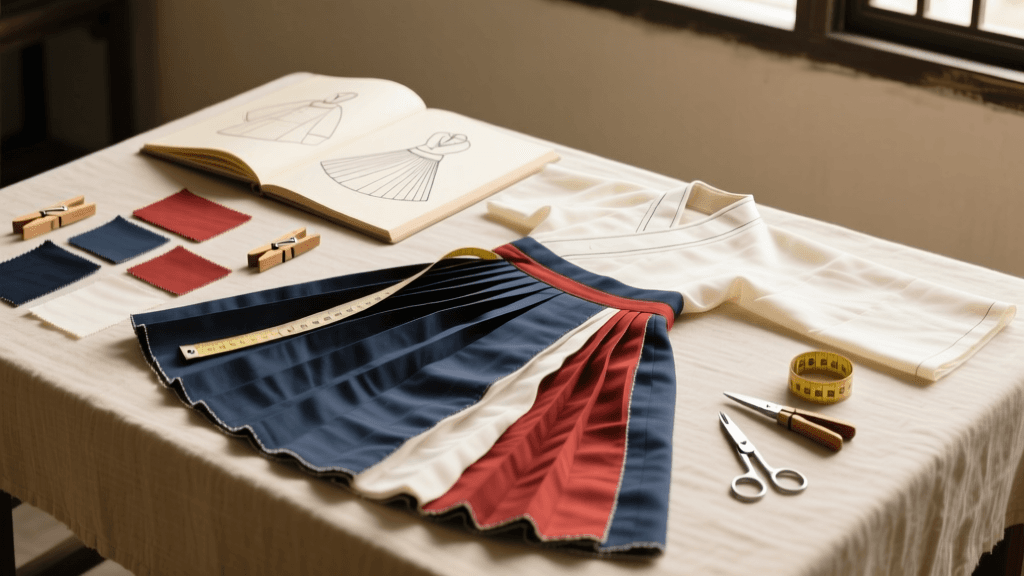
The global Hanfu movement has sparked a renaissance in traditional Chinese garment construction, with the Mamianqun (horse-face skirt) emerging as a cornerstone of the modern Hanfu wardrobe. Originating in the Song Dynasty and reaching its zenith during the Ming Dynasty, the Mamianqun is characterized by its unique structural design: two flat, overlapping front and back panels (the "horse faces") flanked by meticulously folded side pleats. This design allowed for ease of movement, particularly for horseback riding, while maintaining an elegant, structured silhouette.
For DIY sewists and textile enthusiasts, crafting a Mamianqun is a deeply rewarding project. It bridges the gap between historical tailoring and modern sewing techniques. Unlike Western circle skirts or gathered skirts, the Mamianqun relies on precise mathematical calculations for its knife pleats and flat panels. In this comprehensive guide, we will walk you through the essential steps of fabric selection, pattern drafting, and the meticulous pleating process required to create your own authentic Ming Dynasty Mamianqun.
Fabric Selection: The Foundation of the Pleats
The most critical decision in your DIY Hanfu journey is fabric selection. The Mamianqun requires a fabric with enough weight and memory to hold sharp, structural pleats while allowing the flat panels to drape elegantly against the body. According to UNESCO's Intangible Cultural Heritage registry, traditional Chinese sericulture and silk craftsmanship have long produced the heavy brocades and damasks historically used for these skirts. However, modern sewists have a variety of accessible options.
The historical significance of these woven textiles is well-documented by institutions like the Metropolitan Museum of Art, which notes in its Heilbrunn Timeline of Art History that silk weaving techniques in China evolved to create complex, multi-layered fabrics specifically suited for structured garments. When selecting your fabric, avoid lightweight chiffons, thin rayons, or stretchy knits, as they will collapse under the weight of the pleats.
Fabric Comparison Chart for Mamianqun
| Fabric Type | Weight & Drape | Pros | Cons | Estimated Cost |
|---|---|---|---|---|
| Silk Brocade / Zhuanghua | Heavy, stiff, luxurious | Historically accurate, holds pleats perfectly, stunning motifs. | Very expensive, requires dry cleaning, frays easily. | $40 - $100+ / yard |
| Polyester Jacquard | Medium-heavy, structured | Affordable, excellent pleat memory, wide color selection. | Less breathable, synthetic sheen can look cheap if poorly chosen. | $8 - $15 / yard |
| Heavy Crepe / Suiting | Medium, fluid but structured | Matte finish, elegant drape, easy to sew and press. | Pleats may require more aggressive steaming to set permanently. | $12 - $25 / yard |
| Cotton-Linen Blend | Medium, crisp | Breathable, great for summer, easy to wash. | Wrinkles easily, requires heavy starching to maintain pleats. | $10 - $20 / yard |
For visual references on historical garment construction and textile behavior, the Victoria and Albert Museum's Asian collections provide invaluable insights into Ming Dynasty tailoring and textile preservation, showcasing how heavy silks were manipulated to create volume without bulk.
Measurements and Pattern Drafting
The Mamianqun is essentially a wrap skirt constructed from two identical overlapping panels, or one continuous tube with overlapping front sections. For beginners, the two-panel wrap method is often easier to manage on a standard sewing table.
Step 1: Taking Your Measurements
- Waist Circumference: Measure where you want the skirt to sit (typically the natural waist or slightly higher for Hanfu styling). Let's use 70 cm (27.5 inches) as our working example.
- Skirt Length: Measure from your waist down to your ankle bone. Subtract 4 cm (1.5 inches) to account for the waistband. Let's use 96 cm (38 inches) as the finished skirt length.
Step 2: Calculating the Fabric Width
The magic of the Mamianqun lies in its volume. A traditional skirt requires a hem circumference that is 3 to 4 times the waist circumference to allow for deep, overlapping pleats and the flat front panels.
- Flat Panel Width: The front and back flat panels (the "horse faces") should each measure roughly half of your waist circumference plus a 5 cm overlap. For a 70 cm waist, each flat panel is about 40 cm wide.
- Pleated Section Width: The remaining fabric is divided into side pleats. If your total fabric width is 3.5 times your waist (245 cm), subtract the two flat panels (80 cm total). You are left with 165 cm of fabric to be folded into pleats.
- Total Fabric Required: For a standard 150 cm (60 inch) wide fabric bolt, you will need approximately 3 to 4 yards (2.7 to 3.6 meters) of fabric, depending on your desired volume and hem width.
Step-by-Step Sewing Instructions
1. Cutting the Panels and Hemming
Cut your fabric into two large rectangular panels based on your width and length calculations. Crucial Tip: Always cut along the straight grain of the fabric. Cutting on the bias will cause the skirt to stretch and warp, completely ruining the structural integrity of the pleats.
Before pleating, finish all raw edges. Hem the bottom of both panels using a narrow blind hem or a traditional 1 cm double-fold topstitch. Finish the side edges with a serger or a zigzag stitch to prevent fraying during the pleating process.
2. Drafting and Folding the Knife Pleats
The side sections of the Mamianqun feature deep knife pleats that face away from the center flat panel. Decide on your pleat depth; 3 cm to 5 cm (1.2 to 2 inches) per pleat is standard for a rich, historical look.
- Lay your fabric panel flat, wrong side up.
- Mark the center flat panel using fabric chalk.
- Working outward from the flat panel, mark your pleat lines. For a 4 cm pleat, you will fold 4 cm of fabric over, creating an 8 cm total depth per pleat fold.
- Fold the fabric along your marked lines, bringing the fold line to meet the placement line. Pin heavily.
- Repeat this process for all pleats on both sides of the flat panel, ensuring all knife pleats face outward away from the center.
3. Basting and Securing the Pleats
Once all pleats are pinned, use a long basting stitch on your sewing machine to secure the pleats along the top raw edge (the waistline). Remove the pins and measure the pleated waistline. It should match your target waist measurement (e.g., 70 cm) plus seam allowances. If it is too wide, adjust the depth of the outermost pleats. If it is too narrow, you may need to add a small gusset or release the innermost pleats slightly.
4. Constructing the Waistband (Yaolan) and Ties
The traditional Hanfu waistband, or Yaolan, is typically made from a contrasting fabric, often white silk or cotton, to protect the outer garment from skin oils and provide a stark visual border.
- Cut a waistband strip 10 cm (4 inches) wide and the length of your waist plus 4 cm for seam allowances.
- Cut four long tie straps (each roughly 150 cm / 60 inches long and 3 cm wide). Fold and stitch them into long tubes, turning them right side out.
- Sandwich the top edge of your pleated skirt between the folded waistband fabric. Pin the ties to the far left and far right edges of the waistband.
- Stitch through all layers using a walking foot on your sewing machine to prevent the heavy pleats from shifting. Topstitch the waistband closed for a clean finish.
Pressing and Setting the Pleats
The final, and arguably most important, step in DIY Mamianqun construction is pressing. Because Hanfu skirts are rarely dry-cleaned between every wear, the pleats must be heat-set to survive daily use.
- Set up an ironing board with a thick pressing cloth.
- Lay the skirt flat and align the pleats perfectly.
- Use a high-heat steam iron. For synthetic jacquards, use a pressing cloth to avoid melting the fibers. For natural silks and cottons, apply direct steam.
- The Tailor's Clapper: Immediately after applying steam, press a wooden tailor's clapper firmly over the pleats. The wood traps the heat and moisture, forcing the fibers to cool in the exact shape of the fold. This creates razor-sharp pleats that will last for years.
- For stubborn natural fibers, a 50/50 mix of white vinegar and water sprayed lightly on the pleat lines before pressing can help permanently set the crease.
Common Mistakes to Avoid
When transitioning from modern Western sewing patterns to traditional Hanfu construction, DIYers often make a few predictable errors. First, do not interface the entire flat panel. While a lightweight interfacing can be applied to the very top edge to support the waistband, stiffening the flat panel will make the skirt look like a cardboard box rather than a flowing garment. Second, do not skimp on the hem allowance. A wider hem (3 to 5 cm) adds necessary weight to the bottom of the skirt, acting as an anchor that keeps the pleats hanging straight and prevents the skirt from tangling around your legs when walking.
Conclusion
Sewing a Ming Dynasty Mamianqun is an exercise in patience, precision, and historical appreciation. By carefully selecting the right mid-to-heavy weight fabrics, calculating your pleat depths with mathematical accuracy, and utilizing professional pressing techniques, you can create a stunning, museum-quality garment in your own home. Whether worn with a traditional Ao (jacket) for a historical ensemble or paired with a modern blouse for a contemporary Hanfu fusion look, the Mamianqun remains a testament to the enduring brilliance of Asian textile traditions.