Sashiko & Boro: 2026 Global Luxury Fashion Collaborations
The Renaissance of Wabi-Sabi in 2026 High Fashion
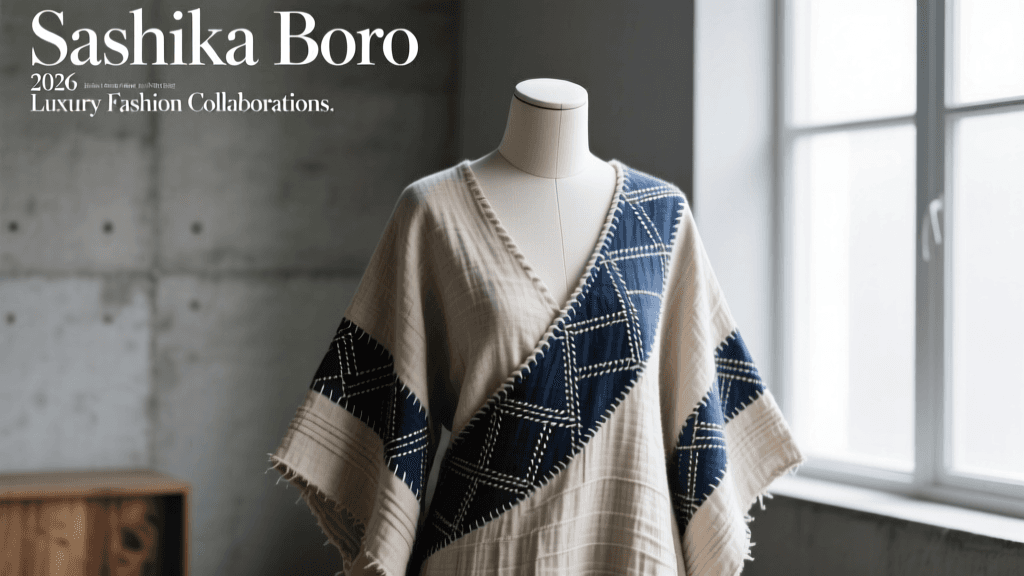
The global fashion landscape in 2026 has decisively pivoted away from hyper-polished, mass-produced luxury, embracing the profound beauty of imperfection. At the forefront of this movement are international design collaborations centered on traditional Japanese textile techniques. European heritage houses and avant-garde streetwear labels are increasingly looking to the East, not merely for aesthetic motifs, but for deep, structural integration of Japanese craftsmanship. Specifically, the ancient techniques of Sashiko (functional running stitching) and Boro (patchwork mending) have become the most coveted elements in 2026’s high-fashion collaborative capsules.
This shift represents a maturation in cross-cultural design. Rather than appropriating superficial patterns, international brands are now partnering directly with multi-generational ateliers in Japan’s rural prefectures. The result is a 2026 market where the philosophy of Wabi-Sabi—finding beauty in transience and imperfection—dictates the silhouettes, textures, and price points of the world's most exclusive garments.
Understanding the Roots: Sashiko and Boro
To understand the premium placed on these collaborative pieces in 2026, one must understand their historical weight. Born out of absolute necessity during the Edo period (1603–1867), these techniques were developed by the working classes in northern Japan, where cotton was scarce and harsh winters demanded insulated clothing. Boro, derived from the Japanese word boroboro (meaning tattered or repaired), refers to garments that have been patched and mended over generations. Sashiko, translating to 'little stabs,' is the functional running stitch used to bind these layers together, eventually evolving into complex geometric patterns.
According to the Metropolitan Museum of Art's Heilbrunn Timeline of Art History, these textiles represent a deep cultural resilience and an early form of sustainable fashion. The Met notes that the intricate stitching not only reinforced the fabric but also trapped layers of air for insulation, turning a garment of poverty into a canvas of profound artistic expression. Today, this historical narrative is exactly what luxury consumers in 2026 are paying a premium to wear.
Technique Comparison: The 2026 Luxury Application
| Technique | Primary Historical Function | Visual Characteristic | 2026 Luxury Collaborative Application |
|---|---|---|---|
| Sashiko | Reinforcement & Insulation | Geometric white running stitches on indigo | Tailored blazer lapels, structured denim overlays, sneaker uppers |
| Boro | Patchwork & Generational Mending | Layered, frayed, multi-tonal indigo scraps | Statement outerwear, avant-garde skirts, modular bags |
| Kasuri | Ikat weaving for everyday wear | Blurred, pixelated geometric patterns | Silk-blend shirting, lightweight summer suits, linings |
2026 International Design Collaborations
In 2026, luxury conglomerates are bypassing traditional overseas manufacturing to partner directly with master artisans in regions like Aomori, Okayama, and Niigata. The cross-pollination of Japanese garments and Western silhouettes is a continuation of a long historical dialogue, as explored in the Victoria and Albert Museum's comprehensive archives on Japanese fashion. However, the 2026 iteration focuses heavily on technique preservation rather than mere silhouette adaptation.
For example, recent Spring/Summer 2026 collaborative capsules between Parisian tailoring houses and Okayama-based denim mills have introduced the Noragi-Blazer Hybrid. This garment utilizes the relaxed, drop-shoulder construction of a traditional Japanese farmer's jacket (Noragi) but is tailored with the internal canvas structuring of a Savile Row suit jacket. The exterior is crafted from 16oz selvedge denim, heavily distressed and repaired using authentic Boro patchwork, with the lapels featuring hand-stitched Sashiko in the Seigaiha (ocean wave) pattern.
The pricing for these authentic, artisan-led collaborations reflects the immense labor involved. A hand-stitched Sashiko Noragi jacket from a premier 2026 European-Japanese collaborative capsule currently commands between $3,200 and $5,800 at retail. Limited-run Boro trench coats, requiring over 120 hours of hand-stitching by master artisans in Aomori, frequently exceed $8,500, with secondary market valuations appreciating by 15% to 20% within months of release.
Key 2026 Collaborative Garments to Watch
For collectors, stylists, and enthusiasts navigating the 2026 market, several specific collaborative garment types are defining the current season:
- The Sashiko-Stitched Sneaker: Footwear collaborations have moved beyond standard canvas. In 2026, vulcanized rubber soles are being paired with uppers made from layered, Sashiko-stitched hemp and cotton blends. The stitching provides incredible durability while offering a tactile, three-dimensional texture that synthetic materials cannot replicate.
- The Boro-Overlay Trench: Outerwear that features a base layer of waterproof, modern technical fabric (like Gore-Tex) overlaid with a removable, hand-patched Boro cotton shell. This merges 2026 performance wear with 19th-century aesthetics.
- Kasuri-Lined Tailoring: Subtlety is a major trend in 2026 menswear. Conservative wool suits are being collaboratively designed with vibrant, hand-woven Kasuri silk linings, offering a hidden flash of traditional Japanese textile art.
- Modular Sashiko Baggage: Luggage and bag collaborations utilizing Sashiko-stitched leather and heavy canvas, designed with modular, detachable pouches that mimic the utilitarian pockets of traditional Japanese workwear.
Sourcing, Styling, and Caring for Artisan Collaborations
Acquiring and maintaining these collaborative pieces requires specific knowledge, particularly regarding fit and textile care. The integration of traditional Japanese cuts into Western wardrobes can be challenging if not approached correctly.
Styling and Fit Guidelines
Traditional Japanese garments like the Noragi or Kimono are cut in straight lines, lacking the darts and curved seams of Western tailoring. When styling 2026 collaborative pieces that blend these aesthetics, it is crucial to respect the intended drape. Collaborative outerwear is typically designed with a boxy, oversized fit. Consumers should generally size up by one from their standard Western sizing to accommodate the drop-shoulder construction and allow for proper layering underneath. Pairing a heavy Boro jacket with slim, tailored trousers creates a balanced silhouette that prevents the outfit from looking overly cumbersome.
Care Instructions for Natural Indigo (Ai-Zome)
Many of the most prestigious 2026 collaborations utilize natural Japanese indigo (Ai-zome) rather than synthetic dyes. Natural indigo is a living dye that continues to oxidize and fade uniquely based on the wearer's habits. To preserve the integrity of these garments:
- Washing: Avoid machine washing entirely. Hand wash in cold water (below 20°C / 68°F) using a mild, pH-neutral detergent like Orvus paste. Never use bleach or harsh enzymatic cleaners, which will strip the natural indigo and damage the cotton fibers.
- Drying: Never wring out Sashiko or Boro garments, as this can snap the heavy stitching threads. Gently press out excess water and lay the garment flat to dry in the shade. Direct sunlight will cause the natural indigo to bleach and degrade prematurely.
- Maintenance: Embrace the evolution of the garment. If a collaborative Boro piece develops a tear, the ethos of the garment dictates that it should be visibly mended. Many 2026 luxury brands now offer in-house repair services, sending the garment back to the original Japanese atelier for authentic, continuous patching.
The Future of Japanese Textile Preservation
The surge in international luxury collaborations in 2026 is not merely a trend; it is a vital economic lifeline for traditional Japanese craftsmanship. The artisans mastering Sashiko and Boro are predominantly elderly, and the rural communities where these skills reside have faced severe depopulation. By injecting significant capital and global prestige into these ateliers, international fashion houses are funding the apprenticeship programs necessary to keep these techniques alive.
When you invest in a 2026 Sashiko or Boro collaborative piece, you are participating in a global effort to preserve intangible cultural heritage. You are wearing a garment that bridges the gap between the Edo period and the cutting edge of modern luxury, proving that true style is not about pristine perfection, but about the beautiful, enduring story woven into the fabric itself.