The Ultimate Guide to Children's Hanfu and Festive Wear
The Renaissance of Children's Traditional Chinese Clothing
The traditional Chinese garment renaissance, widely known as the Hanfu movement, has transcended adult fashion and firmly rooted itself in children's wardrobes. According to a comprehensive cultural report by BBC News, the revival of historical dress is heavily driven by younger generations seeking a tangible connection to their heritage—a sentiment that millennial and Gen Z parents are now passionately passing down to their children. Dressing kids in traditional Chinese clothing is no longer reserved solely for studio portraits or stage performances. Today, children wear these garments to school, family gatherings, global cultural festivals, and even on the playground.
However, buying traditional clothing for growing, active children requires a delicate balance between historical authenticity, modern comfort, and practical durability. Unlike adult garments, which prioritize drape and silhouette, children's traditional wear must accommodate sensitive skin, rapid growth spurts, and high energy levels. This comprehensive guide provides parents with actionable advice on sizing, fabric selection, occasion-based styling, and garment care for children's traditional Chinese clothing.
Understanding Key Garment Types for Kids
Before making a purchase, it is essential to understand the primary categories of traditional Chinese clothing available for children. Each serves a different purpose and offers varying levels of mobility.
1. Hanfu (Historical Han Clothing)
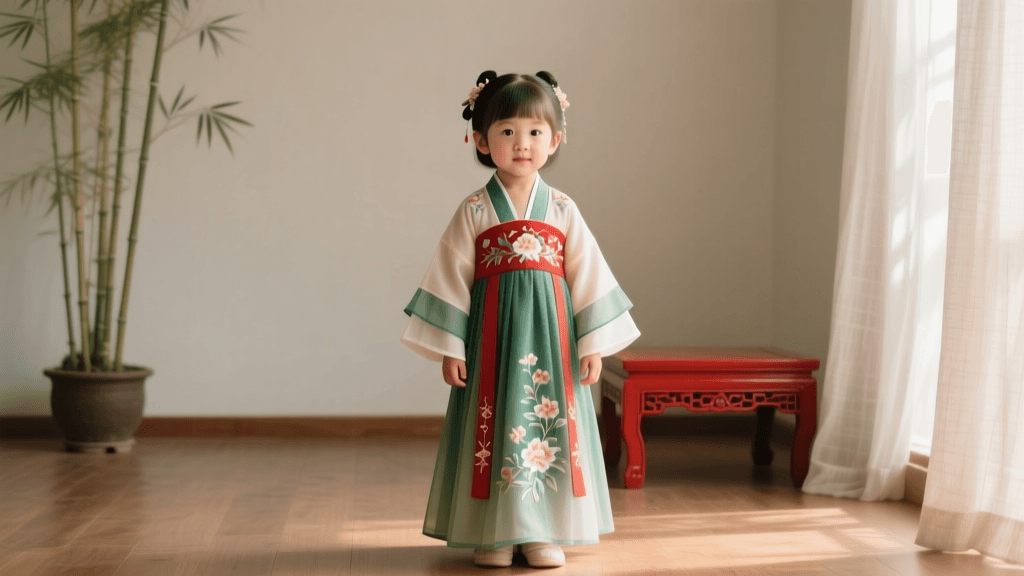
Hanfu refers to the historical clothing of the Han Chinese, predating the Qing Dynasty. As detailed in the historical archives of Hanfu, these garments rely on flat cutting, wrap-around panels, and tying sashes rather than tailored darts and buttons. For children, the most practical and common style is the Ruqun (a cross-collared blouse paired with a high-waisted skirt) for girls, and the Shenyi or Banbi (half-sleeve jackets) paired with loose trousers for boys. The reliance on waist ties makes Hanfu incredibly forgiving for growing bellies and variable heights.
2. Tangzhuang (The Modern Tang Suit)
Often mistaken for ancient clothing, the Tangzhuang is actually a modern hybrid of Manchu and Western tailoring, characterized by a mandarin collar, frog buttons (Pankou), and brocade fabrics. It is the quintessential Lunar New Year outfit for toddlers and young children. While less historically 'pure' than Hanfu, it is highly structured, easy to put on, and widely recognized globally as festive Chinese wear.
3. Xin Zhongshi (New Chinese Style)
For everyday wear and school, the Xin Zhongshi movement is the most practical choice. This style blends traditional elements like standing collars, Pankou knots, and bamboo embroidery with Western silhouettes, such as denim jackets, cotton t-shirts, and A-line skirts. It allows children to express cultural pride without the tripping hazards of trailing sleeves or floor-length skirts.
The Sizing Dilemma: Measurements Over Age Labels
One of the most common mistakes parents make when buying traditional Chinese clothing is relying on Western age brackets (e.g., 4T, 5T). Asian children's garments are almost exclusively sized by height in centimeters, and occasionally by weight. Because Hanfu relies on wrap-around ties, there is built-in flexibility, but the shoulder drop and sleeve length can easily overwhelm a small child if sized incorrectly, creating a safety hazard on stairs or playgrounds.
Actionable Advice: Always measure your child's height, chest circumference, and arm length before ordering. When in doubt, size up by one height bracket (e.g., buy size 110 for a child who is 102cm tall) and use the waist ties to adjust the fit. Roll up excess sleeve length and secure it with a discreet safety pin or decorative wrist cuff.
Standard Sizing Chart for Children's Hanfu and Tangzhuang
| Child's Age (Approx.) | Height (cm) | Chest (cm) | Recommended Asian Size Label | Fit Notes |
|---|---|---|---|---|
| 2 - 3 Years | 85 - 95 | 52 - 54 | 90 | Opt for Velcro closures over frog buttons for toddlers. |
| 4 - 5 Years | 100 - 110 | 56 - 58 | 110 | Ideal for Ruqun; ensure skirt length hits above the ankle. |
| 6 - 7 Years | 115 - 125 | 60 - 62 | 120 / 130 | Size up to 130 for winter layering over thermal wear. |
| 8 - 10 Years | 130 - 145 | 64 - 68 | 140 | Transition to adult-style tying methods; check shoulder seams. |
| 11 - 13 Years | 150 - 160 | 70 - 76 | 160 / Adult XS | Many brands stop at 160; transition to petite adult Hanfu. |
Fabric Selection for Sensitive Skin and Active Play
Children have sensitive skin and high metabolic rates, meaning they sweat easily. The stiff, heavily embroidered synthetic brocades used in budget adult ceremonial wear are a recipe for skin irritation and meltdowns in kids. When sourcing garments, prioritize the following fabric guidelines:
- Summer and Indoor Play: Look for 100% cotton, bamboo blends, or washed linen. These natural fibers breathe well, wick moisture, and withstand frequent machine washing. Bamboo-cotton blends are particularly excellent for the inner lining of cross-collared tops, as they prevent chafing around the neck.
- Winter and Festive Wear: Opt for cotton-lined jacquard, soft velvet, or quilted cotton. If purchasing a Tangzhuang for Lunar New Year, ensure the inner lining is pure cotton. Avoid cheap polyester brocades that trap heat, cause sweating, and subsequently lead to chills when the child goes outdoors.
- The 'Scratch Test': Before buying embroidered Hanfu, check the reverse side of the fabric. If the embroidery backing is rough or exposed, it will scratch the child's skin. Always look for garments with a secondary cotton lining behind embroidered panels.
Occasion-Based Styling Guide
Styling traditional clothing requires an understanding of cultural context, seasonal colors, and practical layering.
Lunar New Year (Spring Festival)
Red and gold are the undisputed colors of the Lunar New Year, symbolizing luck and prosperity. For toddlers, a padded red Tangzhuang jacket paired with black cotton trousers is classic and warm. For older girls, a winter-weight Mamianqun (horse-face skirt) in crimson paired with a white or cream cross-collared top offers a regal, historically grounded look. Layer with a modern thermal turtleneck underneath if the weather is freezing; the high collar of the Hanfu will hide it perfectly.
Mid-Autumn Festival
The Mid-Autumn Festival calls for ethereal, celestial styling. Pastel colors, jade greens, soft blues, and moon-rabbit embroidery are highly appropriate. A lightweight Beizi (open-front jacket) worn over a simple cotton dress or Ruqun allows for easy temperature regulation during evening moon-viewing parties.
Everyday School and Travel
For travel or school, full Hanfu is often impractical. Instead, utilize the Xin Zhongshi aesthetic. Pair a traditional Pankou-button linen blouse with modern denim jeans or cotton leggings. This fusion approach respects the culture while allowing the child to run, jump, and use the restroom independently without assistance.
Footwear and Accessories: Prioritizing Safety
Traditional accessories can pose safety risks for active children if not chosen carefully.
- Tiger Head Shoes (Hutouxie): These traditional, brightly colored toddler shoes are believed to ward off evil spirits and protect the child. While traditional versions feature soft cloth soles, modern parents must seek out versions with anti-slip rubber soles to prevent falls on smooth indoor floors or paved outdoor areas.
- Hair Accessories: Avoid heavy metal hairpins (Buyao) or sharp wooden sticks for young children. A sudden fall or rough play can lead to severe head injuries. Instead, opt for lightweight velvet scrunchies, silk ribbons, soft fabric flowers, or magnetic clasps that mimic the look of traditional jade hairpins without the danger.
- Pankou (Frog Buttons): For children under the age of four, traditional knotted buttons can be a choking hazard if they come loose, and they are difficult for little fingers to fasten. Look for toddler garments that use hidden Velcro or snap fasteners disguised as traditional knots.
Budgeting and Sourcing Authentic Garments
The market for children's Hanfu ranges from cheap costume knock-offs to high-end, historically accurate bespoke pieces. Here is what parents should expect regarding costs and sourcing:
- Budget Tier ($15 - $30 USD): Usually found on global marketplaces like Amazon or AliExpress. These are often made of shiny polyester and are best treated as 'costumes' for a single school cultural day rather than durable garments.
- Mid-Tier ($35 - $70 USD): The sweet spot for everyday and festive wear. Sourced via Taobao or specialized global Hanfu retailers (like Newhanfu or Hanfu-Tang), these pieces feature proper cotton linings, accurate historical collars, and durable stitching.
- Premium Tier ($80 - $150+ USD): Reserved for special occasions. These garments feature real silk, hand-embroidery, and custom tailoring. Because children outgrow clothes rapidly, this tier is only recommended for major milestones or family heirlooms meant to be passed down to younger siblings.
Pro-Tip for Taobao Buyers: When searching on Chinese domestic marketplaces, use the keywords '儿童汉服' (Children's Hanfu) or '女童拜年服' (Girls' New Year Clothing). Always check the buyer photo reviews to verify the actual fabric texture, as studio lighting often makes synthetic fabrics look like silk.
Garment Care and Maintenance
Traditional garments require specific care to maintain their shape and vibrant dyes. Never wash Hanfu or Tangzhuang with heavy items like jeans, as the friction will cause the delicate fabrics to pill or tear.
- Washing: Hand wash in cold water with a mild, pH-neutral detergent. If machine washing is unavoidable, place the garment inside a mesh laundry bag and use the 'delicate' cycle.
- Drying: Never tumble dry. The high heat will shrink cotton linings and melt synthetic embroidery threads. Hang dry in the shade; direct sunlight will quickly fade traditional red and indigo dyes.
- Ironing: Use a low-heat steam iron. Always place a cotton pressing cloth between the iron and the garment, especially when dealing with metallic embroidery or jacquard brocades, to prevent scorching.
By prioritizing comfort, safety, and proper sizing, parents can introduce their children to the rich tapestry of Asian traditions, ensuring that these beautiful garments are worn with joy, pride, and ease.