Hanfu Tourism: Ultimate Photoshoot Guide for Social Media
The Rise of Hanfu Destination Tourism
In recent years, the intersection of traditional Chinese clothing and heritage tourism has created a massive cultural phenomenon across platforms like Douyin, TikTok, and Instagram. Hanfu, the historical dress of the Han Chinese, is no longer confined to niche hobbyist circles or convention halls. Today, it is a vibrant, living fashion movement that draws millions of travelers to China's most iconic historical landmarks. For content creators, travel bloggers, and cultural enthusiasts, planning a Hanfu destination photoshoot offers a unique opportunity to merge sartorial elegance with breathtaking architectural backdrops.
However, capturing the perfect short-form video or editorial photo set requires more than just putting on a beautiful garment. It demands a strategic understanding of fabric behavior, heritage site logistics, optimal lighting conditions, and dynamic movement. Whether you are planning a weekend trip to Xi'an or a week-long cultural immersion in Hangzhou, this comprehensive guide will equip you with the actionable details needed to elevate your Hanfu travel content.
Choosing Your Heritage Backdrop
The location you choose dictates the dynasty, style, and color palette of your Hanfu. Pairing the correct historical silhouette with its corresponding regional architecture creates a visually cohesive and culturally respectful narrative for your audience. Below is a comparison chart of top Hanfu tourism destinations, detailing the ideal styles, seasons, and average costs.
| Destination | Recommended Hanfu Style | Ideal Season | Avg. Rental Cost (USD) | Best Time of Day to Shoot |
|---|---|---|---|---|
| Hangzhou West Lake | Song Dynasty Beizi & Pleated Skirt | Spring / Autumn | $25 - $35 | Early Morning (6:00 AM) |
| Xi'an City Wall | Tang Dynasty Qixiong Ruqun | Summer / Autumn | $30 - $45 | Golden Hour / Blue Hour |
| Beijing Forbidden City (Exterior) | Ming Dynasty Mamianqun & Aoqun | Winter / Late Autumn | $35 - $50 | Mid-Morning (9:00 AM) |
| Luoyang Longmen Grottoes | Wei / Jin Dynasty Wide-Sleeve Robes | Spring | $20 - $30 | Late Afternoon (3:00 PM) |
West Lake: The Song Dynasty Aesthetic
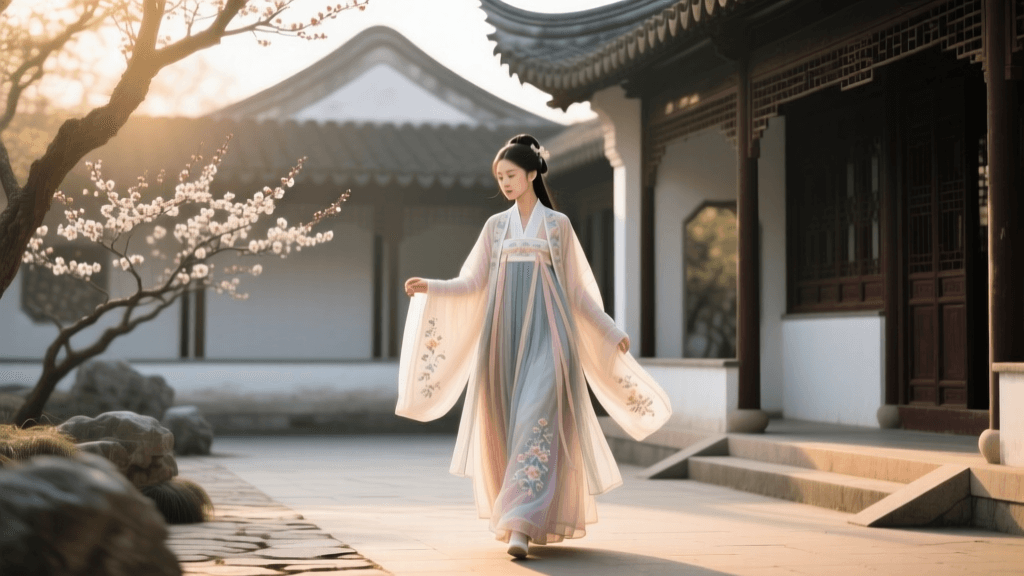
Hangzhou's West Lake is a masterpiece of Chinese landscape design, celebrated for its misty waters, weeping willows, and ancient pagodas. Recognized as a UNESCO World Heritage site, the cultural landscape perfectly complements the refined, minimalist elegance of Song Dynasty Hanfu. The Song style favors slender silhouettes, muted pastel tones, and the iconic Beizi (a long, open-front overcoat). For social media content, the soft morning mist rolling off the lake provides a natural diffuser, creating an ethereal, cinematic look without the need for heavy post-production color grading.
The Forbidden City: Ming Dynasty Majesty
While photography inside the main halls of the Forbidden City is heavily restricted, the exterior gates, corner towers, and the surrounding imperial moat offer spectacular backdrops. The imposing red walls and golden roof tiles demand the structured, regal presence of Ming Dynasty clothing, particularly the Mamianqun (horse-face skirt) paired with a woven Ao (jacket). According to The Palace Museum, the architectural symmetry of the imperial city is best captured using a telephoto lens to compress the background, making the intricate woven patterns of your Mamianqun stand out against the monumental scale of the gates.
Wardrobe Logistics: Renting vs. Packing for Travel
One of the most critical decisions for a Hanfu traveler is whether to rent on-site or pack your own collection. Both options have distinct advantages depending on your itinerary and content goals.
The Economics of Rental
Cities like Xi'an, Luoyang, and Hangzhou have developed robust Hanfu rental ecosystems. A standard rental package—which typically includes the garment set, basic hair styling, and traditional makeup (such as the application of Huadian, or forehead floral decals)—costs between 150 and 300 RMB ($20 to $40 USD). Premium packages featuring authentic silk garments and elaborate hairpieces can reach 600 RMB ($85 USD). Renting is highly recommended for travelers who want to experience heavy, historically accurate winter garments (like Ming Dynasty cloud-shouldered capes) without the burden of packing them.
Packing Your Own: Fabric and Measurements
If you prefer to bring your own Hanfu to ensure a perfect fit and unique color palette, fabric choice is paramount. Traditional silk and linen are historically accurate but wrinkle terribly in a suitcase. For travel and social media content, opt for high-quality jacquard polyester or chiffon blends. These modern textiles mimic the drape and sheen of silk but are highly wrinkle-resistant and dry quickly if caught in the rain.
When packing a Mamianqun, precise measurements are vital to avoid tripping on uneven cobblestones at heritage sites. The skirt length should be measured from your natural waist to just above the ankle bone. For a person who is 160 cm (5'3") tall, a skirt length of 95 cm to 100 cm is ideal. Ensure the waistband is at least 6 cm wide to provide adequate support and prevent the heavy pleats from dragging the skirt down during dynamic video transitions.
Mastering Movement and Posing for Short-Form Video
Static photography only tells half the story; Hanfu was designed to be seen in motion. Platforms like TikTok and Douyin reward creators who understand the physics of traditional garments. To maximize engagement, you must master the art of fabric manipulation.
The Sleeve Toss and Fan Snap
Garments with large, sweeping sleeves (such as the Tang Dynasty Daxiushan or Wei-Jin wide-sleeve robes) require specific movements to look graceful on camera. The 'sleeve toss' involves a swift, upward flick of the wrist, allowing the fabric to catch the air and create a dramatic arc. Practice this movement in slow motion (shooting at 60fps or 120fps) to capture the fabric's fluid descent.
Similarly, the folding fan is an essential prop. A sharp, deliberate 'snap' of the fan opening, timed perfectly with a beat drop in your audio track, creates a highly satisfying visual and auditory hook for viewers. Hold the fan near the base of the ribs for maximum leverage and a crisper sound.
Skirt Twirls and Pleat Display
The Mamianqun is famous for its flat front and back panels, with deep, knife-like pleats hidden on the sides. To showcase this engineering marvel on video, avoid continuous, dizzying spins. Instead, use a 'step-and-pivot' technique. Step forward with your lead foot, pivot sharply on the ball of your foot, and allow the momentum to flare the side pleats outward while the flat front panel remains perfectly facing the camera. This highlights the skirt's structure and the intricate woven motifs on the flat panels.
Essential Travel Packing List
Shooting on location at sprawling heritage sites requires a specialized toolkit. Beyond your camera gear, ensure your day bag includes the following Hanfu-specific essentials:
- Portable Handheld Steamer: Even wrinkle-resistant fabrics can develop creases during transit. A compact, USB-rechargeable steamer is non-negotiable for crisp pleats and smooth collars.
- Double-Sided Fashion Tape: Crucial for securing the overlapping collars (Jiaoling) of your top garment, ensuring modesty and a clean silhouette during windy conditions.
- Anti-Chafe Balm: Traditional garments often feature stiff, embroidered collars or heavy waistbands. Apply anti-chafe balm to the back of your neck and waist to prevent irritation during long shoot days.
- Hairpins and U-Pins (Matte Finish): Wind is the enemy of elaborate traditional updos. Bring a surplus of matte-finished U-pins to anchor your hairpieces securely without reflecting sunlight on camera.
- Collapsible Reflector (Gold/Silver): Heritage sites often feature deep, harsh shadows cast by sweeping eaves. A small, pop-up reflector helps bounce warm light onto your face, balancing the exposure against bright skies.
Respecting the Heritage
While creating stunning social media content is a primary goal, it is imperative to remember that these locations are protected cultural treasures. The Ministry of Culture and Tourism of the People's Republic of China frequently issues guidelines on sustainable and respectful tourism practices at historical sites.
Always adhere to posted photography restrictions. Never climb on ancient stonework, touch fragile wooden carvings, or block main thoroughfares for extended periods to set up tripods. True cultural appreciation means preserving the integrity of the heritage site for future generations.
By combining meticulous wardrobe planning, an understanding of historical aesthetics, and respectful on-location practices, you can create Hanfu travel content that not only captivates your social media audience but also honors the profound legacy of Asian textile traditions.