Sashiko & Boro in 2026: Japanese Fashion's Global Collaborations
The Renaissance of Japanese Artisanal Textiles in 2026
The intersection of traditional Japanese garment-making and international fashion has evolved dramatically by 2026. No longer confined to niche vintage markets or exclusive denim enthusiast circles, heritage techniques like Sashiko and Boro have become the cornerstone of high-profile global design collaborations. As the international fashion industry faces mounting pressure to embrace genuine sustainability and artisanal preservation, European luxury houses and American streetwear giants are turning to the rural cooperatives of Aomori, Kyoto, and Ibaraki. These partnerships are not merely aesthetic; they represent a profound cross-cultural exchange that honors the life stages of a garment, the Zen spirituality of creation, and the rich sensory experience of traditional Asian textiles.
In the 2026 fashion landscape, consumers are highly educated. They demand transparency in trade, authenticity in craftsmanship, and a tangible connection to the hands that wove their garments. This has led to a surge in collaborative capsule collections where Western silhouettes—such as the classic workwear chore coat or the modern technical anorak—are entirely reimagined through the lens of centuries-old Japanese mending and weaving practices.
The Zen Spirituality and Sensory Experience of Sashiko
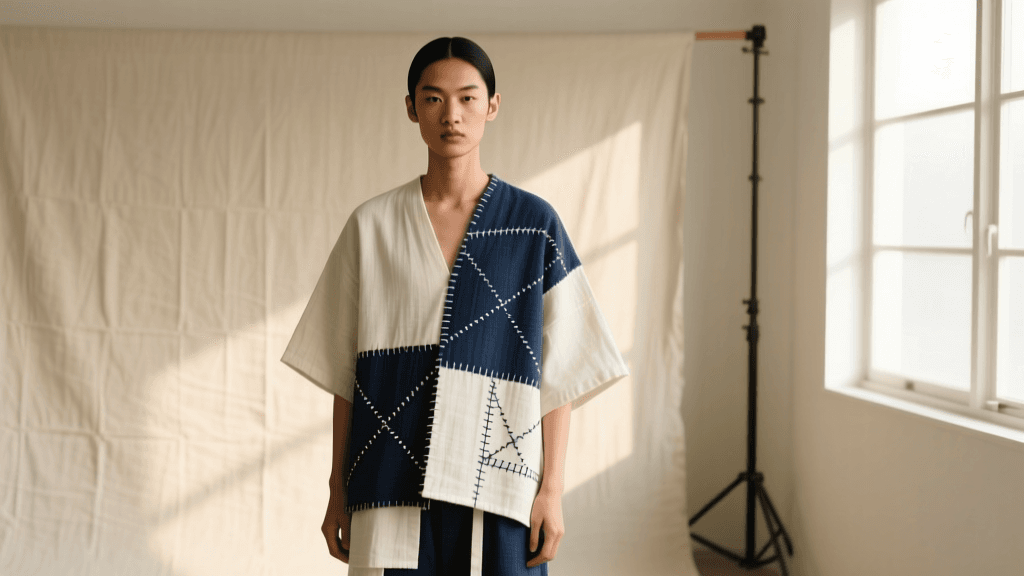
Sashiko, which translates to 'little stabs,' is a functional embroidery technique originally used by working-class Japanese communities to reinforce points of wear in cotton and hemp garments. Today, it is celebrated globally not just for its striking geometric patterns, but for the Zen spirituality embedded in its creation. The repetitive, rhythmic motion of the running stitch induces a state of mushin (no-mind), a meditative focus that the artisan transfers directly into the textile.
For the modern wearer, the sensory experience of a genuine Sashiko garment is unparalleled. When you unbox a 2026 collaborative release featuring authentic, hand-stitched Sashiko, the first thing that strikes you is the scent. Traditional indigo dyeing, utilizing fermented sukumo leaves, imparts a deep, earthy aroma that synthetic dyes simply cannot replicate. The tactile experience is equally distinct; the raised cotton threads create a topographical map across the fabric, offering a structured yet yielding hand-feel that molds to the wearer's body over time. International brands collaborating with Japanese artisans in 2026 are leaning heavily into this sensory storytelling, marketing the meditative origins of the craft to a global audience seeking mindfulness in their consumption habits.
Boro: Life Stages, Mending, and Sustainable Luxury
Boro, derived from the Japanese word boroboro (tattered or repaired), represents the ultimate expression of a garment's life stages. Historically, peasant families in northern Japan would patch and mend their hemp and cotton workwear for generations, creating dense, layered textiles that served as historical records of a family's survival. According to the Metropolitan Museum of Art's Heilbrunn Timeline of Art History, these textiles represent a profound history of mending that transforms utilitarian necessity into striking visual art.
In 2026, Boro has become the ultimate symbol of circular fashion. International design collaborations are no longer just mimicking the Boro look with pre-distressed factory fabrics; they are engaging in 'living collaborations.' Brands are releasing garments designed specifically to be mended over the next fifty years, providing buyers with heritage swatches and Sashiko thread kits. This approach respects the traditional Asian view of clothing not as a disposable commodity, but as an evolving companion that ages alongside the wearer. The friction of daily life, the fading of the indigo, and the eventual need for patchwork are all factored into the 2026 design blueprint.
2026 Material and Cost Breakdown for Global Releases
As international trade routes for heritage textiles have become more regulated to protect artisan livelihoods, the pricing for authentic collaborative pieces in 2026 reflects the true cost of slow fashion. Below is a breakdown of current market expectations for genuine Japanese-international collaborative garments.
| Garment Type | Traditional Origin | 2026 Collaborative Application | Average Retail Price (USD) | Production Time |
|---|---|---|---|---|
| Noragi Jacket | Aomori Prefecture | Heavyweight Sashiko Canvas Workwear | $1,450 - $2,200 | 4-6 Weeks |
| Boro Tote Bag | Tsugaru Region | Upcycled Vintage Hemp & Leather Trim | $850 - $1,100 | 2-3 Weeks |
| Haori Layer | Kyoto / Ibaraki | Yuuki Tsumugi Silk Streetwear | $2,500 - $3,800 | 2-3 Months |
| Sashiko Denim | Okayama / Global | Reinforced Selvedge with Hand-Stitching | $650 - $950 | 1-2 Weeks |
Yuuki Tsumugi and the New Wave of Silk Collaborations
While cotton and hemp dominate the workwear collaborations, the luxury sector in 2026 is fixated on traditional Japanese silk. Specifically, Yuuki Tsumugi, a highly revered pongee silk weaving technique. UNESCO recognizes Yuuki Tsumugi on its Representative List of the Intangible Cultural Heritage of Humanity, noting its meticulous hand-spinning and kasuri (tie-dye) weaving processes.
This year, we are witnessing unprecedented collaborations between European leather goods houses and Yuuki Tsumugi weavers. The result is a new category of ultra-luxury accessories and lightweight layering pieces that merge the structural rigidity of Western tailoring with the breathable, slub-textured elegance of Japanese heritage silk. The trade dynamics here are delicate; international brands are funding the apprenticeship programs in Ibaraki Prefecture to ensure the survival of the craft, creating a symbiotic relationship that goes far beyond simple manufacturing outsourcing.
How to Authenticate and Source Genuine 2026 Collaborations
With the premium placed on Japanese heritage techniques, the market has inevitably seen an influx of machine-made imitations. For collectors and enthusiasts navigating the 2026 market, distinguishing between a genuine artisanal collaboration and a mass-produced facsimile requires a keen eye and an understanding of traditional construction.
- Inspect the Stitch Density: Genuine hand-stitched Sashiko will exhibit microscopic variations in stitch length and tension. Machine-made Sashiko is perfectly uniform. Look for 8 to 12 stitches per inch, a hallmark of master artisans.
- Examine the Reverse Side: In authentic Boro and Sashiko, the back of the fabric should show the continuous, unbroken loops of the running stitch. If the threads are cut or tied off frequently on the reverse, it is likely a modern embroidery machine simulation.
- Verify the Artisan Seals: Legitimate 2026 collaborations will include provenance documentation, often featuring the hanko (personal seal) of the master weaver or dyer, alongside certificates of authenticity from regional guilds.
- Assess the Indigo Depth: Natural indigo penetrates the cotton fibers completely. If you scratch the surface of a dark blue thread and see a stark white core, the garment has likely been surface-dyed with synthetic chemical indigo.
For those looking to deepen their understanding of textile identification before making significant investments, the Victoria and Albert Museum's Asian collections archive offers invaluable resources on the structural nuances of historical and contemporary Japanese weaving.
The Future of Heritage in Global Fashion
The international design collaborations of 2026 prove that traditional Asian garments and textiles are not relics of the past, but living, breathing mediums capable of addressing modern fashion's greatest challenges. By integrating the Zen philosophy of mindful creation, the sustainable ethos of Boro mending, and the unparalleled sensory qualities of natural dyes and hand-woven silks, these global partnerships are ensuring that Japanese artisanal traditions will not only survive but thrive on the world stage. As consumers, our role is to look past the logo, feel the texture of the thread, and honor the generations of craftsmanship woven into every single stitch.