Sardinian Pibiones Weaving & Heritage Textile Brands 2026
The Living Heritage of Sardinian Folk Dress
Sardinia, an island characterized by its rugged interior and historical isolation, has preserved some of the most intricate and visually striking traditional folk dress in all of Europe. While the coastal cities have long embraced globalized fashion, the mountainous heartland of the island remains a fortress of textile heritage. As of 2026, there is a profound renaissance in Sardinian regional garments, driven by a new generation of artisans who are safeguarding ancestral techniques while adapting them for contemporary wardrobes. At the very epicenter of this movement is the village of Samugheo, widely recognized as the capital of Sardinian weaving. Here, the ancient pibiones (grain) technique continues to define the island's most prestigious heritage brands and artisan cooperatives.
Traditional Sardinian folk dress is not merely a costume for tourist festivals; it is a complex visual language. The heavy, pleated skirts known as panneddas, the richly embroidered aprons (grembiules), and the ornate, fringed shawls (scialli) all rely on the structural integrity and decorative brilliance of hand-loomed textiles. Understanding the mechanics, the heritage brands, and the modern marketplace for these garments is essential for any collector, historian, or enthusiast of European folk dress in 2026.
The Mechanics of the Pibiones Weave
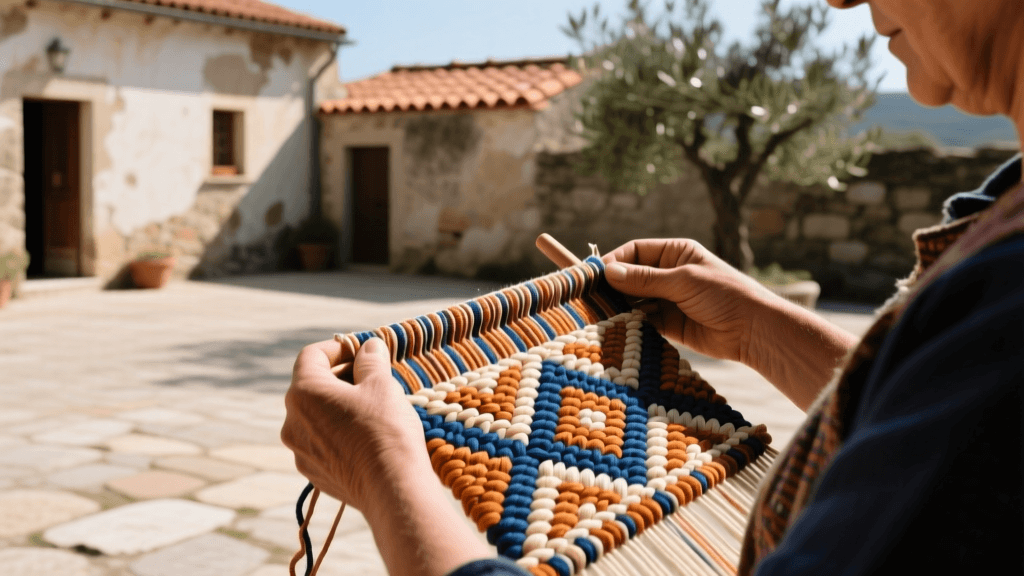
The term pibiones translates roughly to 'grapes' or 'grains' in the Sardinian dialect, referring to the distinctive raised bumps that characterize this specific weaving technique. Unlike flatweave textiles or complex brocades, the pibiones weave relies on a supplementary weft thread that is manually wrapped around a smooth, narrow rod inserted across the warp. When the rod is removed, the thread forms a series of tight, raised loops or 'grains' on the surface of the fabric.
This technique requires an extraordinary level of manual dexterity and patience. A weaver operating a traditional wooden floor loom (telaio) must count the warp threads meticulously to ensure the geometric patterns—often depicting stylized flora, fauna, or ancient protective symbols—align perfectly. In 2026, despite the availability of computerized Jacquard looms, the most prestigious heritage brands in Samugheo strictly utilize manual wooden looms for their high-end folk garments. The slight, organic irregularities in the manual pibiones weave are considered the ultimate hallmark of authenticity, distinguishing true Sardinian heritage pieces from mass-produced imitations.
Heritage Brands and Artisan Cooperatives in 2026
The survival of Sardinian textile traditions is largely owed to a network of heritage brands and women-led cooperatives that have transformed localized domestic crafts into viable, globally respected enterprises. According to the regional cultural archives documented by Sardegna Cultura, the weaving traditions of Samugheo were historically passed down from mother to daughter as a domestic duty. Today, these same techniques are the foundation of sophisticated, export-oriented heritage brands.
Mariantonia Urru: Pioneering Contemporary Heritage
Founded in 1981 by the visionary weaver Mariantonia Urru, this eponymous brand remains the gold standard for Sardinian textiles in 2026. Operating out of Samugheo, the atelier has successfully bridged the gap between strict anthropological preservation and high-end contemporary design. While they produce traditional bridal shawls and folk skirts, they also collaborate with modern interior designers and fashion houses. Their commitment to using locally sourced wool and natural dyes has set the benchmark for the entire region. You can explore their current collections and historical archives via their official portal, Mariantonia Urru.
Tessitura Artigiana Samughese (TAS)
Operating as a cooperative, TAS focuses heavily on the preservation of the most complex, historically accurate patterns used in traditional Sardinian folk dress. The cooperative model ensures that profits are distributed among the master weavers, providing a sustainable economic incentive for young women in the region to apprentice in the craft. In 2026, TAS has introduced a mentorship program subsidized by the European Union's cultural heritage grants, ensuring that the knowledge of natural dye extraction and loom dressing does not vanish with the older generation.
2026 Market Comparison: Samugheo Textile Producers
| Brand / Cooperative | Specialty | Signature Folk Garment | 2026 Price Range (EUR) |
|---|---|---|---|
| Mariantonia Urru | Contemporary & Heritage Blend | Pibiones Silk-Wool Shawl | €450 - €1,200 |
| TAS Cooperative | Strict Historical Accuracy | Traditional Bridal Skirt Trim | €200 - €600 |
| Sa Domu Sarda | Accessible Artisan Retail | Everyday Wool Apron | €120 - €350 |
| Artigianato Sardigna | Curated Regional Aggregator | Curated Pibiones Table & Apparel | €150 - €800 |
Natural Dyes: The 2026 Standard for Sustainable Heritage
A defining characteristic of authentic Sardinian folk dress is its rich, earthy color palette, historically derived from the island's diverse flora. In 2026, as the global fashion industry faces intense scrutiny over synthetic chemical pollution, Sardinian heritage brands are being celebrated for their centuries-old, zero-waste dyeing practices. The rubia tinctorum (madder root) is still cultivated in the island's interior to produce deep, vibrant reds, while walnut hulls (Juglans regia) are foraged to create profound, colorfast browns and blacks.
Saffron, historically one of the most expensive commodities on the island, is used sparingly to achieve brilliant yellows for festival garments. The 2026 push toward organic certification for traditional crafts has led to a rigorous auditing process. When purchasing a heritage garment today, buyers can request a 'dye passport' from top-tier ateliers, which details the exact botanical origins of the colors used in the textile, adding a layer of provenance that collectors highly value.
How to Authenticate and Purchase Sardinian Textiles
The commercial success of Sardinian weaving has inevitably attracted counterfeiters. Factory-produced textiles mimicking the pibiones weave, often imported from overseas and sold in coastal tourist shops, pose a threat to the local economy. To ensure you are investing in genuine European folk dress heritage in 2026, follow these actionable authentication steps:
- Examine the Reverse Side: True hand-loomed pibiones will show a distinct, slightly messy, but structurally sound pattern on the back, with visible knots and thread transitions. Machine-made imitations often have a perfectly clean back or use a floating thread that can be easily snagged and pulled out.
- Look for the Marchio Collettivo: The regional government and artisan guilds have established a collective trademark. Authentic pieces from recognized Samugheo cooperatives will feature a sewn-in tag certifying the geographic origin and the manual nature of the weaving.
- Assess the Weight and Drape: Traditional Sardinian wool is dense and heavy, designed to provide warmth in the mountainous interior and to hold the rigid, structured pleats of a pannedda (skirt). If the shawl or skirt feels lightweight or overly soft, it is likely blended with synthetic fibers or made from industrially processed merino.
- Consult National Directories: The official Italian tourism and culture board, accessible via Italy.it, maintains updated directories of certified artisan workshops. Always verify a brand's credentials through these official channels before making high-value purchases.
Integrating Sardinian Folk Garments into Contemporary Style
While full traditional Sardinian dress is typically reserved for major cultural events like the Cavalcata Sarda or local saint festivals, individual components of the folk dress are increasingly being integrated into modern, high-end wardrobes. In 2026, the styling of heritage textiles is all about juxtaposition.
A hand-loomed scialle (shawl) featuring subtle, monochromatic pibiones geometric patterns can be draped over a tailored, minimalist wool coat, providing a striking textural contrast. Similarly, the heavy, woven trims traditionally used to hem Sardinian skirts are now being repurposed by bespoke tailors as lapel accents on blazers or as structural belts. By treating these heritage textiles as luxury, artisanal fabrics rather than mere historical artifacts, wearers help sustain the economic viability of the Samugheo weaving cooperatives.
Conclusion
The traditional garments of Sardinia represent a masterclass in European folk dress, where every thread, dye, and geometric motif carries the weight of history. The heritage brands and cooperatives of Samugheo have proven that ancient techniques like the pibiones weave are not relics of the past, but vital, evolving art forms. By understanding the mechanics of the loom, recognizing the markers of authenticity, and supporting the artisans who dedicate their lives to this craft, we ensure that the rugged, beautiful textile heritage of Sardinia continues to thrive in 2026 and beyond.