Bavarian Dirndl vs Polish Krakow Dress: 2026 Regional Guide
The 2026 Renaissance of European Regional Folk Dress
As we navigate the cultural landscape of 2026, the revival of traditional European folk costumes has evolved far beyond mere festival wear or theatrical reenactment. Today, heritage-driven fashion is at the forefront of the sustainable textiles movement, with enthusiasts and historians alike demanding regional accuracy, ethical sourcing, and artisanal construction. Two of the most iconic, yet fundamentally distinct, sartorial traditions in Europe are the Alpine Bavarian Dirndl and the Eastern European Strój Krakowski (Kraków folk costume). While both represent deep-rooted agrarian histories, their construction, textile choices, and cultural signifiers vary wildly. This comprehensive guide explores the anatomy, regional variations, and 2026 sourcing realities of these two magnificent garments.
Anatomy of the Alpine Icon: The Bavarian Dirndl
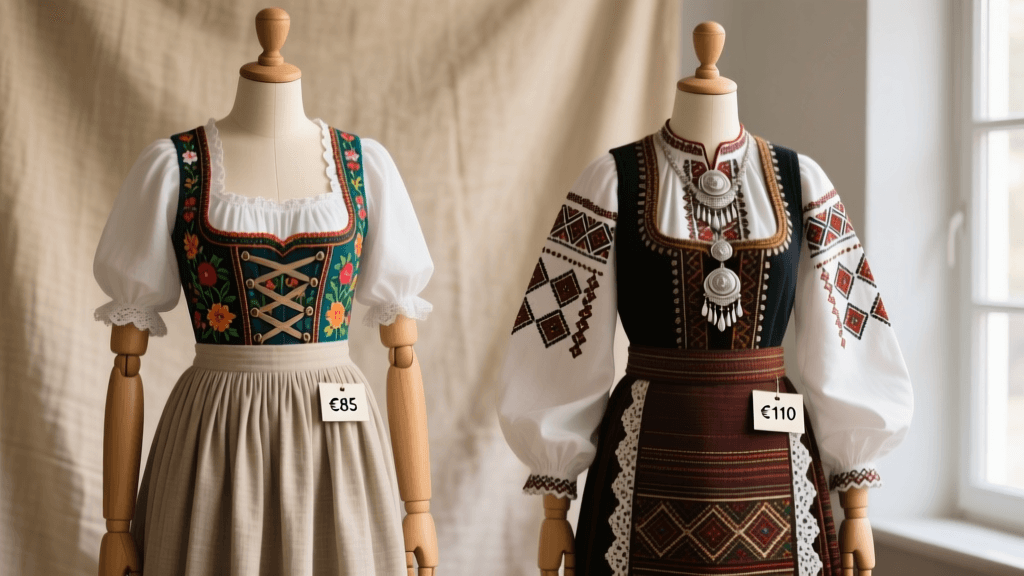
Originating in the Alpine regions of Bavaria and Austria, the Dirndl began as the practical workwear of peasant women in the 18th and 19th centuries before being romanticized by the aristocracy. In 2026, the modern Dirndl is a masterclass in structured tailoring and natural fibers, heavily regulated by cultural preservation societies to maintain historical integrity.
The Four Pillars of the Dirndl
- Mieder (Bodice): The structural core of the dress. Authentic 2026 Mieders are heavily boned using natural reeds or steel, featuring deep necklines (round, square, or heart-shaped) and closed with traditional hook-and-eye closures, silver chain lacing, or carved horn buttons.
- Rock (Skirt): Gathered or pleated at the waist, the skirt traditionally falls to the knee or mid-calf. Contemporary heritage weavers are prioritizing GOTS-certified alpine linen and naturally dyed wools using madder root and woad.
- Schürze (Apron): The most communicative element of the Dirndl. The placement of the apron knot signals the wearer's relationship status: a bow on the left indicates single and looking; on the right, married or taken; in the center front, traditionally a virgin or young maiden; and in the back, a widow or working waitress.
- Bluse (Blouse): Worn beneath the bodice, the Dirndlbluse is typically crafted from crisp white cotton batiste or silk, featuring puffed sleeves and delicate lace or smocking.
The Jewel of the Lowlands: Poland’s Strój Krakowski
Transitioning from the Alps to the Carpathian foothills and Polish lowlands, the Strój Krakowski represents the vibrant, highly decorated folk tradition of the Kraków region. Recognized as a symbol of Polish national identity, this costume is characterized by its bold colors, intricate floral embroidery, and elaborate beadwork. According to the Muzeum Etnograficzne w Krakowie, the preservation of these specific regional embroidery techniques has seen a massive resurgence among young Polish artisans in 2026.
Core Components of the Kraków Costume
- Gorset (Corset/Bodice): The centerpiece of the female Kraków dress. Traditionally made of dark wool or velvet, the Gorset is heavily adorned with hand-stitched floral motifs using sequins (cekiny), glass beads (koraliki), and silk ribbons. The 2026 trend leans heavily toward heritage seed beads and natural silk threads, moving away from the mass-produced plastics of the late 20th century.
- Spódnica (Skirt): A full, ankle-length skirt made of lightweight wool or linen, often featuring a floral print or intricate woven stripes. The waistband utilizes cartridge pleating to achieve the signature bell-like silhouette without adding bulk to the torso.
- Kaftan (Tunic): Worn over the corset in cooler weather, this long-sleeved, thigh-length tunic is typically made of dark blue or black cloth, lined with sheepskin or faux shearling, and edged with red cord and brass buttons.
- Ochrus (Headpiece): Unmarried women wear elaborate floral wreaths, while married women don the cepek, a stiffened cap covered in white embroidery and lace.
Regional Textile & Construction Comparison
Understanding the distinct material cultures of these two regions is vital for collectors and tailors. Below is a comparative analysis of their structural and textile differences as of 2026.
| Feature | Bavarian Dirndl (Alpine) | Strój Krakowski (Polish Lowlands) |
|---|---|---|
| Primary Fabric | Heavy alpine wool, raw linen, silk brocade | Lightweight wool, printed cotton, velvet |
| Bodice Structure | Internal boning, structured seams, front lacing | Soft but fitted, external beadwork, hook closure |
| Skirt Silhouette | Knee to mid-calf, gathered waist | Ankle-length, deep cartridge pleating |
| Signature Embellishment | Antler buttons, silk apron, lace trim | Dense floral beadwork, sequins, ribbons |
| 2026 Artisan Cost | €1,200 – €2,500+ | €800 – €1,800 (Gorset alone: €500+) |
Sourcing Authentic Pieces in 2026: A Buyer’s Guide
Finding authentic, regionally accurate garments in 2026 requires navigating a landscape of both master artisans and commercial costume houses. For serious collectors and cultural enthusiasts, avoiding 'Trachtenmode' (mass-produced commercial Dirndls) is paramount. The Bayerischer Trachtenverband (Bavarian Tracht Association) maintains strict guidelines on what constitutes a true regional Tracht, emphasizing hand-woven textiles and historically accurate patterns over modern fashion adaptations.
'The 2026 revival is not just about wearing the clothes; it is about sustaining the rural supply chains. When you commission a true Dirndl or a Kraków Gorset, you are funding the heritage weavers, the natural dyers, and the master embroiderers who keep these languages of cloth alive.' — Director of Textile Heritage, Trachtenkulturzentrum
Where to Commission and Buy
For the Bavarian Dirndl, look to master tailors in Upper Bavaria and Salzburg. Artisan waitlists in 2026 frequently stretch from six to nine months, especially for hand-woven linen from the Mühlviertel region. Expect to pay a minimum of €1,200 for a complete, bespoke ensemble. For the Strój Krakowski, the best route is commissioning directly from artisan cooperatives in Małopolska. The embroidery alone can take over 120 hours of hand-stitching, justifying the €500 to €900 price tag for a single, authentic Gorset.
Precise Measurement Guides for Custom Artisans
When ordering from European heritage tailors, standard modern sizing is entirely irrelevant. Folk dress relies on precise, specialized measurements to achieve the correct historical silhouette.
Measuring for a Dirndl
- Underbust (Unterbrustweite): Crucial for the boned Mieder. Measure snugly directly beneath the bust line.
- Natural Waist (Taille): Measure at the narrowest point of the torso, typically above the navel. The Dirndl skirt sits at the natural waist, not the modern low hip.
- Bodice Length: Measure from the base of the front neck down to the natural waist to ensure the Mieder does not dig into the hips when sitting.
Measuring for a Strój Krakowski
- High Hip to Ankle: Because the Spódnica uses cartridge pleating at the waist, the length must be measured from the high hip bone down to the desired ankle break, accounting for the traditional flat leather shoes (kierpce).
- Shoulder to Elbow: The Kaftan and blouse sleeves require precise arm measurements to allow for the voluminous gathering at the cuffs without restricting movement during traditional folk dances like the Krakowiak.
Care, Maintenance, and Archival Storage
Heritage textiles demand specialized care. A true wool Dirndl skirt must never be machine washed; it requires professional dry cleaning or careful airing and brushing with a natural bristle garment brush. The silk Schürze should be rolled, never folded, to prevent permanent creasing in the delicate fibers. For the Strój Krakowski, the heavy beadwork on the Gorset makes it highly susceptible to snagging and weight distortion. Store the corset flat in an acid-free archival box, layered with unbleached muslin. Never hang a heavily beaded Kraków bodice, as the gravity will eventually warp the foundational wool and snap the antique silk threads.
Final Thoughts on Regional Preservation
Whether you are drawn to the structured, alpine elegance of the Bavarian Dirndl or the vibrant, intricately beaded majesty of the Polish Strój Krakowski, investing in these garments in 2026 is an act of cultural preservation. By prioritizing authentic sourcing, supporting regional artisans, and understanding the deep historical codes woven into every pleat and bead, we ensure that Europe's rich textile heritage continues to thrive for generations to come.