Authentic Sardinian Pibiones 2026: Heritage Brands Guide
The Renaissance of Sardinian Pibiones Weaving in 2026
As the global fashion and home decor industries pivot heavily toward traceability, slow manufacturing, and deep cultural heritage in 2026, the island of Sardinia has emerged as a powerhouse of authentic European folk dress and textile revival. At the forefront of this movement is the ancient art of pibiones weaving. Once reserved for a bride's dowry and rural household accents, Sardinian textiles are now being championed by a new generation of heritage cooperatives and independent artisans. These weavers are bridging the gap between centuries-old loom techniques and the demands of the modern 2026 sustainable market, creating garments and home textiles that are as durable as they are historically significant.
According to cultural archives maintained by the Sardegna Cultura portal, the island's textile traditions are deeply tied to its micro-regions, with each village historically guarding its own geometric patterns and natural dye recipes. Today, buying authentic Sardinian folk garments and textiles is not just an aesthetic choice; it is an investment in the survival of rural European craftsmanship. This comprehensive guide will walk you through the mechanics of Sardinian weaving, the heritage brands leading the 2026 revival, and exactly how to source, style, and care for these extraordinary pieces.
Decoding the Technique: What Makes Pibiones Unique?
The term pibiones translates roughly to 'grapes' or 'grains' in the Sardinian language, a direct reference to the raised, bumpy texture that defines this specific weaving style. Unlike flatweave tapestries or standard twill, the pibiones technique relies on a supplementary weft thread that creates a raised, embossed pattern on the surface of the fabric.
The Mechanics of the Loom
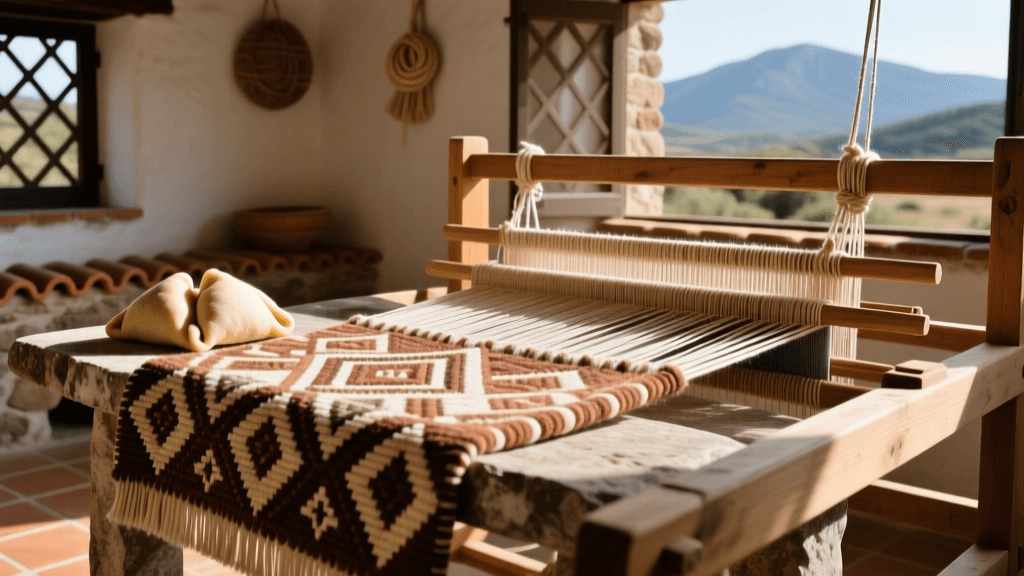
To achieve this distinct texture, the weaver uses a traditional wooden floor loom, often dating back several decades or even a century. The foundational warp is typically made of tightly spun cotton or linen, providing a sturdy canvas. As the weaver works the primary weft, they introduce a thicker, secondary thread—usually wool or a soft cotton blend. Before beating this supplementary thread into place with the reed, the weaver places a smooth wooden or metal rod (called a ferro) across the warp. The supplementary thread is wrapped over this rod, creating a loop. When the rod is removed, the loops remain on the surface, forming the signature 'grain' or 'grape' texture.
In 2026, master weavers in hubs like Samugheo and Mogoro are experimenting with the thickness of the ferro to create multi-level relief patterns, adding a tactile, almost sculptural quality to modern shawls, cushion covers, and ceremonial vest pieces. The physical labor involved is immense; a skilled artisan might complete only a few dozen centimeters of complex pibiones fabric in a single day.
Orbace, Heritage Fibers, and 2026 Natural Dyes
You cannot discuss Sardinian traditional garments without addressing orbace (or orbaci). This is a coarse, heavy, and incredibly durable woolen cloth woven from the fleece of native Sardinian sheep. Historically, orbace was the fabric of the working class and shepherds, prized for its natural water-resistant properties and wind-breaking capabilities. It was the primary material used for the mastruche, the iconic sleeveless sheepskin and wool vests worn by Sardinian men during festivals and harsh winters.
In 2026, heritage brands have refined the orbace spinning process. By blending native coarse wool with finer merino or alpaca fibers, contemporary cooperatives are producing 'soft orbace'—a material that retains the rustic visual appeal and thermal regulation of traditional Sardinian wool but is comfortable enough for modern tailored gilets, winter skirts, and structured jackets.
The Return of Botanical Dyes
A major trend among Sardinian heritage brands this year is the strict return to botanical and mineral dyes, moving entirely away from synthetic anilines. Artisans are foraging and cultivating local flora to achieve the rich, muted tones characteristic of authentic folk dress:
- Walnut Hulls (Mallo di Noce): Used to achieve deep, colorfast browns and charcoal blacks, traditionally used for men's ceremonial trousers and vests.
- Madder Root (Robbia): Cultivated in the island's interior to produce vibrant terracottas, brick reds, and soft pinks for bridal shawls.
- Weld and Saffron: Yielding brilliant, sun-fast yellows and golds, often reserved for the intricate borders of pibiones textiles.
- Indigo and Woad: Sourced to create the deep, moody blues found in the traditional skirts of the Barbagia region.
2026 Buyer’s Guide: Top Sardinian Weaving Hubs & Cooperatives
When sourcing authentic European folk dress and textiles, knowing the regional hubs is critical. The Istituto Superiore Regionale Etnografico (ISRE) in Nuoro extensively documents these regional variations, noting that a pattern from the north of the island differs vastly from one in the deep south. Below is a comparison of the primary weaving hubs and what you can expect when commissioning or purchasing from their associated cooperatives in 2026.
| Hub / Region | Signature Style | Primary Materials | 2026 Price Range (EUR) | Custom Lead Time |
|---|---|---|---|---|
| Samugheo (Central) | Complex Pibiones, geometric diamonds, and stylized flora/fauna motifs. | Cotton warp, wool/cotton supplementary weft. | €180 - €950 | 6 - 10 weeks |
| Aggius (Gallura, North) | Flatweave tapestries (tappeti), bold horizontal stripes, and high-contrast geometric blocks. | Raw linen, native sheep wool. | €150 - €700 | 4 - 8 weeks |
| Dorgali (Barbagia, East) | Intricate damask and brocade techniques, heavily influenced by historical Spanish trade routes. | Silk blends, fine mercerized cotton. | €300 - €1,500 | 10 - 16 weeks |
| Sennori (Sassari, NW) | Traditional folk costume components, heavily embroidered bodices, and fine linen camicie. | White linen, silk embroidery thread. | €250 - €1,200 | 8 - 12 weeks |
How to Spot Authentic Sardinian Handwoven Textiles
As the demand for 'cottagecore' and heritage aesthetics has peaked in 2026, the market has unfortunately seen an influx of machine-made imitations imported from overseas and falsely labeled as Sardinian artisanal work. To ensure you are investing in genuine European folk heritage, apply these four authentication checks:
- Examine the Reverse Side: True pibiones weaving will show the supplementary weft floating on the back of the fabric. Machine-made imitations often use a jacquard weave that looks identical on both sides, or they use a synthetic binder thread that feels plasticky to the touch.
- Check the Selvedge: Handwoven textiles on traditional shuttle looms will have a soft, slightly undulating selvedge (the finished edge of the fabric). If the edge is perfectly straight, laser-cut, or serged with modern polyester thread, it is machine-woven.
- Look for Tension Variations: The hallmark of human craftsmanship is microscopic imperfection. Run your hand across the weave; you should feel slight variations in the tension of the warp threads and the beating of the weft. Absolute mathematical uniformity indicates automated manufacturing.
- Verify the Marchio: Reputable cooperatives in 2026 will provide a certificate of authenticity or a physical tag bearing the Marchio di Origine e Qualità Artigianale, a regional certification that tracks the textile back to the specific workshop and artisan.
Integrating Sardinian Heritage into a Modern 2026 Wardrobe
You do not need to wear a full, historically accurate folk costume to appreciate and utilize these garments. Contemporary heritage brands are producing versatile pieces that integrate seamlessly into a modern, sustainable wardrobe. An orbace wool gilet, for instance, is an exceptional layering piece for autumn and winter, offering the rugged texture of a Sardinian shepherd's vest but tailored with modern armholes and subtle hardware.
For women, a handwoven linen camicia (shirt) from Sennori, featuring traditional baramu (lace) or subtle geometric embroidery at the cuffs and neckline, pairs beautifully with modern high-waisted denim or tailored wool trousers. Pibiones accent scarves and stoles, woven in muted natural dye palettes like walnut brown and weld yellow, serve as striking statement accessories that elevate a minimalist winter coat. By mixing these profound heritage pieces with contemporary basics, you honor the folk tradition while keeping it relevant and alive in daily wear.
Care and Maintenance of Heritage Textiles
Sardinian textiles are built to last generations, provided they are cared for correctly. The natural oils present in native sheep wool make orbace naturally resistant to odors and light moisture. Therefore, frequent washing is not only unnecessary but detrimental to the fibers. Instead, spot clean stains with a mild, pH-neutral wool wash and cold water. For full cleaning, always rely on a dry cleaner who specializes in heritage and organic fibers.
When storing your Sardinian garments and textiles during the warmer months, never use plastic garment bags, which trap moisture and encourage mildew. Instead, wrap the pieces in unbleached cotton muslin. To protect your woolens from moths, utilize blocks of untreated Sardinian cedar or small sachets of dried local lavender and rosemary, avoiding harsh chemical mothballs that will permanently taint the natural botanical dyes. With proper respect and maintenance, these 2026 acquisitions will remain pristine artifacts of European folk dress for decades to come.