Sardinian Orbace Wool Shawls: 2026 Heritage Brand Guide
The Enduring Legacy of Sardinian Orbace Wool
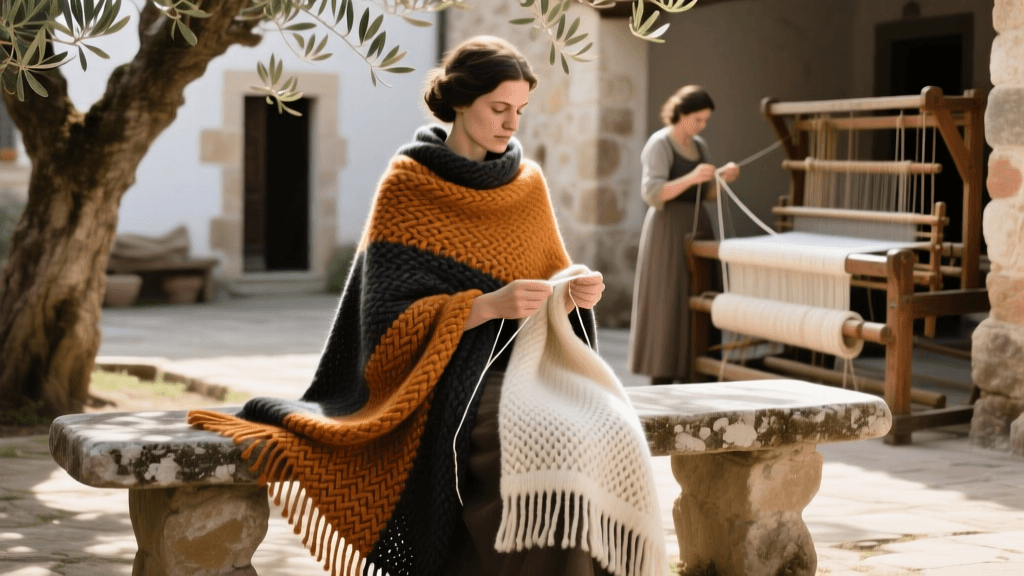
Sardinia’s rugged interior has long been the cradle of one of Europe’s most resilient and fascinating textile traditions. At the heart of this heritage is Orbace (or Orbaci), a coarse, highly durable, and naturally water-resistant wool woven from the fleece of indigenous Sardinian sheep. For centuries, this remarkable textile served as the foundational layer for the island's pastoral communities, providing essential protection against the harsh mountain winds and heavy Mediterranean rains. In 2026, Orbace has transcended its utilitarian roots to become a highly sought-after material in the slow fashion and heritage garment movements, celebrated for its sustainability, tactile richness, and deep cultural resonance.
The production of Orbace is an intricate, multi-generational process. The raw wool is sheared, washed in local river waters to retain a protective layer of natural lanolin, and then spun by hand or on traditional wooden spinning wheels. The resulting yarn is remarkably robust, possessing a slightly irregular texture that gives hand-woven Orbace its distinctive, organic character. Today, as consumers increasingly reject mass-produced synthetic textiles, the demand for authentic, hand-loomed Orbace garments has reached unprecedented heights, driving a renaissance among the island's master weavers.
The Scialle and Cambusciu in the Abitu Sardu
To understand the cultural weight of Orbace, one must examine its role in the Abitu Sardu, the traditional Sardinian folk dress. The costume is a complex visual language, with every fold, color, and embellishment denoting the wearer's village, marital status, and social standing. While the vibrant silk bodices and finely pleated linen skirts often capture the eye, the outer garments crafted from Orbace are the true workhorses of the traditional wardrobe.
For women, the scialle (shawl) and the cambusciu (a heavy, hooded cloak) were indispensable. In regions like Barbagia and Ogliastra, a woman’s winter shawl was typically woven in deep, natural tones and draped over the shoulders to provide warmth during long hours of agricultural labor or while attending Sunday mass. For men, Orbace was the primary material for the coietto (a sleeveless shepherd’s coat) and the heavy trousers worn during the transhumance. The drape and weight of an authentic Orbace shawl are entirely unique; it molds to the body over time, becoming a deeply personal garment that carries the scent of the Mediterranean maquis and the lanolin of the highland pastures.
The Alchemy of Natural Dyes in 2026
A defining characteristic of heritage Orbace is the use of botanical dyes, a practice that has seen a massive revival among artisanal cooperatives in 2026. Master dyers forage for local flora to create a rich, muted palette that synthetic chemicals simply cannot replicate. Sa Nigra (black) is achieved using wild asphodel roots or walnut hulls; Sa Ruja (red) is derived from madder root; and Sa Groga (yellow) comes from saffron crocus or chamomile. These natural dyes bond beautifully with the lanolin-rich wool, resulting in colors that age gracefully, developing a prized patina over decades of use.
2026 Heritage Brands Leading the Orbace Revival
The contemporary revival of Sardinian weaving is anchored by a network of dedicated cooperatives and heritage brands that prioritize traditional techniques over industrial efficiency. These organizations not only preserve ancient patterns but also ensure that the weavers—predominantly women in rural villages—are compensated fairly for their highly specialized labor.
Tessitura Su Trobasciu (Samugheo)
Located in the village of Samugheo, widely considered the capital of Sardinian weaving, this historic cooperative is the gold standard for traditional textiles. In 2026, their master weavers continue to use mid-century wooden looms to produce heavy Orbace shawls and tapestries. Their signature pieces often feature a burda (a raised, embroidered-like weave) and geometric motifs that trace back to Nuragic civilization. Purchasing directly from their atelier guarantees authenticity and supports the village's primary cultural enterprise.
Artigianato Sardo (ISRE Affiliated Artisans)
Working in close collaboration with the Istituto Superiore Regionale Etnografico (ISRE) in Nuoro, independent artisans in the Barbagia region produce some of the finest, most tightly woven Orbace available. These weavers focus on the scialle di Nuoro, a slightly finer variant of the traditional shawl, characterized by intricate border patterns and a softer drape. The ISRE's ongoing ethnographic research ensures that the patterns reproduced by these artisans in 2026 are historically accurate to specific micro-regions.
Edizioni Il Maestrale & Slow Fashion Collectives
Bridging the gap between ancient folk dress and contemporary wardrobes, several slow fashion collectives have emerged in Cagliari and Sassari. These brands source raw Orbace from rural weavers and tailor it into modern silhouettes, such as structured winter coats and oversized wrap shawls. By utilizing a pre-order model, these 2026 collections eliminate textile waste, allowing weavers to produce only what has been commissioned, thereby maintaining the highest standards of craftsmanship without the pressure of mass production.
Comparative Guide: Buying Authentic Orbace in 2026
Investing in an authentic Orbace garment is a significant financial commitment, reflecting hundreds of hours of manual labor. Below is a comparative overview of what to expect when commissioning or purchasing heritage Sardinian wool shawls in the current market.
| Heritage Maker / Region | Garment Type | Average 2026 Price (EUR) | Weave Technique | Estimated Lead Time |
|---|---|---|---|---|
| Tessitura Su Trobasciu (Samugheo) | Heavy Tapestry Shawl | €850 - €1,200 | Flat weave with raised 'a burda' motifs | 3 - 5 Months |
| Independent Nuoro Artisans (ISRE) | Fine Scialle di Nuoro | €600 - €900 | Tight twill weave, natural botanical dyes | 2 - 4 Months |
| Cagliari Slow Fashion Collectives | Contemporary Orbace Wrap | €450 - €750 | Standard plain weave, tailored edges | 1 - 2 Months |
| Rural Ogliastra Cooperatives | Traditional Cambusciu (Cloak) | €1,100 - €1,600 | Heavyweight, water-resistant plain weave | 4 - 6 Months |
The 2026 Sustainability Impact of Heritage Wool
As the global fashion industry faces intense scrutiny regarding its environmental footprint in 2026, Sardinian Orbace stands out as a paragon of sustainable textile production. The entire lifecycle of an Orbace shawl is inherently circular and low-impact. The sheep graze on wild, uncultivated Mediterranean scrub, requiring no irrigated feed or chemical fertilizers. The wool is processed using biodegradable, plant-based soaps, and the natural dyes are foraged locally without depleting the ecosystem.
Furthermore, the extreme durability of Orbace means these garments are designed to last for generations, actively countering the destructive cycle of fast fashion. According to cultural preservation data highlighted by the Regione Autonoma della Sardegna, supporting local weaving cooperatives also sustains the rural economy, preventing the depopulation of inland villages and preserving intangible cultural heritage that UNESCO continues to monitor and protect. When you purchase an Orbace shawl, you are not merely buying a piece of clothing; you are funding the survival of an ancient, ecologically harmonious way of life.
How to Identify Authentic Hand-Loomed Orbace
With the rising popularity of heritage folk dress, the market has unfortunately seen an influx of industrial imitations. Mass-produced wool blends from overseas are sometimes marketed as 'Sardinian style' to unwary tourists. To ensure you are investing in genuine, hand-loomed Orbace in 2026, look for the following hallmarks:
- The Selvedge Edge: Authentic hand-loomed Orbace will have a natural, slightly uneven selvedge (the self-finished edge of the fabric). If the edges are perfectly uniform, laser-cut, or serged with synthetic thread, it is machine-made.
- The Lanolin Scent and Feel: True Orbace retains a microscopic amount of natural lanolin to maintain its water-resistant properties. It should feel slightly waxy or 'grippy' to the touch, not overly soft or chemically stripped, and it will have a faint, earthy scent reminiscent of raw wool and dried herbs.
- The Water Drop Test: Because of the tight weave and residual lanolin, a drop of water placed on authentic Orbace will bead up and roll off the surface rather than being immediately absorbed.
- Artisanal Irregularities: Look closely at the weave. Hand-spun yarn and hand-operated looms naturally produce minor variations in thread thickness and tension. These 'flaws' are the true signature of human craftsmanship.
Caring for Your Traditional Sardinian Wool Garments
Proper maintenance is crucial to preserving the structural integrity and natural water-resistance of your Orbace shawl. Because the wool relies on its natural oils, aggressive cleaning methods will strip the lanolin and ruin the garment's protective qualities.
Washing: Avoid dry cleaning, as the harsh chemical solvents will destroy the lanolin. If your shawl requires washing, do so only when absolutely necessary. Submerge it in cold water with a mild, pH-neutral soap (traditional Sardinian weavers recommend pure olive oil soap). Gently press the water through the fibers without wringing, twisting, or agitating, which will cause the wool to felt and shrink.
Drying and Storage: Never hang a wet Orbace garment, as the heavy water weight will distort the weave. Roll it in a clean cotton towel to press out excess moisture, then lay it flat on a drying rack away from direct sunlight or heat sources. When storing your shawl for the warmer months, fold it loosely and place it in a breathable cotton or linen bag. Include blocks of natural Sardinian cedar or dried lavender to repel moths, avoiding synthetic mothballs that will permanently taint the wool with chemical odors.
Conclusion: Wearing History in the Modern Era
The Sardinian Orbace shawl is far more than a winter accessory; it is a wearable archive of European folk dress, embodying centuries of pastoral wisdom, botanical alchemy, and artistic resilience. By choosing to invest in heritage brands and artisanal cooperatives in 2026, collectors and fashion enthusiasts play a direct role in keeping the looms of Samugheo, Nuoro, and Ogliastra active. Whether draped over the shoulders at a contemporary gallery opening or worn during a crisp autumn walk, an authentic Orbace garment offers a profound, tactile connection to the enduring soul of Sardinia.