Sardinian Folk Dress & Heritage Weavers: 2026 Buyer Guide
The Renaissance of the Costume Sardo in 2026
Sardinia, the rugged Mediterranean island with a history shaped by Nuragic civilizations, Phoenician traders, and Spanish conquerors, possesses one of the most intricate and well-preserved traditional wardrobe systems in Europe. Known collectively as the Costume Sardo, Sardinian folk dress is not a single uniform, but a complex visual language. Historically, the specific cut, color, and embroidery of a garment could reveal a wearer’s exact village, marital status, and social standing. Today, as the global slow-fashion movement reaches its zenith in 2026, there has been a massive resurgence in demand for authentic, regionally crafted Italian garments. Discerning collectors and cultural enthusiasts are increasingly turning to Sardinian heritage brands and artisan cooperatives to acquire pieces that represent centuries of unbroken textile tradition.
According to the Sardegna Cultura portal, regional initiatives launched in the mid-2020s have successfully subsidized apprenticeships for young weavers, ensuring that ancient techniques are not lost to time. This 2026 buyer’s guide explores the anatomy of traditional Sardinian garments, the unique textiles that define them, and the heritage cooperatives keeping this vibrant culture alive.
The Anatomy of the Traditional Sardinian Wardrobe
The traditional Sardinian wardrobe is characterized by its rich layering, vibrant contrast, and masterful use of locally sourced materials. While variations exist across the island's 377 municipalities, the foundational garments remain remarkably consistent in their construction.
Women’s Traditional Attire
The women’s folk dress is a masterpiece of textile layering and metallurgical art. The foundation begins with sa camisa, a linen or cotton chemise often featuring intricate lacework at the cuffs and neckline. Over this, women wear su corittu, a tightly fitted, heavily embroidered bodice typically made of velvet or brocade. The bodice is left open at the front to reveal the chemise and is fastened with ornate silver or gold filigree buttons, a craft for which Sardinian jewelers are globally renowned.
The lower half features sa munnedda, a voluminous, finely pleated skirt made of heavy wool or cotton, often dyed in deep reds, blacks, or indigos. This is covered by su pannicciu, a highly decorated apron that serves as the visual centerpiece of the outfit, woven with geometric motifs that carry apotropaic (evil-averting) symbolism. The ensemble is completed with a delicate headscarf, sa berritta or su muccadori, tied in specific ways dictated by local custom.
Men’s Traditional Attire
Men’s traditional dress is decidedly more utilitarian, reflecting the island’s pastoral and agricultural heritage, yet it remains deeply elegant. The most iconic element is sa berritta, a long, baggy woolen hat that drapes down the side of the face or over the shoulder. Men wear a white linen shirt beneath a dark woolen vest, paired with sas ragas—a distinctive, pleated linen kilt worn over fitted trousers. The outermost layer is typically su gabbano or su cappotto, a heavy, hooded coat woven from coarse, water-resistant wool designed to withstand the harsh mountain winters of the Gennargentu massif.
The Soul of the Garment: Orbace Wool and Pibiones Weaving
To understand Sardinian folk dress, one must understand its textiles. The island’s isolation forced a reliance on local sheep breeds, resulting in unique weaving traditions that are highly prized in 2026.
Orbace: The Shepherd’s Armor
Orbace (or orbaci) is a coarse, tightly woven wool fabric that is naturally water-resistant and incredibly durable. Historically worn by shepherds, orbace is spun from the raw, un-dyed wool of local Sardinian sheep, resulting in a fabric that ranges from deep charcoal to warm, heathered brown. The weaving process involves a tight twill structure that is then heavily milled (shrunk and felted) in water, creating a dense, windproof barrier. In 2026, authentic orbace coats are considered luxury heritage investments, prized for their sustainability and rugged elegance.
Pibiones: The Grain of the Loom
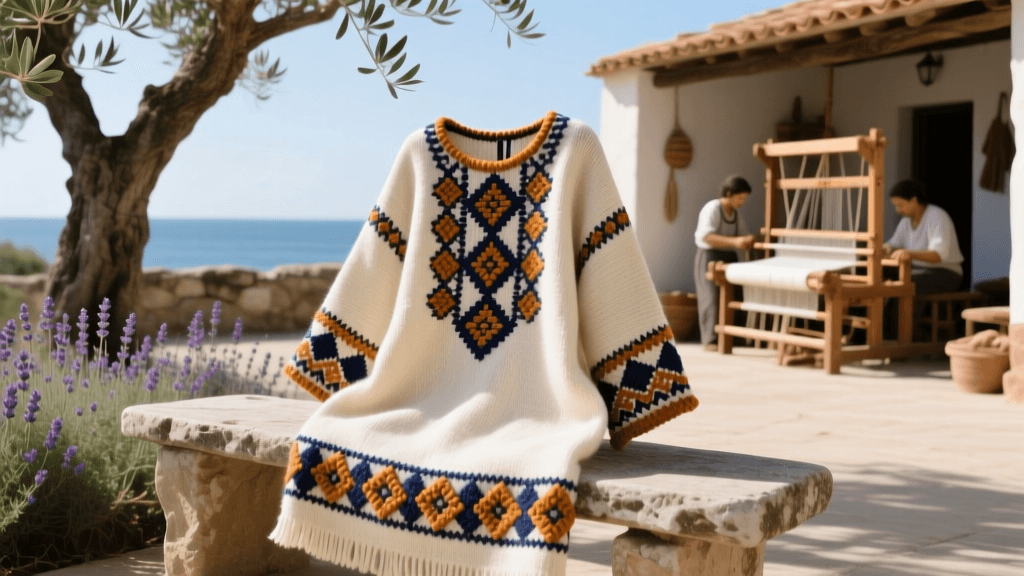
Pibiones (meaning 'grains' or 'seeds' in the Sardinian language) is a highly specialized, raised-weave technique. The weaver places a smooth wooden or metal rod across the warp threads, wrapping the weft yarn over it to create a raised, three-dimensional bump before removing the rod. This creates a textured, embossed surface that forms intricate geometric patterns, often depicting stylized flora, fauna, or ancient Nuragic symbols. Pibiones is most commonly used for shawls, bedspreads, and the decorative borders of aprons.
Heritage Brands and Artisan Cooperatives in 2026
Purchasing authentic Sardinian textiles requires navigating a landscape of genuine artisan cooperatives and heritage workshops. The Fondazione Cologni dei Mestieri d'Arte frequently highlights Sardinian weaving cooperatives as prime examples of European intangible cultural heritage preservation. Below is a comparison of the most prominent heritage producers operating in 2026.
| Cooperative / Brand | Location | Specialty Technique | 2026 Lead Time | Starting Price (EUR) |
|---|---|---|---|---|
| Tessitura Artigiana di Samugheo | Samugheo, Oristano | Pibiones weaving, traditional rugs, and shawls | 4–6 Months | €350 (Shawls) |
| Muresu | Cagliari | Contemporary adaptations of traditional Sardinian motifs | 2–4 Weeks | €180 (Accessories) |
| Artigianato Sardo Network | Island-wide | Orbace wool coats, bespoke folk dress components | 6–8 Months | €850 (Orbace Coats) |
| Tessitura di Aggius | Aggius, Gallura | Gallurese tapestry weaving, flat-weave wool garments | 3–5 Months | €250 (Vests/Wraps) |
Sourcing Authentic Pieces: 2026 Pricing and Availability
As of 2026, the market for authentic, hand-loomed Sardinian folk garments has tightened significantly. The global appreciation for 'quiet luxury' and hyper-local craftsmanship has driven up demand, while the pool of master weavers remains small. When sourcing a complete traditional outfit or individual heritage pieces, buyers should be prepared for bespoke pricing structures.
- Bespoke Bodices (Su Corittu): Hand-embroidered velvet bodices crafted by master tailors in villages like Oliena or Orgosolo now command prices between €1,200 and €2,500, largely due to the hundreds of hours required for the metallic thread embroidery.
- Authentic Orbace Coats: A genuine, hand-milled orbace coat from a certified cooperative will typically cost between €800 and €1,500. Beware of 'orbace-style' coats made from industrial felt; authentic orbace has a distinct, slightly lanolin-scented natural oiliness and a visible twill weave beneath the felting.
- Pibiones Shawls: A standard-sized shawl woven on traditional wooden looms using the pibiones technique averages €350 to €600, depending on the complexity of the motif and the quality of the cotton or wool yarn used.
For buyers unable to travel to the island, the Italian National Tourist Board maintains a verified directory of regional artisan e-commerce portals that ship globally, ensuring that export taxes and artisan certifications are properly handled.
'When you wear a garment woven in Samugheo, you are not just wearing fabric; you are wearing the rhythm of the wooden loom and the memory of the women who sang while they wove.' — Maria Giuseppa, Master Weaver, 2025 Artigianato Sardo Symposium.
How to Identify Authentic Sardinian Garments
With the rise in popularity of Mediterranean folk aesthetics, mass-produced imitations have flooded the market. To ensure you are purchasing genuine heritage pieces in 2026, look for the following markers of authenticity:
- The Marchio di Qualità (Quality Mark): Genuine pieces produced by recognized cooperatives will feature a holographic or serialized tag issued by the regional chamber of commerce, verifying the artisan's identity and the village of origin.
- Loom Width Limitations: Traditional wooden looms in Sardinia are generally narrow. Authentic pibiones shawls and table runners are rarely wider than 120 cm. If a piece is excessively wide and lacks a central seam, it was likely woven on an industrial power loom.
- Imperfections and Slubs: Hand-spun orbace wool will naturally feature slight variations in yarn thickness (slubs). The fabric should feel dense, heavy, and slightly coarse to the touch, unlike the uniform softness of commercially milled merino.
Caring for Heritage Sardinian Textiles
Preserving these garments requires specific care protocols, particularly for the delicate structural integrity of the pibiones weave and the natural oils in orbace wool.
- Orbace Maintenance: Never machine wash orbace. The agitation and heat will cause the wool to felt further, shrinking the garment drastically. Spot clean with cold water and a mild, lanolin-based wool soap. For deep cleaning, consult a dry cleaner who specializes in heritage textiles.
- Pibiones Storage: The raised 'grains' of the pibiones weave can be permanently crushed if folded under heavy weight. Store shawls and aprons by rolling them around acid-free tissue paper tubes, or hang them flat in a breathable cotton garment bag.
- Embroidery Care: The metallic threads used in su corittu bodices are prone to tarnishing. Store embroidered pieces in a cool, dry environment, and insert anti-tarnish silver strips into the storage box to preserve the brilliance of the filigree.
Conclusion
The Sardinian folk dress is far more than a historical costume; it is a living, breathing testament to the island's resilience and artistic brilliance. By investing in authentic orbace wool and pibiones textiles from heritage cooperatives in 2026, collectors and fashion enthusiasts do more than acquire a beautiful garment—they actively fund the survival of one of Europe's most extraordinary textile traditions.