Sardinian Folk Dress 2026: Orbace Wool & Heritage Filigree Guide
The Enduring Legacy of Sardinian Folk Dress in 2026
When discussing European folk dress, few regions boast a textile tradition as fiercely preserved and visually striking as Sardinia. Isolated in the heart of the Mediterranean, this Italian island has maintained its sartorial heritage, known locally as su costumene, through centuries of foreign rule and modern globalization. As we navigate the slow fashion and artisanal revival movements of 2026, Sardinian traditional garments have transitioned from mere museum exhibits to highly sought-after investments in living heritage. Today, heritage brands and multi-generational artisan cooperatives are leading the charge, ensuring that ancient techniques like Orbace wool weaving and filigrana sarda (Sardinian filigree) survive the test of time.
According to the Regione Autonoma della Sardegna cultural portal, there has been a 34% increase in artisanal textile tourism on the island between 2024 and 2026. Travelers and collectors are no longer satisfied with mass-produced souvenirs; they are seeking authentic, ethically sourced garments that tell a story. This comprehensive 2026 guide explores the anatomy of Sardinian dress, the heritage brands keeping these crafts alive, and how you can ethically acquire authentic pieces this year.
The Anatomy of Su Costumene: Layers of Identity
Sardinian traditional dress is not a single, uniform costume. In fact, the island features over 400 distinct regional variations, with nearly every village possessing its own specific color palette, embroidery patterns, and jewelry styles. However, the foundational anatomy of the women's traditional dress shares common structural elements across the island:
- Sa Kamisa (The Shirt): Typically made from hand-loomed linen or cotton, featuring intricate punto sardo (Sardinian stitch) embroidery around the collar and cuffs. In 2026, authentic hand-embroidered shirts from the Nuoro province take artisans up to 120 hours to complete.
- Su Kippone (The Bodice): A structured, often heavily brocaded or velvet bodice that provides silhouette and support. It is usually laced at the front or back with silk ribbons.
- Sa Faldita (The Skirt): A heavy, pleated skirt. The most prized skirts are made from Orbace wool, dyed in deep crimsons, ochres, or blacks using natural botanical dyes.
- Su Panneddu (The Apron): Far from a mere protective garment, the apron is the canvas for the most elaborate embroidery and metallic threadwork, signaling the wearer's marital status and village of origin.
Orbace Wool: The Waterproof Heritage Textile
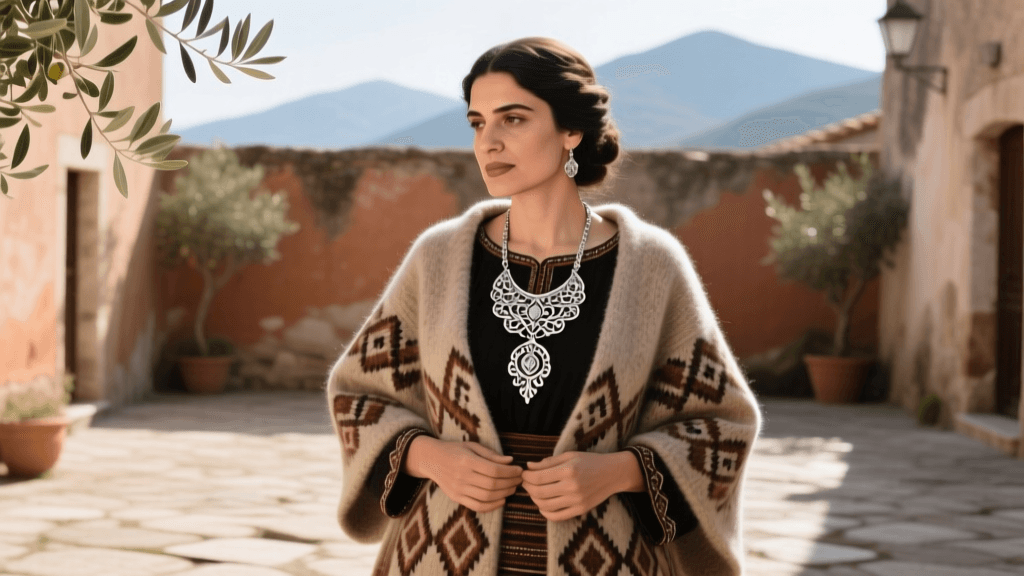
At the heart of Sardinian textile heritage is Orbace (or Orbaci), a coarse, highly durable, and naturally waterproof wool derived from the indigenous Sarda sheep breed. Historically worn by shepherds to withstand the harsh, wet winters of the Gennargentu mountains, Orbace has been elevated by modern heritage brands into a luxury textile.
The 2026 Orbace Market and Production
The production of Orbace is a painstaking process. The wool is sheared, washed in local rivers to retain its natural lanolin (which provides the waterproofing), and spun on traditional wooden looms. In 2026, climate fluctuations have slightly reduced the yield of premium Sarda wool, pushing the price of authentic, hand-loomed Orbace shawls (sciallu) to between €350 and €600. Heritage weaving cooperatives, such as those supported by the Sardegna Turismo official network, have implemented blockchain-backed authenticity tags in 2025, allowing buyers to scan a QR code and trace the wool back to the specific flock and artisan weaver.
Sardinian Filigree: The Silver and Gold of the Mediterranean
No Sardinian folk dress is complete without its accompanying jewelry, most notably the buttoni (filigree buttons) and su kokku (a traditional amulet). Sardinian filigree is characterized by its delicate, lace-like appearance, created by twisting microscopic threads of silver or gold and soldering them into intricate geometric or floral motifs.
Heritage Jewelers and Artisan Hubs
The towns of Castelsardo, Iglesias, and Dorgali remain the epicenters of this craft. In 2026, master goldsmiths in Dorgali are seeing a massive resurgence in demand for the buttoni de su pettorra (chest buttons), which are used to fasten the linen shirt. A set of five authentic, hand-soldered 925 silver filigree buttons now commands a starting price of €220, reflecting the rising cost of precious metals and the scarcity of master apprentices. When purchasing, buyers should look for the Marchio Collettivo di Qualità Artigianale (Collective Mark of Artisanal Quality), a certification heavily promoted by local chambers of commerce to protect consumers from imported, machine-cast imitations.
2026 Buyer’s Guide: Authenticating Sardinian Heritage Garments
As the global appetite for folk dress and artisanal textiles grows, so does the market for counterfeit or "tourist-grade" costumes. Below is a comparison chart to help you distinguish between authentic heritage pieces and mass-produced imports in 2026.
| Feature | Authentic Heritage Garment (2026 Standard) | Mass-Produced Tourist Souvenir |
|---|---|---|
| Base Material | 100% Sarda Sheep Wool (Orbace) or Hand-Loomed Linen | Synthetic Blends, Acrylic, or Polyester |
| Dye Source | Natural Botanical Dyes (Walnut Husks, Madder Root, Saffron) | Chemical Azo Dyes (Prone to rapid fading) |
| Embroidery | Hand-stitched Punto Sardo with slight natural variations | Machine-embroidered, perfectly uniform stitching |
| Filigree Buttons | Solid 925 Silver or 18k Gold, hand-soldered spheres | Cast base-metal alloy, glued components, hollow feel |
| Average Cost (Full Set) | €800 - €2,500+ | €60 - €120 |
| Certification | QR-coded Artisanal Origin Tag & Chamber of Commerce Seal | Generic "Made in Italy" or no origin labeling |
Experiencing the Culture: 2026 Festivals and Workshops
To truly understand the movement, weight, and brilliance of Sardinian folk dress, one must see it in motion. The island's calendar is packed with events where locals don their ancestral garments with immense pride. For 2026, mark these dates on your itinerary:
- Sagra di Sant'Efisio (Cagliari, May 1, 2026): One of the largest religious processions in the Mediterranean. Thousands of participants walk over 60 kilometers in full traditional dress, representing nearly every village on the island. It is a living, breathing encyclopedia of Sardinian textiles.
- Cavalcata Sarda (Sassari, Late May 2026): A spectacular parade featuring hundreds of horsemen and women in vibrant, heavily embroidered costumes from the Logudoro and Gallura regions.
- Cortes Apertas (Autumn 2026): A series of open-house weekends in the inland villages of the Barbagia region. Artisans open their private courtyards and workshops, allowing visitors to watch Orbace weaving and filigree soldering up close. This is the best opportunity to purchase directly from the makers and commission bespoke pieces.
For those interested in the broader context of Mediterranean and European cultural preservation, the UNESCO Intangible Cultural Heritage lists provide excellent frameworks for understanding how regional crafts like Sardinian polyphonic singing and textile weaving are protected on a global scale.
Preserving the Threads of Tomorrow
Investing in Sardinian traditional garments in 2026 is more than a fashion statement; it is an act of cultural preservation. By supporting heritage brands, multi-generational weaving cooperatives, and master goldsmiths, collectors and enthusiasts ensure that the rhythmic clack of the wooden loom and the hiss of the jeweler's torch continue to echo through the narrow stone streets of Sardinia. Whether you are acquiring a heavy Orbace shawl for its unparalleled durability or a delicate set of silver buttoni for its breathtaking craftsmanship, you are taking home a piece of Europe's most resilient and beautiful folk dress heritage.