Sardinian Orbace Wool & Berritta Heritage Brands 2026 Guide
The Enduring Legacy of Sardinian Folk Dress
When discussing European folk dress, few regions boast a textile heritage as rugged, functional, and visually striking as the Italian island of Sardinia. Isolated by the Mediterranean Sea, Sardinian communities developed highly specialized garments designed to withstand the harsh mountain climates of the Barbagia region and the sweeping coastal winds. In 2026, the global slow fashion movement has catalyzed a massive revival of these traditional garments, shifting them from museum exhibits and isolated village festivals into the wardrobes of heritage menswear and womenswear enthusiasts worldwide.
At the heart of this revival are two iconic elements of the Sardinian pastoral wardrobe: orbace wool and the berritta cap. Today, a new generation of heritage brands and artisan cooperatives are preserving ancient weaving techniques while adapting these garments for contemporary use. This comprehensive guide explores the history, construction, and modern market for authentic Sardinian folk textiles in 2026.
Understanding Orbace: The Fabric of Sardinian Shepherds
Orbace is a coarse, heavy, and virtually waterproof woolen cloth that has served as the foundational textile for Sardinian folk dress for centuries. Woven exclusively from the fleece of the indigenous Sarda sheep, orbace is renowned for its durability and natural resistance to the elements. The Sarda sheep produces a fleece rich in lanolin, a natural wax that, when retained during the processing stages, renders the finished fabric highly water-repellent.
The Weaving and Fulling Process
The creation of authentic orbace is a labor-intensive process that remains largely unchanged in the island's artisan workshops. After the raw wool is sheared, it is spun into thick, uneven yarns using traditional drop spindles or antique spinning wheels. The weaving takes place on narrow wooden handlooms, resulting in a fabric with a distinct, slightly irregular twill weave that is highly prized by textile collectors in 2026.
Once woven, the cloth undergoes a crucial finishing step known as fulling. Historically, this was achieved using a gualchiera (a water-powered fulling mill), where the woven cloth was beaten in wooden troughs with water and natural soap. This process shrinks the fabric, matting the wool fibers together to create a dense, felt-like texture that blocks wind and rain. According to archival research maintained by the Istituto Superiore Regionale Etnografico (ISRE), the survival of these fulling techniques is a cornerstone of Sardinia's intangible cultural heritage.
The Berritta: Anatomy of a Traditional Cap
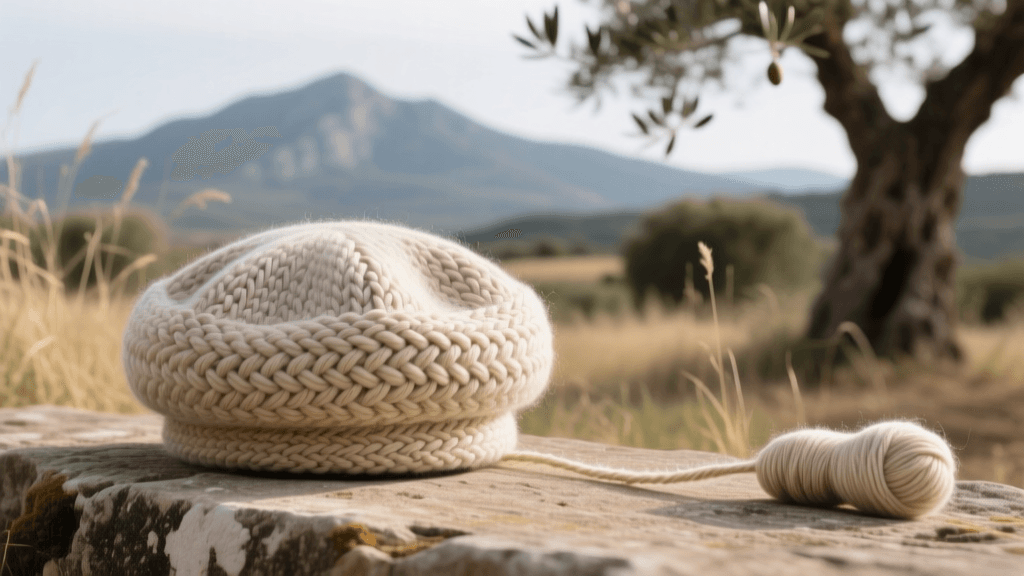
No Sardinian folk ensemble is complete without the berritta (also spelled beritta), the traditional cap worn by men across the island. While often compared to the beret or the Phrygian cap, the Sardinian berritta has a distinct tubular or conical shape, typically crafted from dark orbace wool or, for festive occasions, black velvet and velvet-lined silk.
Regional Variations and Styling
The styling of the berritta varies dramatically from village to village, serving as a geographic identifier. In the mountainous Nuoro province, the berritta longa is favored—a long, tubular cap that is often folded back upon itself or draped over the shoulder. Conversely, in the southern Campidano plains, shorter, more structured caps are common. In 2026, heritage brands are offering bespoke berritta caps that allow buyers to select specific regional silhouettes, complete with hand-embroidered interior linings featuring traditional Sardinian motifs like the pavone (peacock) or the rosa (rose).
Heritage Brands and Artisan Cooperatives in 2026
The commercialization of folk dress often leads to cultural dilution, but Sardinia's artisan cooperatives have fiercely protected their craft. The regional government and cultural bodies, such as the Soprintendenza Archeologia, Belle Arti e Paesaggio della Sardegna, actively monitor and support authentic production methods to prevent the market from being flooded with synthetic, overseas imitations.
In 2026, several notable heritage initiatives are leading the charge:
- Tessitura Artigianale di Mureddu: Located in the deep interior, this cooperative focuses exclusively on 100% Sarda sheep orbace, utilizing natural plant dyes like walnut husk and madder root.
- Sa Berritta Nuorese Studio: A modern atelier that partners with elderly master hatters to produce the berritta using antique wooden block molds, ensuring the structural integrity of the cap matches 19th-century specifications.
- ISOLA (Istituto Sardo Organizzazione Lavoro Artigiano):strong> The overarching regional body that certifies authentic Sardinian handicrafts. In 2026, their digital authentication tags are woven directly into high-end orbace garments, allowing buyers to scan a thread-embedded NFC chip to verify the garment's origin, the specific artisan, and the flock of sheep the wool came from.
2026 Buyer’s Guide: Authenticating Sardinian Textiles
As demand for heritage European folk dress surges, the market has seen an influx of mass-produced 'souvenir' garments that mimic Sardinian styles using synthetic acrylics and machine-knitted wool. For serious collectors and enthusiasts, knowing how to authenticate these pieces is essential.
| Garment / Accessory | Artisan Cooperative (2026 Price) | Mass-Market Souvenir (2026 Price) | Key Authentication Marker |
|---|---|---|---|
| Orbace Wool Vest (Gilet) | €280 - €350 | €60 - €90 | Hand-loomed irregularities, natural lanolin scent, heavy drape. |
| Berritta Cap (Nuoro style) | €120 - €150 | €25 - €40 | Internal leather sweatband, seamless top stitching, rigid tubular hold. |
| Cabbanu (Shepherd's Cloak) | €650 - €900 | €150 - €200 | Heavyweight (3kg+), waterproofed via natural oils, hand-stitched collar. |
| Orbace Trousers (Pantaloni) | €320 - €400 | €80 - €110 | Internal linen lining, button-fly with carved horn buttons, wide gusset. |
When purchasing, always look for the official ISOLA certification mark or request documentation of the artisan's workshop. Authentic orbace will feel slightly waxy to the touch due to the lanolin and will have a distinct, earthy odor that dissipates only slightly over time, unlike the chemical smell of synthetic dyes used in counterfeit garments.
Care and Maintenance for Orbace Garments
Owning an authentic piece of Sardinian folk dress requires specific maintenance to preserve the structural integrity of the orbace wool. Because the fabric relies on its natural oils for water resistance, modern cleaning methods can easily ruin the garment.
- Avoid Dry Cleaning: The harsh chemicals used in standard dry cleaning will strip the lanolin from the Sarda wool, leaving the orbace brittle, scratchy, and permeable to water.
- Spot Cleaning: For minor stains, use a damp cloth and a mild, pH-neutral wool soap. Gently dab the area without rubbing, which can cause the fulled wool to pill or distort.
- Airing and Brushing: After wearing, hang the garment in a well-ventilated area away from direct sunlight. Use a natural boar-bristle brush to gently sweep away dust and dirt, following the direction of the twill weave.
- Storage: Store orbace garments in breathable cotton garment bags. Because the wool is highly attractive to moths, place blocks of untreated cedar wood or dried lavender sachets in the pockets and storage area. Never use chemical mothballs, as the porous wool will permanently absorb the toxic odor.
Conclusion
The revival of Sardinian orbace wool and the berritta cap in 2026 represents a triumph of cultural preservation over fast fashion. By investing in heritage brands and artisan cooperatives, enthusiasts of European folk dress are not merely buying a garment; they are funding the continuation of a centuries-old pastoral tradition. Whether you are acquiring a heavy cabbanu cloak for harsh winters or a finely stitched berritta for a cultural festival, authentic Sardinian textiles offer unparalleled craftsmanship, history, and enduring style.