Sardinian Folk Dress Revival: Heritage Brands & Filigree 2026
The Enduring Legacy of the Costume Sardo in 2026
Sardinia, the rugged Mediterranean island with a fiercely independent cultural identity, is home to one of the most diverse and intricate folk dress traditions in Europe. Unlike many regional costumes that have been relegated to museum displays or annual tourist parades, the costume sardo (Sardinian traditional dress) is experiencing a profound renaissance in 2026. Driven by a new generation of heritage brands, artisan cooperatives, and a global shift toward sustainable, slow fashion, Sardinian garments are being reimagined for contemporary wardrobes while strictly preserving ancestral techniques.
The revival is not merely aesthetic; it is deeply economic and cultural. In 2026, regional initiatives have empowered local weavers, embroiderers, and goldsmiths to form robust collectives. These heritage brands are safeguarding the intricate patterns of the corpetto (bodice), the natural dyeing processes of orbace (traditional wool), and the world-renowned Sardinian filigree jewelry. For collectors, cultural historians, and slow-fashion enthusiasts, understanding the anatomy and modern market of Sardinian dress is essential.
The Anatomy of the Costume Sardo
Sardinian folk dress is highly localized, with over 400 distinct variations across the island's villages. However, the foundational elements remain consistent, serving as a canvas for regional expression.
The Camisa (Shirt) and Embroidery
The foundation of the women's costume is the camisa, a voluminous linen or cotton shirt characterized by expansive, pleated sleeves. In 2026, heritage ateliers in towns like Busachi and Nuoro are championing the return of hand-stitched embroidery. The punto a fil'e 'oro (gold thread stitch) and intricate whitework lace are being revived using organically grown European flax. Modern heritage brands are moving away from the synthetic threads of the late 20th century, opting instead for natural silk and metallic threads that age beautifully and align with contemporary eco-conscious standards.
The Corpetto (Bodice)
The corpetto is the structural and visual centerpiece of the ensemble. Traditionally made from rich velvets, damasks, or brocades, it is heavily boned and laced to provide a striking silhouette. Today's heritage brands are sourcing upcycled vintage velvets and collaborating with local textile mills to weave new brocades using historical Jacquard looms. The lacing, often done with silk ribbons or silver chains, allows for adjustability and remains a focal point of the garment's craftsmanship.
The Faldita (Skirt) and Orbace Wool
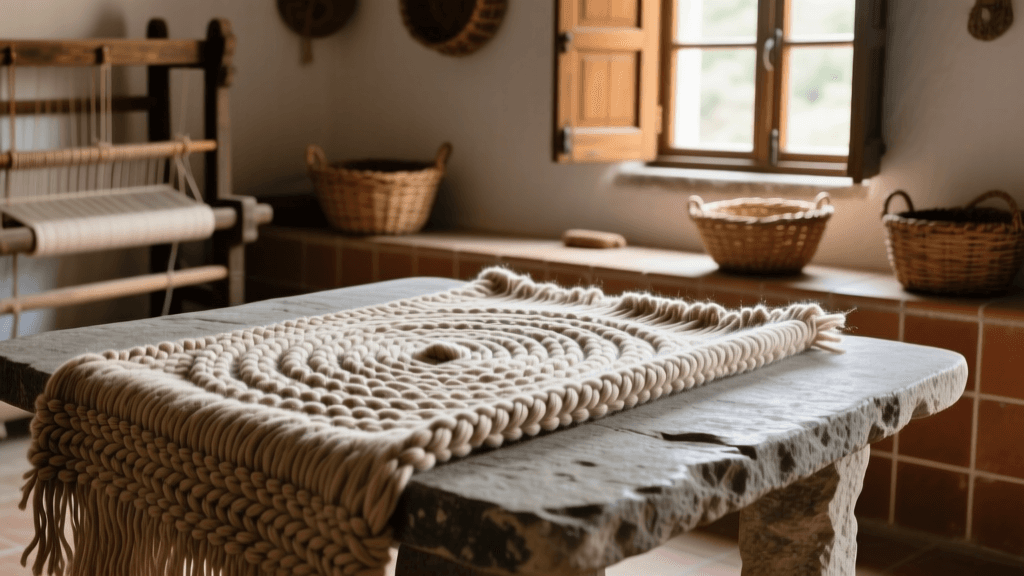
The faldita is a heavily pleated skirt that requires yards of fabric to achieve its signature bell shape. Historically, this was crafted from orbace, a coarse, water-resistant wool woven on traditional wooden looms. In 2026, the production of authentic orbace has seen a massive resurgence. Cooperatives in the Barbagia region are raising local sheep breeds to produce wool that is then dyed using indigenous flora, such as madder root for deep reds and walnut husks for rich browns. The result is a skirt that is both historically accurate and aligned with modern sustainable textile movements.
The Grembiule (Apron)
Far from a utilitarian afterthought, the Sardinian grembiule is a luxurious garment worn over the skirt. Crafted from silk taffeta, brocade, or fine wool, it is often heavily embroidered at the hem and features intricate, hand-pressed pleating. Contemporary artisans are experimenting with 'peace silk' and natural mordants to ensure the vibrant colors of the apron remain colorfast without the use of harsh chemical fixatives.
Sardinian Filigree: The Bottoni Sardi
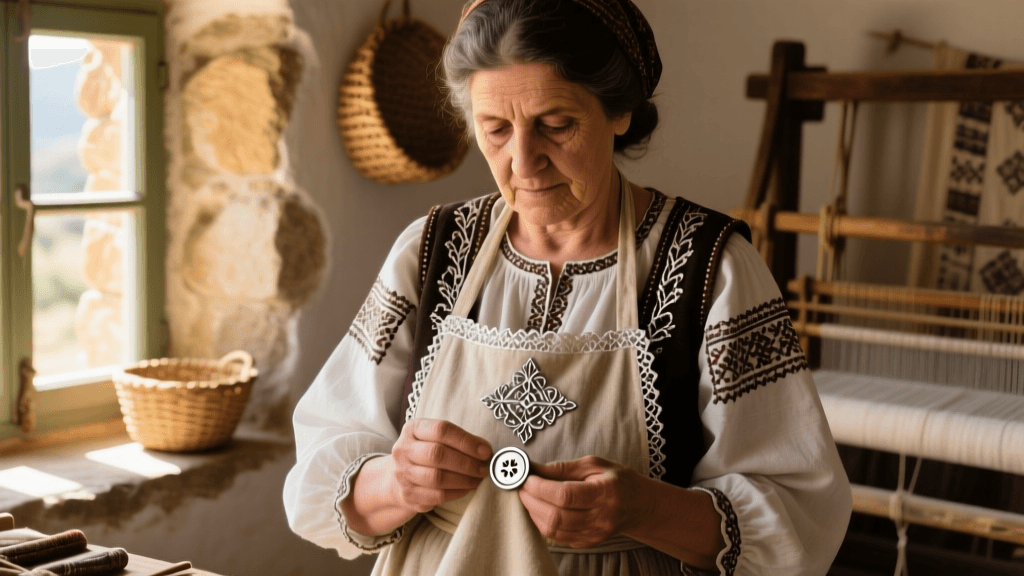
No discussion of Sardinian folk dress is complete without addressing the bottoni sardi (Sardinian buttons). These are not mere fasteners; they are masterpieces of metallurgy and a vital component of the island's intangible cultural heritage. The buttons are used to fasten the camisa at the cuffs and collar, and are often presented as a buttoniera—a matched parure that can include up to 24 individual pieces.
The technique, known as filigrana a traforo (openwork filigree), involves melting silver, drawing it into microscopically thin wires, and twisting it into delicate spirals and rosettes. These elements are then meticulously soldered onto a silver base. The town of Iglesias remains the undisputed capital of this craft. In 2026, master goldsmiths are blending ancient techniques with modern archival technology. Many ateliers now use 3D scanning to digitally preserve 18th-century button molds before casting, ensuring that if a physical mold degrades, the exact historical pattern is never lost.
Due to the significant surge in raw silver prices throughout 2025 and into 2026, authentic, hand-crafted Sardinian filigree has become a highly sought-after investment. A complete, master-crafted buttoniera from a certified Iglesias goldsmith can now command prices upwards of €1,500, reflecting both the material value and the dozens of hours of painstaking labor required.
Heritage Brands and the 2026 Market Landscape
The modern market for Sardinian traditional garments is defined by a shift from isolated artisan workshops to collaborative heritage brands. These brands act as curators and distributors, ensuring that rural artisans receive fair compensation while providing global buyers with verified, high-quality garments.
According to the regional craft portal Sardegna Artigianato, the implementation of the regional 'Sardegna Artigianato' hallmark has been crucial in 2026 for combating mass-produced imitations. This certification guarantees that the garment or jewelry piece was entirely conceived and manufactured on the island using traditional methods.
| Garment Element | Traditional Material | 2026 Heritage Brand Adaptation | Average Cost (EUR) |
|---|---|---|---|
| Faldita (Skirt) | Orbace (coarse wool) | Lightweight merino-wool blends for daily wear | €450 - €850 |
| Corpetto (Bodice) | Velvet and brocade | Upcycled vintage velvet with modern boning | €600 - €1,200 |
| Bottoni (Buttons) | Silver filigree | Recycled sterling silver with 3D-archived molds | €150 - €400 (per piece) |
| Grembiule (Apron) | Silk taffeta | Peace silk dyed with indigenous botanicals | €300 - €700 |
| Cambusciu (Shawl) | Wool and silk blend | Ethically sourced cashmere-wool weaves | €250 - €500 |
Sourcing Authentic Sardinian Garments and Accessories
For collectors and enthusiasts looking to acquire authentic Sardinian folk dress elements in 2026, navigating the market requires a discerning eye and an understanding of regional hallmarks. The island's cultural institutions, such as the Museo della Vita e delle Tradizioni Popolari Sarde in Nuoro (detailed via Sardegna Turismo), frequently partner with local cooperatives to host vetted artisan markets.
Verifying Silver and Textile Authenticity
When purchasing bottoni sardi, always look for the Italian silver hallmark (typically 925 for sterling or 800 for continental silver) alongside the maker's mark. Genuine filigree will have a slightly irregular, organic feel to the soldering under magnification, whereas cast imitations will appear uniformly flat and lack the sharp definition of twisted wire. For textiles, request documentation of the dyeing process. Authentic heritage brands will proudly detail the botanical sources of their dyes and the specific village cooperative that wove the orbace.
Care and Preservation
Preserving these garments requires specialized care. Orbace wool should never be machine washed; it must be dry-cleaned by specialists familiar with natural dyes, or gently aired and brushed. Silk grembiules should be stored flat or rolled in acid-free tissue paper to prevent the permanent creasing of the hand-pressed pleats. Silver filigree buttons should be polished sparingly with a soft cloth, as the dark oxidation in the recesses of the openwork is highly prized for highlighting the intricate patterns.
The Future of Sardinian Sartorial Heritage
As we move through 2026, the Sardinian folk dress revival stands as a triumph of cultural resilience. By embracing sustainable materials, leveraging modern archival technology, and forming robust artisan cooperatives, heritage brands are ensuring that the costume sardo remains a living, breathing tradition. Whether you are investing in a hand-woven orbace skirt or a master-crafted filigree buttoniera, you are participating in the preservation of one of Europe's most magnificent textile legacies.