Sardinian Folk Dress Guide 2026: Heritage Brands & Tips
The Enduring Legacy of the Costume Sardo in 2026
Sardinia, the rugged and windswept island in the heart of the Mediterranean, possesses one of the most complex and meticulously preserved folk dress traditions in all of Europe. Unlike many regional costumes that have faded into mere festival caricatures, the costume sardo (Sardinian traditional dress) remains a living, breathing expression of local identity. In 2026, a powerful movement blending ancestral craftsmanship with contemporary sustainable fashion has brought Sardinian textiles to the forefront of the European heritage revival. From the coarse, weather-resistant wools of the Barbagia region to the intricate gold filigree of Iglesias, Sardinian garments offer a masterclass in functional, culturally rich design.
For collectors, cultural historians, and enthusiasts of slow fashion, understanding the anatomy of these garments and knowing how to source them from authentic heritage cooperatives is essential. This guide explores the defining elements of Sardinian folk dress, highlights the master weavers keeping the tradition alive in 2026, and provides actionable advice for acquiring and caring for these investment pieces.
Anatomy of the Traditional Sardinian Garment
Sardinian folk dress varies drastically from village to village—a phenomenon so pronounced that locals can often identify a person's exact town of origin simply by the cut of their jacket or the color of their headscarf. However, the garments from the central mountainous region of Nuoro (the Barbagia) and the southern plains around Cagliari share foundational elements that define the island's sartorial heritage.
The Men's Ensemble: Carzetta and Cartzones
The traditional male silhouette is built for the harsh, mountainous terrain of the island's interior. The core of the outfit is the carzetta, a short, double-breasted jacket typically made from orbace (a dense, hand-woven, water-resistant wool). In 2026, bespoke tailors in Nuoro still craft these jackets using natural, undyed black or brown sheep's wool, featuring distinctive velvet collars and intricate, subtle embroidery along the cuffs. Beneath the jacket, men wear the carzetta de tela, a loose linen shirt, and the cartzones, wide-legged trousers made of heavy white linen or wool, tucked into knee-high leather gaiters known as cartzas. The ensemble is crowned by the berritta, a long, tubular black woolen cap that is folded back on itself or draped over the shoulder.
The Women's Ensemble: Bodices and Headpieces
Women's traditional dress is a vibrant explosion of color, texture, and symbolic jewelry. The foundation consists of a voluminous linen skirt (unnedda), heavily pleated and often bordered with silk or velvet ribbons. Over a finely embroidered blouse, women wear a rigid, heavily decorated bodice (corittu), which is laced at the front and serves to support the posture and display the family's wealth through its brocade fabrics. The headpiece is equally vital; married women traditionally wear the muccadore, a finely woven silk or cotton scarf tied in specific, elaborate knots that signify marital status and regional pride.
Orbace and Pibiones: The Textile Heartbeat
To truly appreciate Sardinian folk dress, one must understand the textiles. In 2026, the global slow-fashion movement has placed a massive spotlight on two specific Sardinian weaving techniques that heritage brands are fiercely protecting.
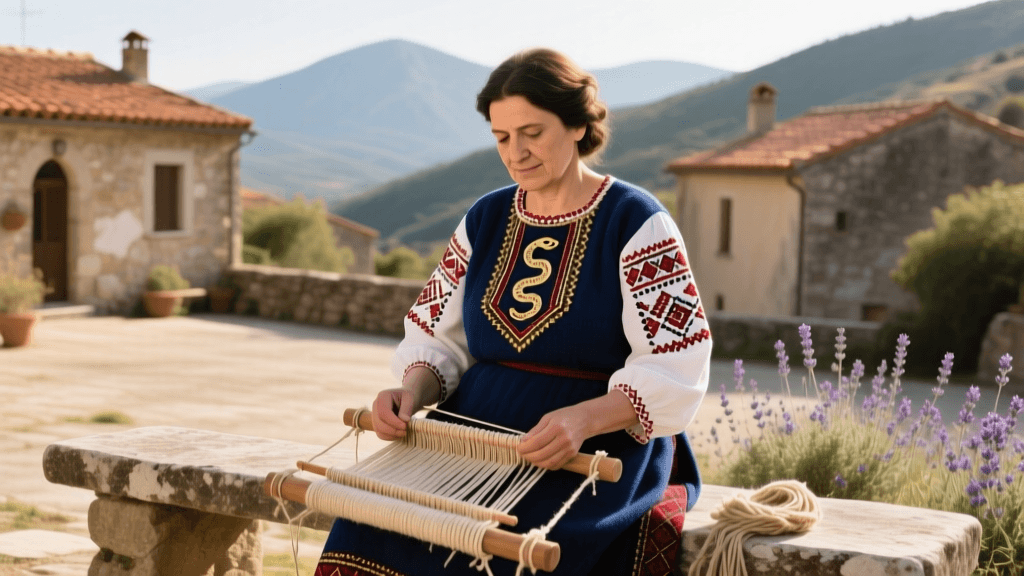
- Orbace: This is the quintessential Sardinian wool. Spun and woven tightly on traditional wooden looms, orbace is virtually waterproof and incredibly durable. Historically worn by shepherds to survive freezing mountain nights, today's heritage brands use orbace to create modern overcoats and structured jackets that retail for upwards of €1,200 due to the sheer labor intensity of the hand-weaving process.
- Pibiones (Grain Weave): A highly specialized raised-weave technique where small, grain-like bumps of thread are pulled up across the surface of the linen or cotton fabric. Originally used for bridal bed linens and ceremonial aprons, contemporary Sardinian design cooperatives are now incorporating pibiones motifs into high-end folk-inspired skirts and home textiles, preserving the geometric patterns that date back to the Nuragic civilization.
According to cultural preservationists at Sardegna Cultura, the transmission of these weaving techniques from master weavers to younger apprentices has seen a 30% increase in enrollment since 2024, driven by a renewed interest in zero-waste, locally sourced fibers.
Heritage Cooperatives and Artisans to Watch in 2026
If you are looking to acquire authentic Sardinian garments or textiles, bypass mass-produced tourist shops and seek out established artisan cooperatives and heritage brands that employ traditional loom techniques and natural dyes.
1. ISOLA (Istituto Sardo Organizzazione Lavoro Artigiano)
ISOLA is the premier regional agency and cooperative network dedicated to certifying and promoting authentic Sardinian craftsmanship. When shopping for textiles, jewelry, or ceramics in 2026, looking for the ISOLA certification mark guarantees that the item was handcrafted on the island using traditional methods. Their flagship showrooms in Cagliari and Alghero are the best starting points for sourcing authentic pannu (woven wool blankets) and traditional bodices.
2. Museo del Costume Artisans (Nuoro)
The area surrounding the Museo della Vita e delle Tradizioni Popolari Sarde in Nuoro is the epicenter of Barbagia folk dress. Local weavers affiliated with the museum's preservation trust offer bespoke commissions. Here, you can find master goldsmiths practicing the ancient art of Sardinian filigree, creating the iconic buttones (spherical silver or gold buttons) used to fasten the cuffs and collars of traditional shirts.
3. Telai di Sardegna (Contemporary Heritage Revival)
A newer wave of heritage brands, such as those operating under the 'Telai' (Looms) collective banner, are bridging the gap between strict historical reproduction and modern wearability. In 2026, these brands are utilizing naturally dyed orbace—using walnut hulls for deep blacks and madder root for terracotta reds—to create contemporary outerwear that honors the silhouette of the carzetta while fitting seamlessly into a modern urban wardrobe.
2026 Buyer's Guide: Sourcing, Pricing, and Measurements
Commissioning or purchasing authentic Sardinian folk garments requires an understanding of current artisan pricing and lead times. Because these items are made entirely by hand, patience is a prerequisite.
| Garment Component | Traditional Material | 2026 Average Artisan Cost (EUR) | Typical Lead Time |
|---|---|---|---|
| Carzetta (Men's Jacket) | Hand-woven Orbace Wool, Velvet trim | €850 - €1,400 | 3 - 5 Months |
| Corittu (Women's Bodice) | Silk Brocade, Linen lining | €600 - €1,100 | 2 - 4 Months |
| Berritta (Men's Cap) | Fine Black Wool | €120 - €180 | 1 - 2 Months |
| Pibiones Apron / Skirt Panel | Raised-weave Linen/Cotton | €350 - €700 | 2 - 3 Months |
| Buttones (Set of 6 Filigree Buttons) | Sterling Silver or 18k Gold | €250 - €900+ | 4 - 6 Weeks |
How to Measure for Bespoke Sardinian Tailoring
If you are commissioning a carzetta or a traditional bodice from a Sardinian tailor remotely in 2026, precise measurements are critical, as these garments are cut much closer to the body than modern outerwear.
- Chest/Torso: Measure around the fullest part of the chest, keeping the tape measure snug. For the women's corittu, also measure the underbust, as the bodice is meant to act as a supportive corset.
- Shoulder Span: Measure from the outer edge of one shoulder bone to the other. Sardinian jackets feature a slightly dropped, structured shoulder to allow for movement while working.
- Sleeve Length: Measure from the shoulder seam down to the wrist bone. Note that traditional shirts require an extra 2 inches in the sleeve length to allow for the characteristic billowing effect at the cuff before it is cinched by the filigree buttons.
Garment Care: Preserving Heritage Wool and Linen
Owning a piece of Sardinian heritage comes with the responsibility of proper conservation. The natural lanolin left in hand-woven orbace wool makes it naturally water-resistant and odor-resistant, meaning it should never be dry-cleaned with harsh modern chemicals, which will strip the fibers and ruin the garment's structural integrity.
- Cleaning Orbace: Spot clean with cold water and a very mild, pH-neutral wool soap. To refresh the garment, hang it outside in the damp morning air or a steamy bathroom to allow the fibers to release odors naturally.
- Storing Linen and Brocade: The heavy pleats of the unnedda (skirt) must be stored properly to maintain their shape. In 2026, textile conservators recommend rolling heavy pleated skirts around acid-free cardboard tubes rather than folding them, which can cause permanent crease damage to antique or newly woven linen.
- Polishing Filigree: Sardinian silver buttons oxidize over time, which is often considered a desirable patina. If you prefer a bright shine, use a soft jeweler's cloth and avoid liquid dips, which can loosen the traditional solder joints used by island goldsmiths.
Conclusion
The Sardinian folk dress is far more than a historical artifact; it is a testament to the island's resilience, artistry, and deep connection to the natural landscape. As we move through 2026, the dedication of local weavers, tailors, and jewelers ensures that the costume sardo continues to evolve without losing its soul. Whether you are investing in a bespoke orbace jacket, collecting intricate silver filigree, or simply studying the geometric brilliance of the pibiones weave, engaging with Sardinia's heritage brands offers a profound connection to one of Europe's most vibrant textile traditions.